Skip to content
Water Restoration Pros

Water Damage Service

Sump Pump Failure Cleanup

When a sump pump stops during heavy rain or a power outage, water can rise quickly through a basement or crawl space. Learn how to stay safe, limit the spread, and connect with help for extraction, drying, and cleanup.

Service overview

Cleanup after a sump pump failure starts with safe access and water extraction, then drying and moisture verification before repairs or prevention upgrades.

Recognize the problem

Does this situation call for sump pump failure cleanup?

Start with what you can safely observe. The source, the type of water, and the materials affected determine the response after an on-site assessment.

What you may notice

Standing water is rising in a basement or crawl space near the sump pit

The pump is running but cannot keep up with incoming water

The pump is silent, short-cycling, or failing to activate as the pit fills

Water has reached finished walls, flooring, storage, or mechanical equipment

The water is gone but the space remains damp, humid, or musty

How it commonly starts

A storm-related power outage without a working battery backup

A stuck, obstructed, or disconnected float switch

Incoming water that exceeds the pump's capacity

A frozen, clogged, or poorly routed discharge line

A failed check valve that allows discharged water to flow back

A worn motor or an aging pump that no longer moves water reliably

Why timing changes the outcome

Standing water can reach electrical equipment, stored items, and finished materials.

Below-grade walls, flooring, and framing hold moisture and dry slowly. Water may require contaminated-water handling depending on where it entered.

Measured drying before repairs helps avoid trapping moisture in the basement.

In-depth guidance

What to know about sump pump failure cleanup

Understanding sump pump failures

Sump pumps are essential for preventing basement flooding, especially during severe weather conditions when water levels can rise rapidly. Despite their importance, these devices can fail due to several common issues. One frequent problem is power outages during storms, which can render electric sump pumps inoperative unless there is a backup power system in place. This is why many homeowners opt for battery backups or generators to ensure their sump pumps remain functional during critical times.

Mechanical failures are another common issue with sump pumps. For instance, a float switch may become stuck, preventing the pump from activating when water levels rise. This can happen due to debris or mechanical wear over time. In addition, clogged discharge lines can obstruct water flow, leading to potential flooding as the pump cannot expel water effectively. Regular maintenance can help prevent these problems by ensuring all components are in good working order and free of obstructions.

Post-cleanup considerations

After the initial cleanup from a sump pump failure, damaged drywall, flooring, insulation, or trim may need to be repaired or replaced. The reconstruction scope depends on how high the water reached, how long materials stayed wet, the water category, and which finishes can be matched. Repairs should wait until moisture readings confirm the basement is dry.

Additionally, reviewing insurance coverage is a critical step post-cleanup. Not all causes of water damage are covered under standard homeowners insurance policies. For example, flood damage from rising water often requires separate flood insurance through the NFIP or private insurers. Understanding the specifics of your policy, including what types of damage are covered, can help in managing expectations and avoiding unexpected expenses. This knowledge allows homeowners to make informed decisions about necessary repairs and potential upgrades.


Preventing future failures

To reduce the likelihood of future sump pump failures, implementing regular preventative measures is essential. Scheduling annual maintenance checks can help identify and address potential issues before they lead to pump failure. These checks should include testing the float switch to ensure it moves freely and activates the pump when necessary, as a stuck switch is a common cause of failure.

Installing a battery backup system is another important preventative measure, providing assurance that the sump pump will continue to operate during power outages. Additionally, water alarms can be installed to serve as early warning systems, alerting homeowners to rising water levels before they result in significant flooding. These systems offer peace of mind and allow for proactive management of potential issues, preventing minor problems from escalating into major ones.

Professional response

How the work moves from damage to a dry property

The exact scope changes with the water source and affected materials, but a measured restoration response generally moves through three phases.

Assess and stabilize

Assess safe access

Professionals assess electrical hazards, water depth, and whether sewage or other contamination may be present before anyone enters.

Extract standing water

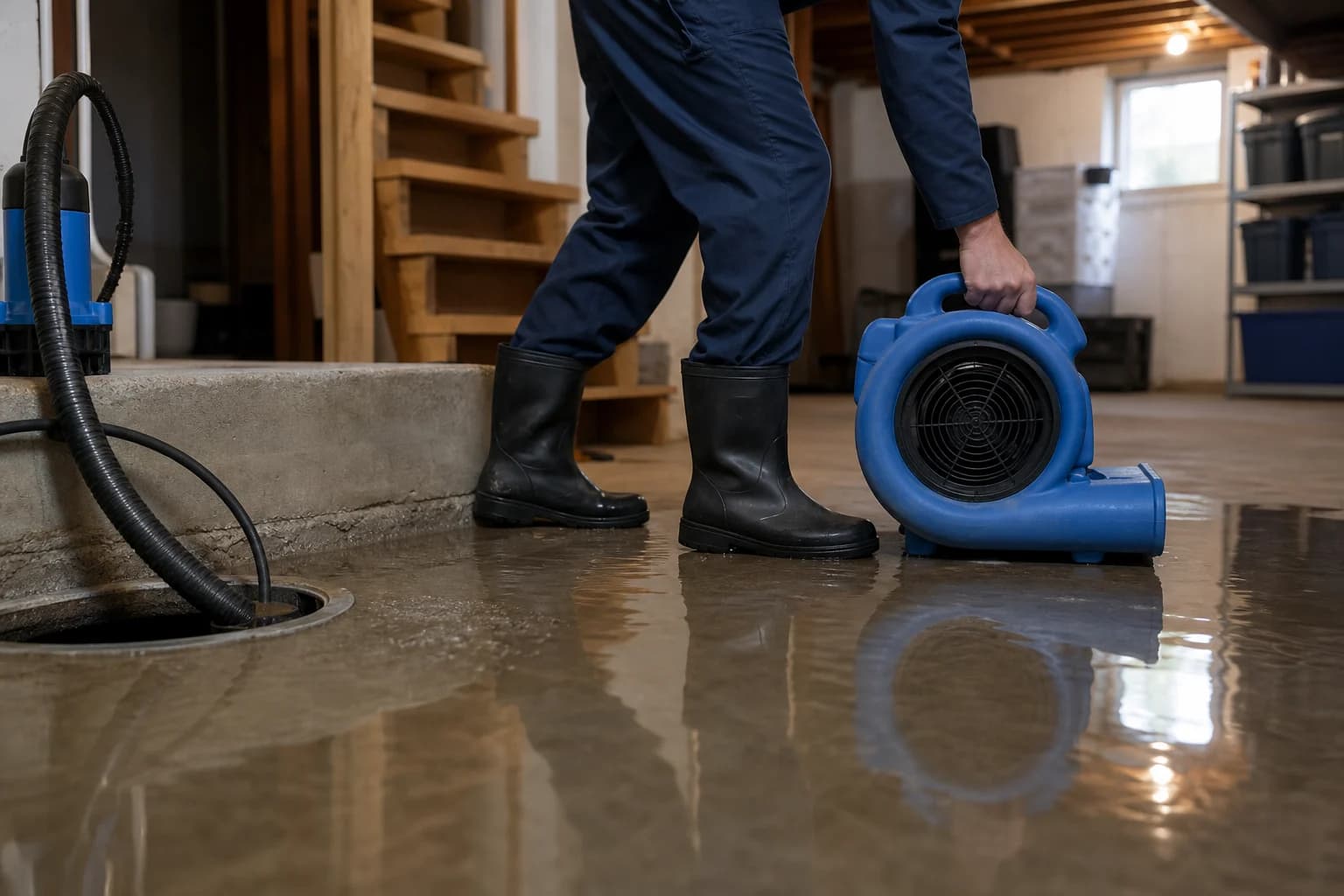
Pros use equipment suited to the water level and contamination risk to remove standing water without spreading it into clean areas.

Remove and dry

Remove and clean affected materials

Materials that cannot be safely cleaned and dried are removed, and affected hard surfaces are cleaned according to the conditions found.

Dry the basement

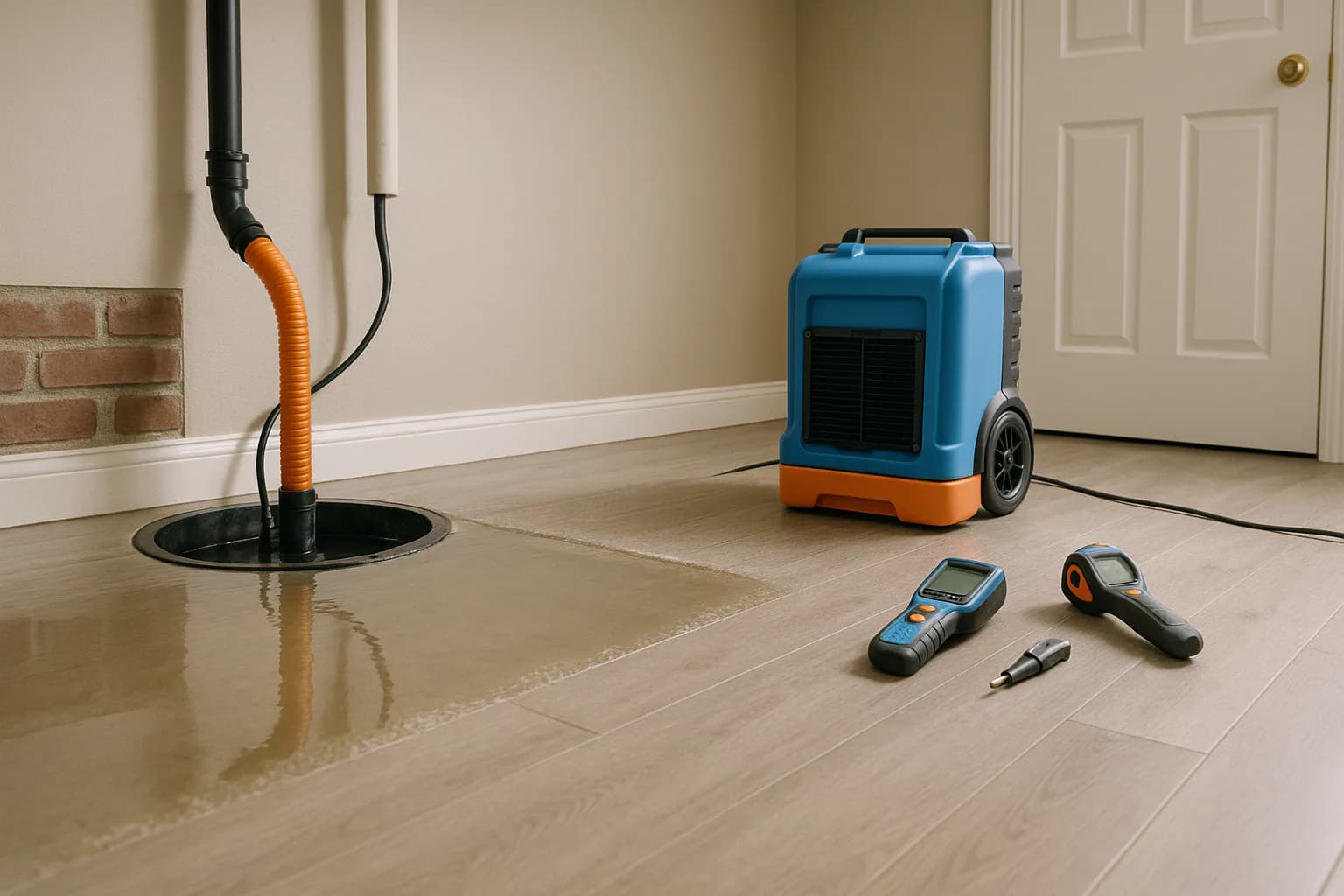
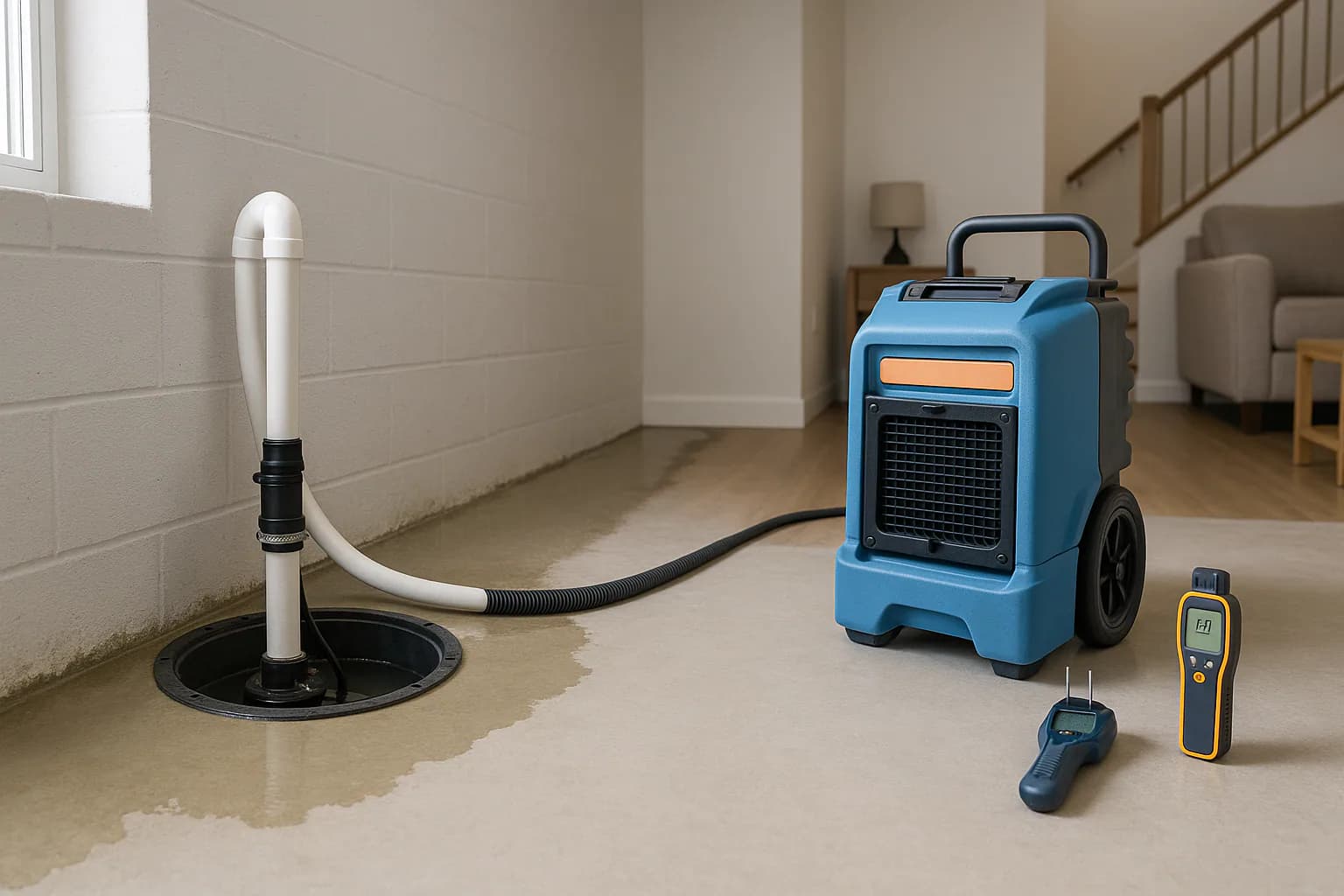
After contaminated water and affected materials are addressed, controlled air movement and dehumidification dry the remaining structure.

Verify and recover

Verify moisture levels

Moisture readings are tracked against an appropriate dry reference before equipment is removed or repairs begin.

What to expect from the first visit

Assess safe access

Professionals assess electrical hazards, water depth, and whether sewage or other contamination may be present before anyone enters.

Extract standing water

Pros use equipment suited to the water level and contamination risk to remove standing water without spreading it into clean areas.

Remove and clean affected materials

Materials that cannot be safely cleaned and dried are removed, and affected hard surfaces are cleaned according to the conditions found.

Dry the basement

After contaminated water and affected materials are addressed, controlled air movement and dehumidification dry the remaining structure.

Questions to ask before approving the scope

How will the assessment document water depth and safe access?

The answer should be specific to the property and reflected in the written scope.

Which conditions determine whether sump pump failure is the right service path?

The answer should be specific to the property and reflected in the written scope.

What work, specialist responsibilities, measurements, and completion records will be included in writing?

The answer should be specific to the property and reflected in the written scope.

Before help arrives

What you can do now

Only take steps you can complete safely. Leave the area and wait for qualified help if there is an electrical, structural, or contamination risk.

Stay out of a flooded basement if water may be in contact with electrical equipment.

Shut off power only from a dry, safely accessible location.

Do not wade through water that may be contaminated or conceal hazards.

Photograph the water level, sump pit, pump, and affected materials if it is safe.

Call to connect with sump pump failure cleanup and drying help.

These are general precautions for sump pump failure cleanup; conditions at the property determine what is safe and appropriate.

Frequently asked questions

What should I do if my sump pump fails?
Stay out of a flooded basement if water may be touching electrical equipment. Shut off power only from a dry, safely accessible location, avoid contact with potentially contaminated water, and arrange for extraction and drying.
How much does sump pump failure cleanup cost?
Cost depends on the water depth and affected area, contamination category, materials involved, extraction needs, drying equipment and monitoring time, and any repairs. An on-site assessment is needed for an accurate scope.
Does insurance cover sump pump failure?
Coverage depends on the cause and policy terms. Sudden failures might be covered, but damage from rising water generally requires separate flood insurance.
How can I prevent sump pump failures?
Regular maintenance, installing battery backups, and conducting annual float switch tests help prevent failures. Water alarms can provide early warnings.
Why is professional cleanup necessary?
Professional cleanup ensures safety, thorough water removal, and effective drying, preventing mold growth and structural damage. Pros handle contaminated water safely.
Technical and safety sources (5)

These sources support restoration, safety, moisture, cleanup, and scope guidance. They do not serve as numeric pricing provenance.

Need help with sump pump failure?

Call Water Restoration Pros to connect with sump pump failure cleanup help in your area.

Call (833) 968-0848 · No-obligation · Availability varies by area

(833) 968-0848Check