Skip to content
Water Restoration Pros

Water Damage Service

Pipe Leak Water Damage

Not every pipe problem announces itself. A slow or hidden leak can drip inside a wall, ceiling, or under a floor for weeks before stains, warping, or a musty smell give it away. Water Restoration Pros helps property owners connect with help to find the moisture from a pipe leak, dry it out, and repair the damage.

Service overview

Pipe leak water damage help that locates moisture from a slow or hidden leak, dries the affected materials, and repairs the damage left behind.

Recognize the problem

Does this situation call for pipe leak water damage?

Start with what you can safely observe. The source, the type of water, and the materials affected determine the response after an on-site assessment.

What you may notice

You found stains, bubbling paint, or warped floors near plumbing

There is a musty smell that points to moisture inside a wall or ceiling

Your water bill jumped without an obvious explanation

A slow leak was discovered behind a wall, under a sink, or below a floor

You suspect a pipe has been leaking quietly for a while

How it commonly starts

Slow drips at aging or corroded pipe joints and connections

Pinhole leaks in supply lines hidden inside walls

Loose or worn fittings under sinks and behind fixtures

Failing seals on drain lines under floors

Small leaks at appliance and fixture supply connections

Why timing changes the outcome

A hidden leak can soak framing and drywall long before it is noticed.

Trapped moisture inside walls and floors creates the conditions for mold. Warped flooring, stained ceilings, and soft drywall point to ongoing damage.

Finding and drying the moisture early limits how much has to be repaired.

In-depth guidance

What to know about pipe leak water damage

Plumber and restoration company do different jobs

A pipe leak usually needs two kinds of help, and it is easy to confuse them. A plumber fixes the pipe: they locate the failed line or fitting and repair or replace it so the leak stops. That is essential, but it does not address the water that already soaked into your walls, ceiling, or floor.

A restoration company handles the damage the leak caused. They find the moisture that spread beyond the pipe, dry the affected materials in a controlled way, and repair or rebuild what was damaged. With a slow or hidden leak, the water often traveled well past the leak point, so drying and repairs are their own job once the plumbing is fixed.

Finding hidden leaks: signs and detection

A hidden leak rarely shows itself as water; it shows itself as the marks the water leaves. Discoloration or a yellow-brown ring on a wall or ceiling, paint that bubbles or peels, drywall that feels soft or looks warped, flooring that cups or lifts, and a persistent musty smell in one area are all signs moisture is present where you cannot see it. A water bill that climbs for no clear reason, or the sound of running water when every fixture is off, can point to a supply line leaking inside the structure. Any of these near plumbing is worth taking seriously before the damage spreads further.

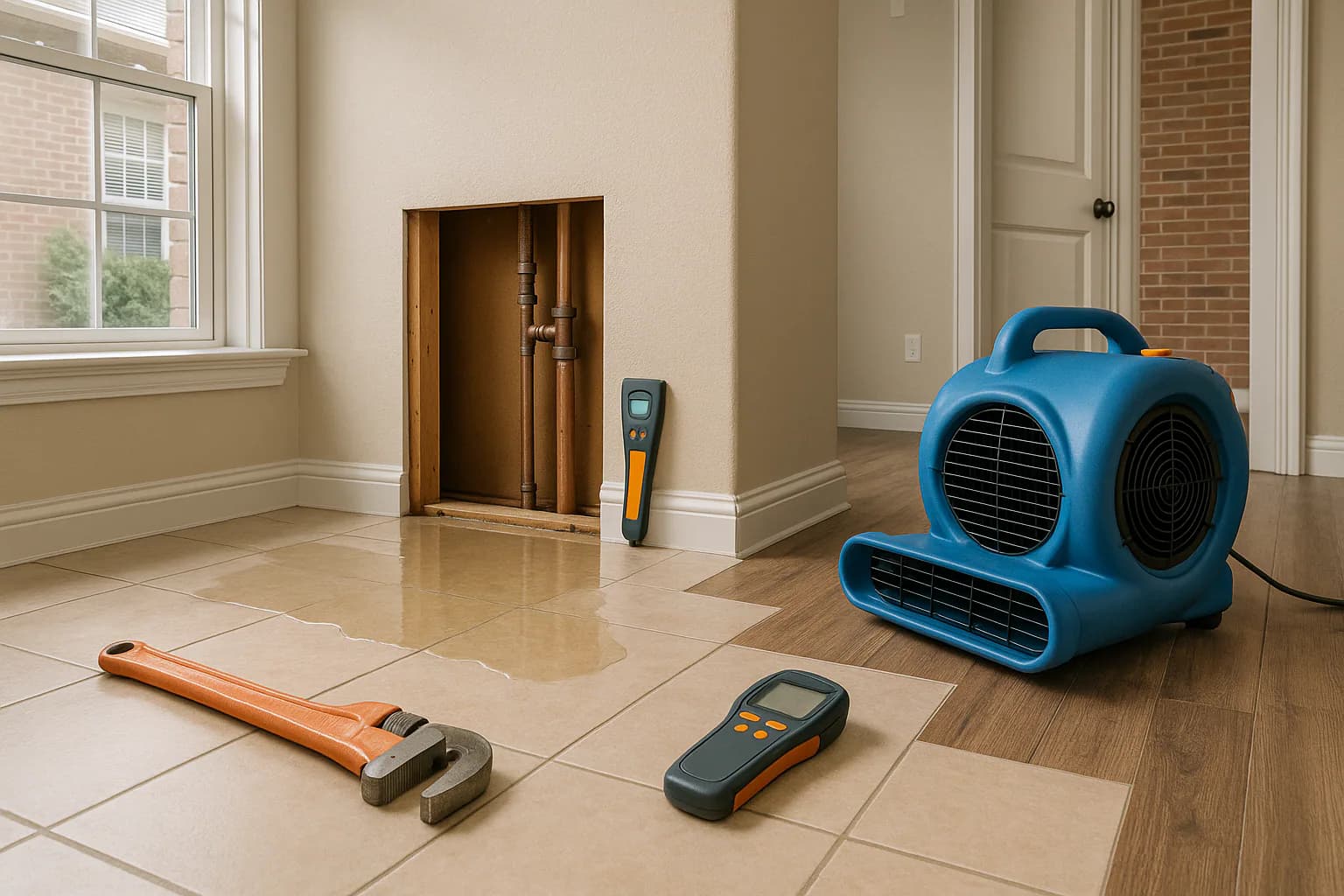
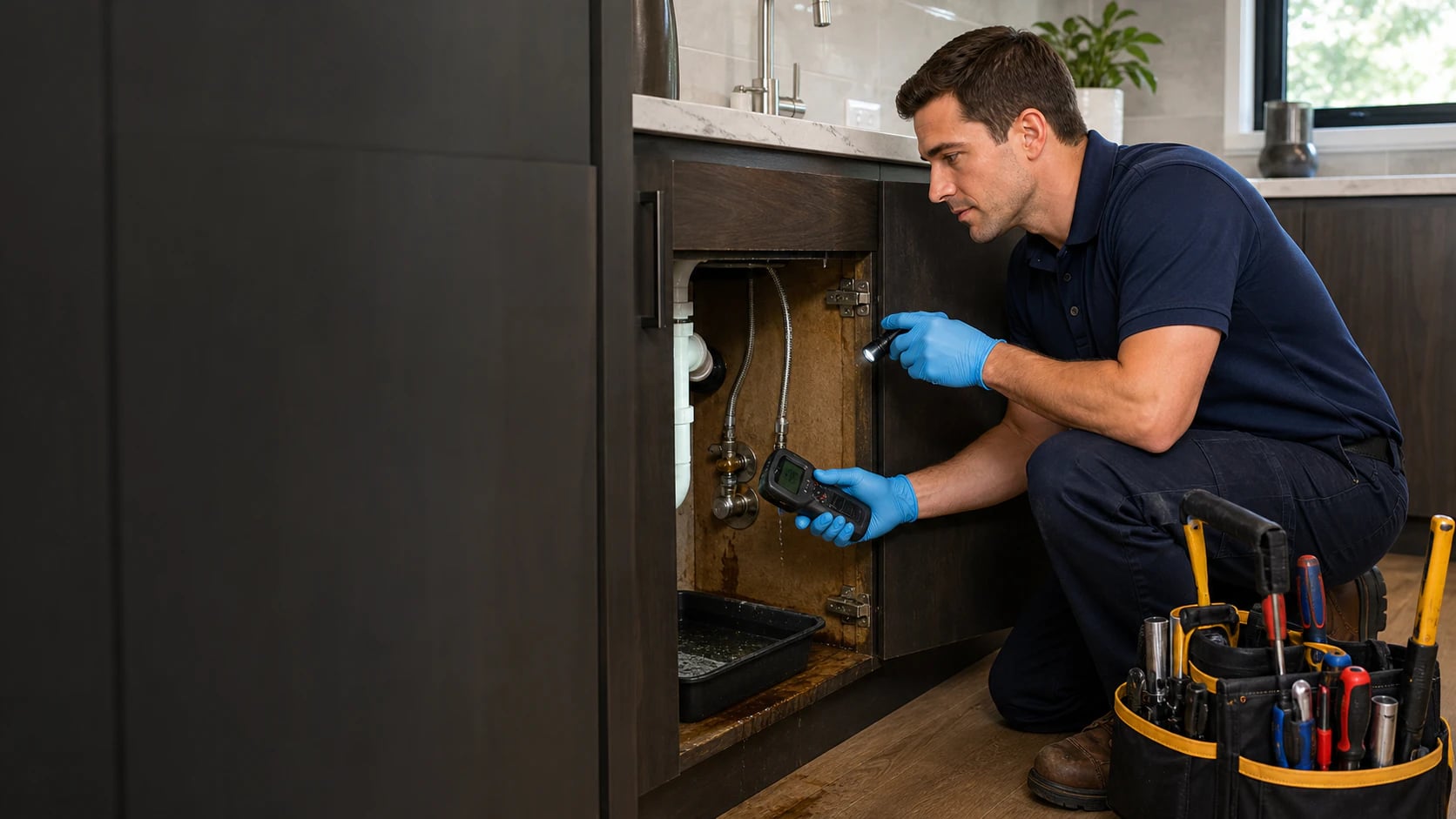
Once there is reason to suspect a leak, restoration pros confirm and map it with tools rather than guesswork. Moisture meters read how wet a material is and trace the spread back toward its source, and infrared cameras reveal the cooler signature of damp areas behind a surface without opening it up. These let a pro see how far water has traveled inside a wall, ceiling, or floor, and pinpoint where to open up so the trapped moisture can be reached and dried. The detection step matters because the visible stain is usually only the edge of a larger wet area hiding behind the finish.

Who to call first, and how the two roles hand off

Because a pipe leak needs both a plumber to fix the pipe and a restoration company to handle the damage, owners often ask who to call first. As a general rule, stopping the water comes first: shutting off the leaking line or the main supply, and getting a plumber to repair the failed pipe or fitting, ends the source of the problem. Drying soaked materials while a pipe is still leaking is wasted effort, so the plumbing fix usually leads. With a slow or hidden leak that has already done its damage, the two can also be lined up close together, with the plumber repairing the line and the restoration pros assessing the moisture in the same window.

The hand-off between the two is where things can fall through the cracks, so it helps to understand the seam. A plumber's job ends at a working pipe; it does not include drying the wall it leaked into or repairing the stained ceiling below. The restoration company picks up from there, finding how far the water spread, drying the materials, and repairing the finishes. Documentation is part of that hand-off as well: photographing the failed pipe, the stains, and the damage supports an insurance claim, where coverage often hinges on whether the leak was sudden and accidental rather than slow and ongoing. Reviewing the policy or asking the insurer is the way to understand what applies.

Professional response

How the work moves from damage to a dry property

The exact scope changes with the water source and affected materials, but a measured restoration response generally moves through three phases.

Assess and stabilize

Confirm the leak is stopped

Make sure the water to the leaking line is off and the pipe itself has been or will be repaired by a plumber.

Find the moisture

Use moisture meters and inspection to map how far water from the leak has spread inside walls, ceilings, and under floors.

Remove and dry

Open up where needed

Open or remove affected drywall, ceiling, or flooring so trapped moisture in the cavities can escape.

Dry the materials

Set air movers and dehumidifiers to dry framing, subfloor, and remaining building materials.

Verify and recover

Monitor and verify

Track moisture readings until materials reach a dry, stable target instead of guessing by feel.

Repair the damage

Plan and complete the drywall, ceiling, flooring, and finish repairs the leak left behind.

What to expect from the first visit

Confirm the leak is stopped

Make sure the water to the leaking line is off and the pipe itself has been or will be repaired by a plumber.

Find the moisture

Use moisture meters and inspection to map how far water from the leak has spread inside walls, ceilings, and under floors.

Open up where needed

Open or remove affected drywall, ceiling, or flooring so trapped moisture in the cavities can escape.

Dry the materials

Set air movers and dehumidifiers to dry framing, subfloor, and remaining building materials.

Questions to ask before approving the scope

How will the assessment document leak location and repair responsibility?

The answer should be specific to the property and reflected in the written scope.

Which conditions determine whether pipe leak damage is the right service path?

The answer should be specific to the property and reflected in the written scope.

What work, specialist responsibilities, measurements, and completion records will be included in writing?

The answer should be specific to the property and reflected in the written scope.

Before help arrives

What you can do now

Only take steps you can complete safely. Leave the area and wait for qualified help if there is an electrical, structural, or contamination risk.

Shut off the water to the leaking line, or the main supply, if you can.

Have a plumber find and repair the leaking pipe itself.

Move belongings away from stained or damp walls, ceilings, and floors.

Photograph the stains, warping, and damage for your insurance.

Call to connect with pipe leak water damage help.

These are general precautions for pipe leak water damage; conditions at the property determine what is safe and appropriate.

Frequently asked questions

How is a slow pipe leak different from a burst pipe?
A burst pipe releases a lot of water fast and is obvious right away. A slow or hidden leak drips quietly inside a wall, ceiling, or under a floor, sometimes for weeks, and is usually found through stains, warped floors, a musty smell, or a higher water bill rather than visible flooding.
What are the signs of a hidden pipe leak?
Common signs include water stains or bubbling paint on walls and ceilings, warped or soft flooring, a persistent musty smell, and an unexplained jump in your water bill. Any of these near plumbing is worth investigating.
Do I need a plumber or a restoration company for a pipe leak?
Often both. A plumber finds and repairs the leaking pipe itself. A restoration company dries the materials the water soaked into and repairs that damage. Fixing the pipe stops the leak, but it does not address the moisture already in your walls and floors.
Will insurance cover water damage from a leaking pipe?
It depends on the cause and your specific policy. Coverage often hinges on whether the leak was sudden and accidental versus slow and ongoing, since gradual damage is treated differently. Document everything with photos and review your policy or ask your insurer.
How do restoration pros find a leak hidden inside a wall or floor?
They start from the visible signs, such as stains, warped flooring, or a musty smell, then confirm and map the moisture with tools. Moisture meters measure how wet materials are and trace the spread, while infrared cameras reveal cooler damp areas behind a surface without opening it. That shows how far the water traveled and where to open up to dry it.
Should I call a plumber or a restoration company first for a pipe leak?
Stopping the water generally comes first, so shut off the line or main supply and have a plumber repair the pipe, since drying while it is still leaking is wasted effort. The restoration company then handles the moisture the leak left behind. With a slow leak that already caused damage, the two are often lined up close together.
Technical and safety sources (4)

These sources support restoration, safety, moisture, cleanup, and scope guidance. They do not serve as numeric pricing provenance.

Need help with pipe leak damage?

Call Water Restoration Pros to connect with pipe leak water damage help in your area.

Call (833) 968-0848 · No-obligation · Availability varies by area

(833) 968-0848Check