Discovering water where it does not belong is stressful, but the first hour matters more than almost anything else. Acting quickly and methodically helps limit how far the water spreads, how much it soaks into your home, and how complicated the cleanup becomes. This guide walks you through the immediate steps to take so you can stay safe and get the situation under control.
Stop the Water and Stay Safe
Before anything else, address the source if you can do so safely. A burst supply line, an overflowing appliance, or a failed water heater can keep adding gallons by the minute. If the water is rising or you suspect it has reached outlets or wiring, treat electrical safety as the priority. Water and electricity are a dangerous combination, and taking steps to ensure safety is crucial.
- 1
Shut off the water
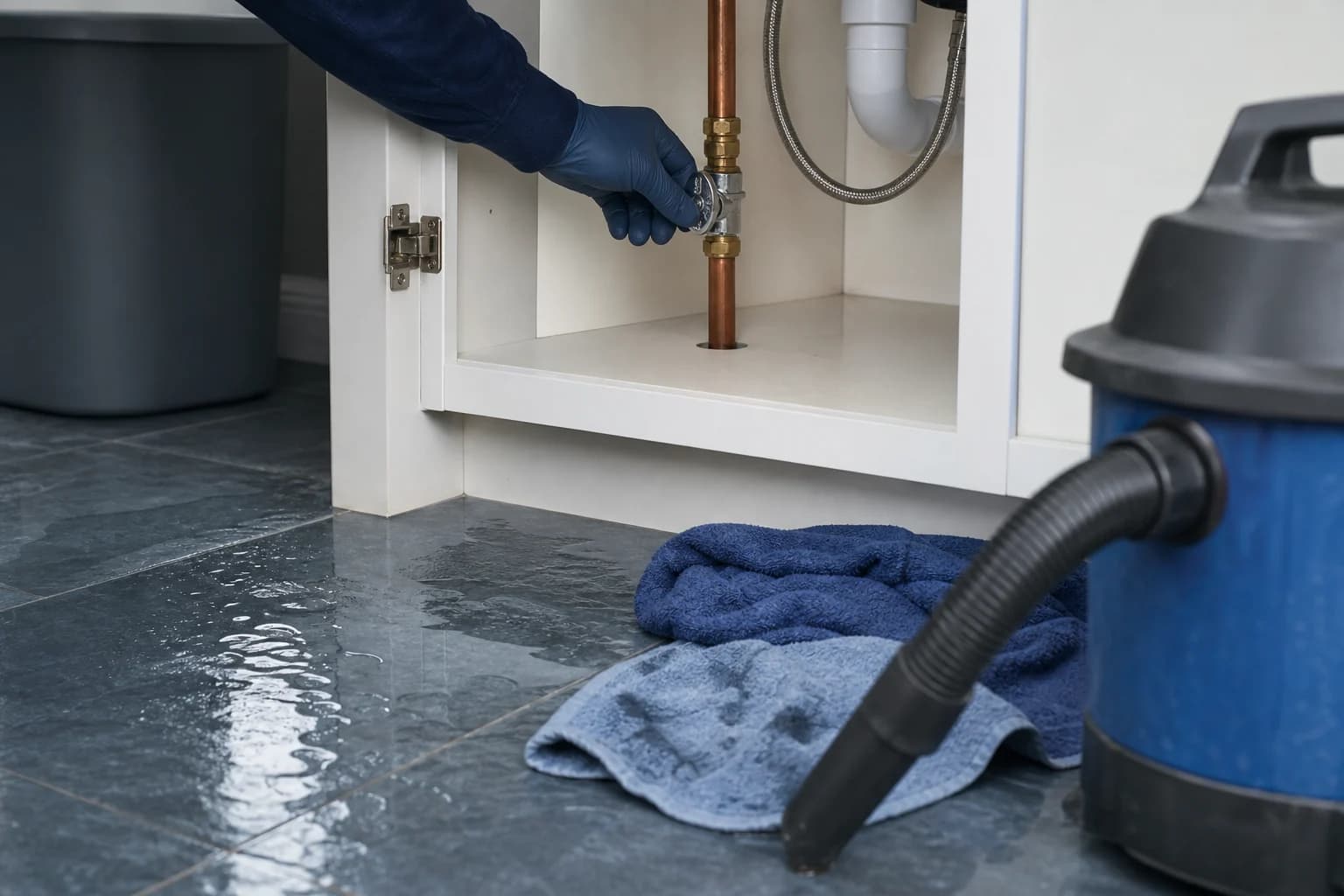
Close the nearest fixture valve or the home's main water shutoff to stop new water from entering the area. Quick action can prevent further damage and is the first step in mitigating water issues.
- 2
Cut the power if needed
If water is near outlets, appliances, or the panel, turn off electricity to the affected area from the breaker only if you can reach it safely and your hands and footing are dry. This step helps prevent electrical hazards.
- 3
Avoid standing water of unknown origin
If the water may be contaminated, from a sewer line or outside flooding, keep people and pets away until professionals can handle it. Contaminated water may involve exposure concerns and requires proper handling.
Do not enter deep or contaminated water
Never walk through standing water that is touching electrical sources, or water that may carry sewage or chemicals. When in doubt, wait for trained help rather than risking your safety.
Protect Belongings and Slow the Spread
Once the source is stopped, your goal is to move valuables out of harm's way and reduce how much water soaks into floors, walls, and furnishings. Small actions now can save items that would otherwise be lost. Protecting your belongings not only saves money but also reduces emotional stress.
- Lift furniture legs onto blocks or foil, and move rugs, electronics, and important documents to a dry area. This prevents moisture from seeping into valuable items.
- Soak up surface water with towels and mops where it is safe to do so. Quick removal of standing water reduces potential damage.
- Open windows and run fans for airflow if outdoor conditions allow. Ventilation can aid in drying, but avoid using fans if the water is contaminated.
- Remove small items from the floor so they are not sitting in moisture. Keeping floors clear helps in the drying process and protects belongings.
Document Everything for Your Claim
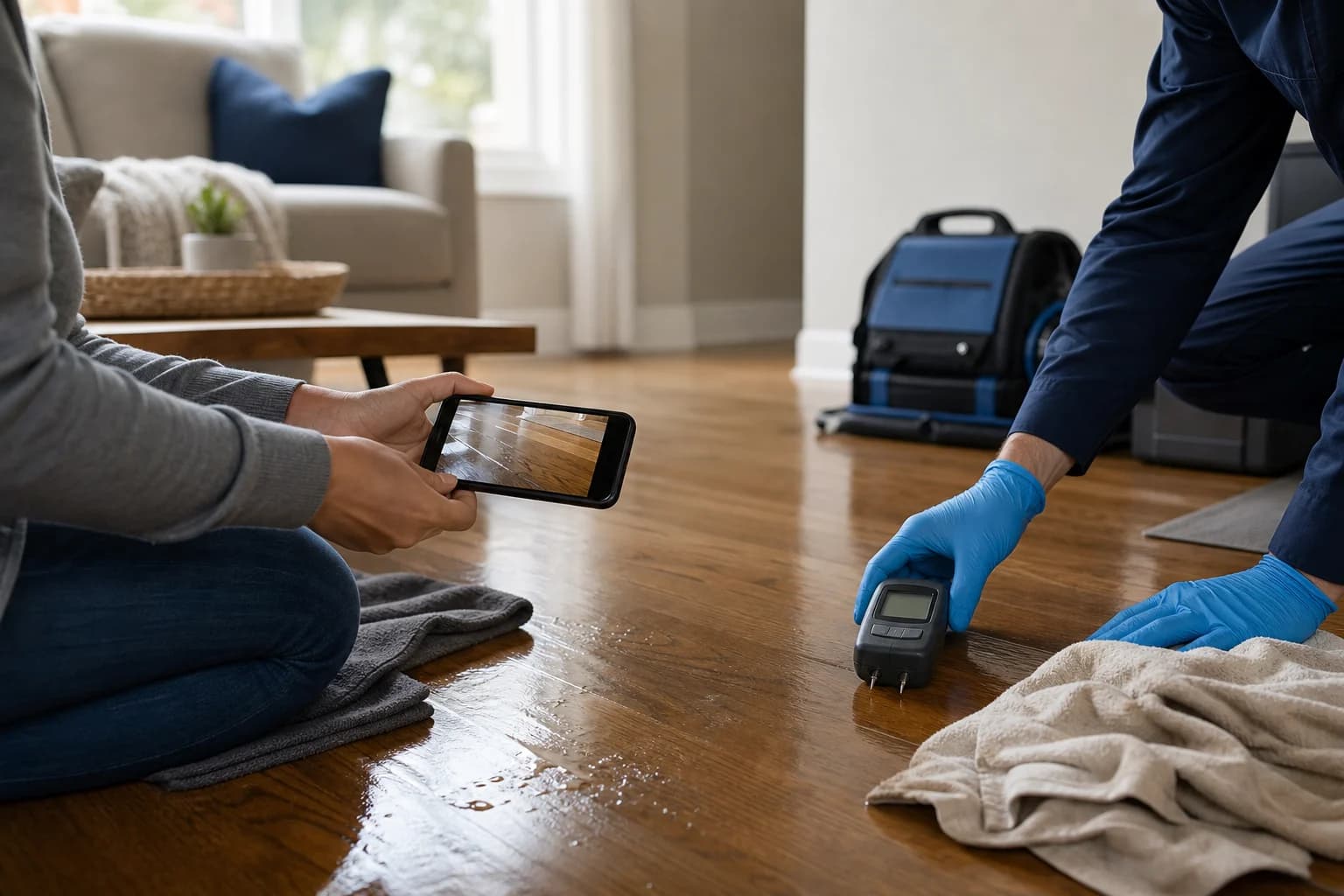
Before cleanup goes too far, take clear photos and short videos of the damage, the water's reach, and any affected belongings. Thorough documentation supports an insurance claim and helps everyone understand the scope. Keep a simple list of damaged items as you go. This step is essential for transparency and accountability when working with insurance adjusters.
Act fast to limit mold conditions
Lingering moisture creates the conditions that allow mold to grow. Fast, professional drying helps reduce that risk, which is why getting help quickly is so valuable.
Prioritize the First 24–48 Hours
The first 24 to 48 hours after discovering water damage are critical. According to the EPA, wet materials should be dried within this timeframe to reduce the conditions that allow mold growth. Focus on areas that are most saturated and susceptible to damage. Prioritize drying wet carpets, drywall, and any porous materials. Effective drying in this window can significantly reduce long-term repair costs and health risks associated with mold.
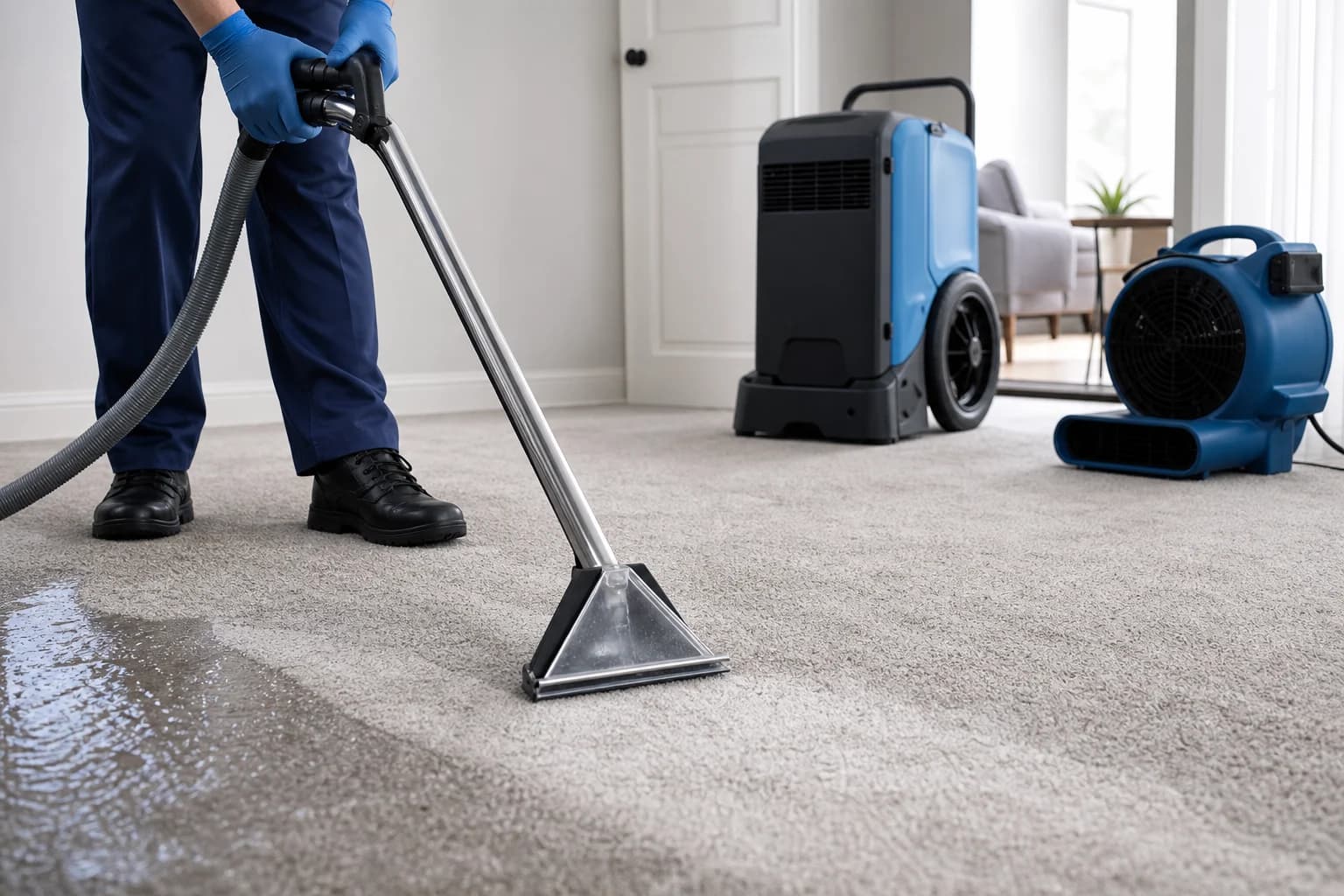
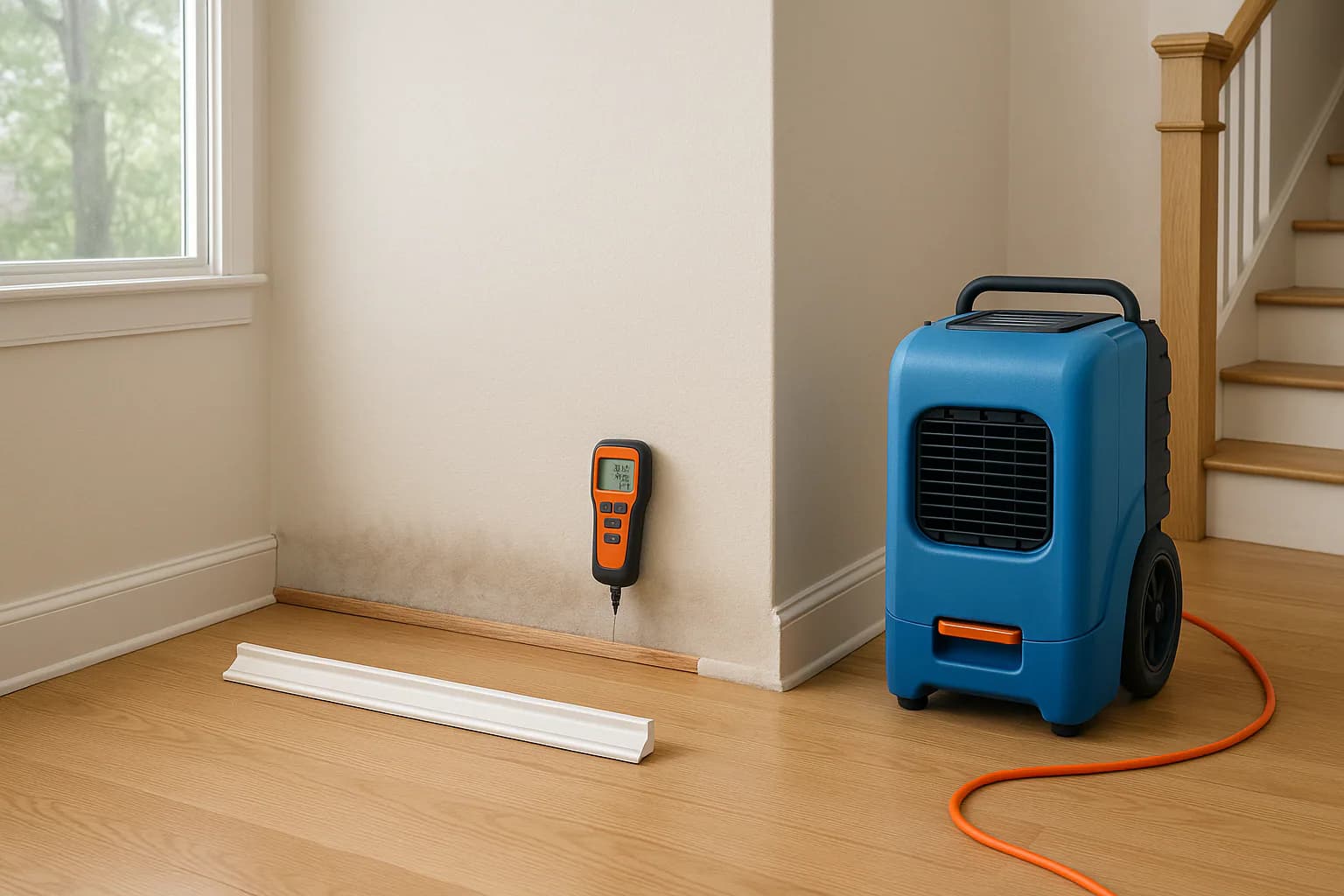
If standing water is present, it should be removed as soon as possible using pumps or wet vacuums. After water extraction, dehumidifiers and air movers help remove moisture from the air and surfaces. This process is essential to supports documented drying and to prevent conditions favorable to mold growth. The sooner the drying process begins, the better the outcome.
When to Call in the Professionals
While some water damage situations can be handled by homeowners, others require the expertise of professionals. For instance, Category 3 water, known as black water, contains harmful contaminants and requires specialized handling. In such cases, professional intervention is necessary to ensure safe and effective cleanup. Pros have the equipment and knowledge to manage these high-risk situations safely.
If the affected area is large or if mold is suspected, calling a professional is advisable. Moldy areas larger than about 10 square feet generally call for professional handling due to potential health risks and the complexity of removal. Professionals use advanced techniques and equipment to ensure that all moisture and mold are thoroughly addressed, preventing future issues.
Moreover, reconstruction after the drying process can be complex and is often best left to professionals. Pros can assess the damage accurately and provide a more precise plan for restoring the property to its original condition.
What Not to Do During Water Damage Cleanup
Avoid common mistakes during the water damage cleanup process. Do not use household fans to dry out areas with Category 3 water, as this can spread contaminants. Instead, rely on professional-grade equipment designed to handle such situations safely. Fans can also inadvertently cause mold spores to spread if used improperly.
Do not rip up carpets or remove flooring prematurely. Without proper assessment, this can lead to unnecessary damage and costs. Professionals can determine what materials can be salvaged and what needs replacement. Premature removal can also expose hidden moisture, leading to mold growth.
Finally, do not ignore potential structural damage. Water can weaken structural components like beams and walls. If you suspect structural integrity has been compromised, consult with professionals who can assess and repair the damage safely.
Get Connected With the Right Help
Need help right now?
Water Restoration Pros can connect you with water damage professionals that service your area. Call now to get connected with help fast and start the recovery process.
Call (833) 968-0848Frequently asked questions
What is the very first thing I should do after finding water damage?
Should I try to clean up the water myself?
How soon should I call for help after water damage?
Sources reviewed (3)
- U.S. EPA - Mold Course Chapter 2: EPA guidance to dry wet building materials within about 24 to 48 hours when possible.
- Insurance Information Institute — Facts + Statistics: Homeowners and renters insurance: Industry statistics for water-damage and freezing claim frequency and homeowners loss categories.
- U.S. EPA - A Brief Guide to Mold, Moisture and Your Home: EPA guidance on moisture control, prompt drying, indoor humidity, and mold cleanup decisions.