How condo water damage claims are usually sorted
Water damage in a condo can involve more than one policy, especially when the source starts in a unit and spreads to shared areas or another home. Coverage depends on the cause of the damage, the policy language, exclusions, deductibles, endorsements, limits, and the claim facts. Condo owners should review their own policy and the association documents, then contact the insurer and association as soon as the damage is discovered.
Coverage is policy-specific
An HO-6 policy, the association master policy, and any neighbor policy can have different responsibilities. The cause, condo documents, deductibles, exclusions, limits, endorsements, and claim facts determine how an insurer evaluates the loss.
The cause of the water matters most
Insurance reviewers usually start with what caused the loss. Sudden and accidental water damage is often treated differently from damage that develops over time, such as a slow leak that went unrepaired. A clear description of the source can help the claim move forward, but it does not decide coverage on its own.
Flooding from outside the building is handled differently from a plumbing leak inside a unit. Standard condo policies may not address outside floodwater, so owners should review their policy and ask the insurer how that type of loss is handled. If water is potentially contaminated, avoid exposure and follow public-health guidance while waiting for a local pro to assess the area.
HO-6 coverage and the association master policy
A condo owner’s HO-6 policy commonly addresses personal property and may also apply to certain unit improvements or interior finishes, depending on the policy. The association’s master policy often covers common elements and shared building systems. Which policy responds first depends on the loss and the governing documents for the condominium.
Because condo responsibilities can overlap, the same water event may involve both the unit owner’s policy and the association’s policy. Bylaws, declarations, and related documents help show who is responsible for specific parts of the building. Reviewing those documents early can reduce confusion during the claim process.
When a neighbor or common element is involved
Water damage may begin in one unit and affect another, or it may come from a roof, shared pipe, hallway, or other common element. In those cases, more than one party may need to be notified. The association, the affected unit owner, and any neighboring owner involved in the source of the loss may all need to share information with their insurers.
Responsibility can be divided, and claim handling may take time while the source is investigated. A local pro can document the affected areas, note the likely path of the water, and help support the restoration plan. Careful coordination matters in multi-unit buildings because repairs in one unit can affect adjacent spaces.
What to document before filing a claim
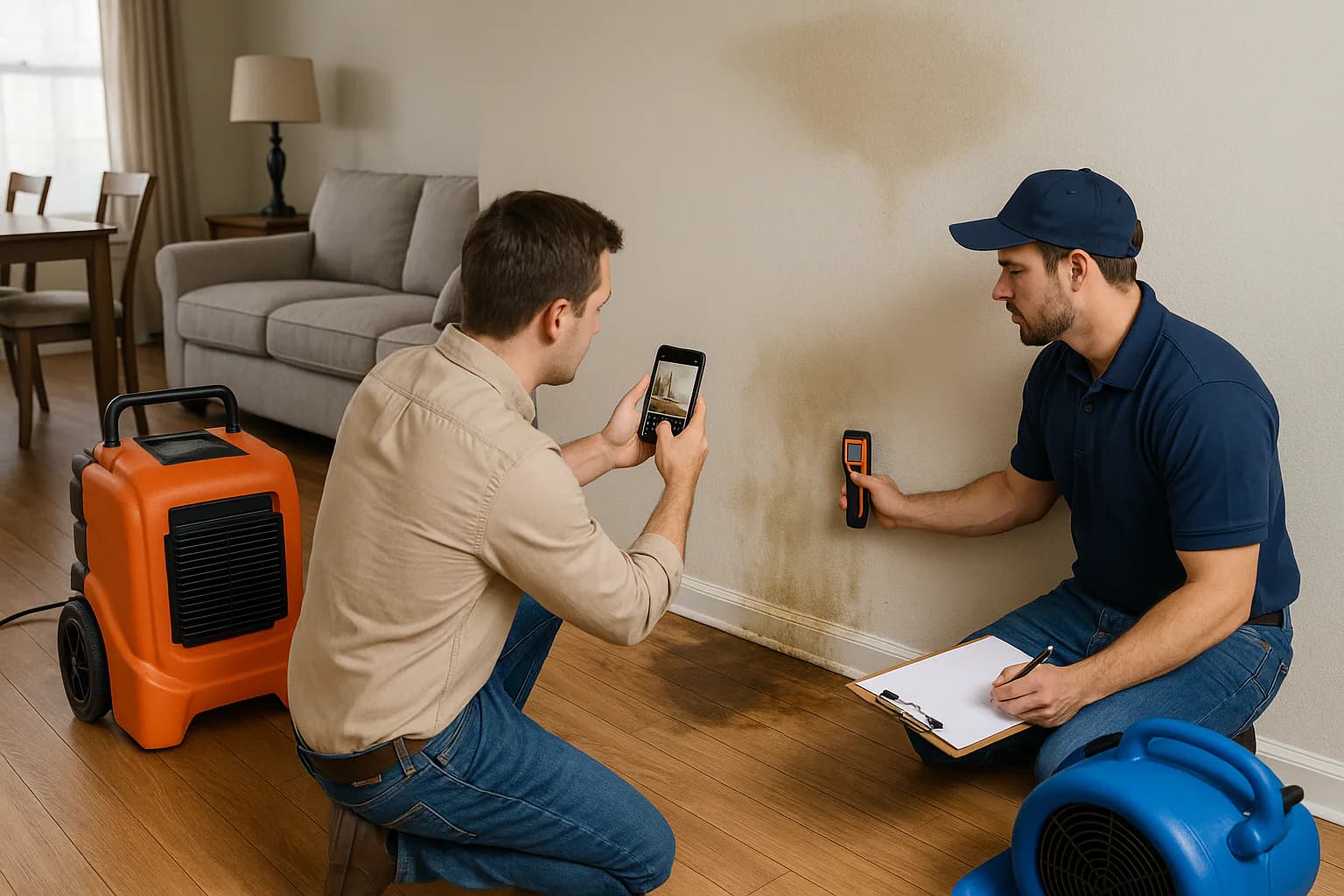
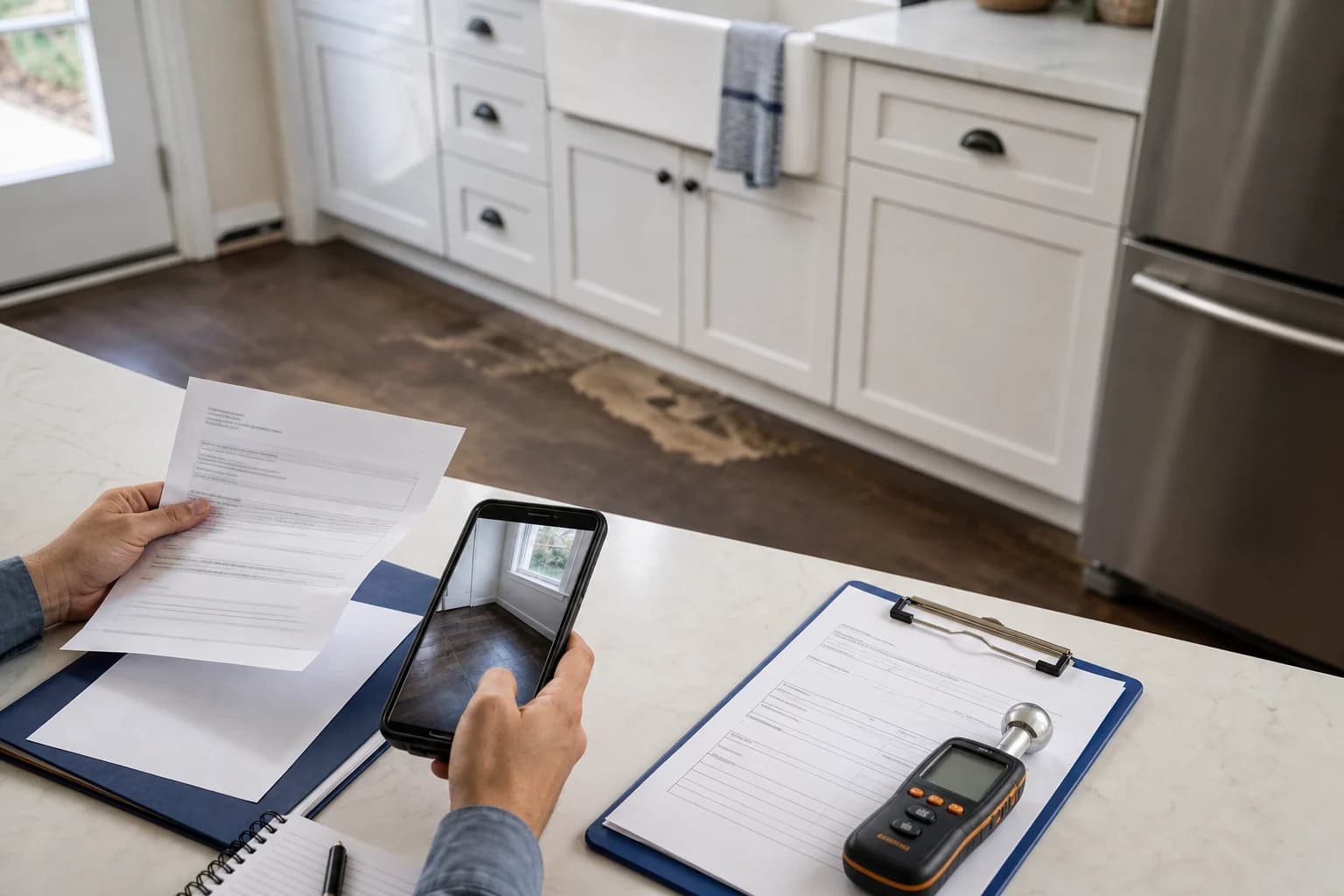
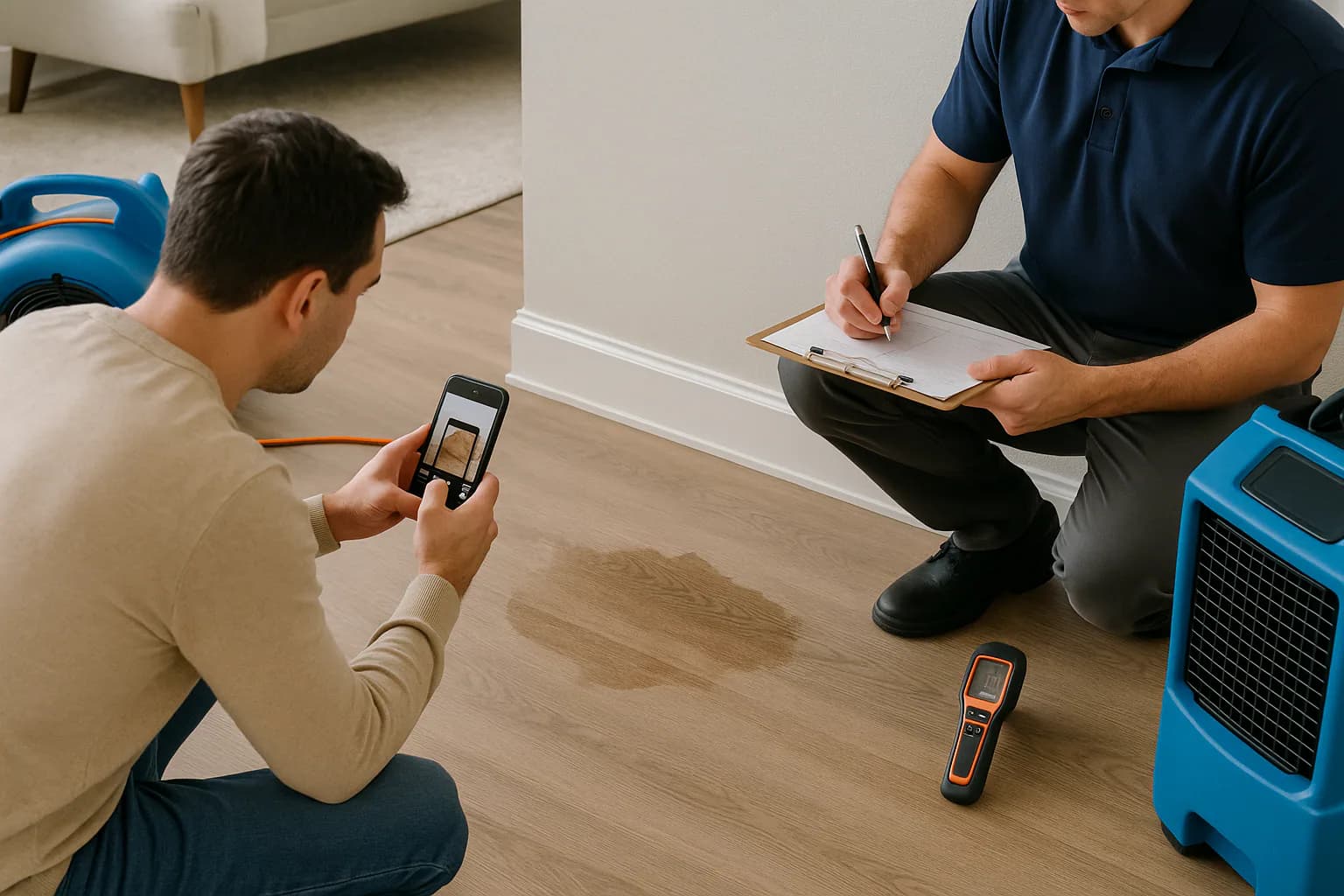
The NAIC recommends prompt notification and detailed records when filing a homeowners claim. Condo owners should keep a clear record of what happened, when it was discovered, and who was notified. Photos, videos, and written notes can help show the condition of the unit before cleanup begins.
- Photograph and video the affected areas and damaged belongings.
- Make an inventory of damaged items and unit improvements, if applicable.
- Keep receipts for emergency mitigation, temporary repairs, and related purchases.
- Save copies of emails, texts, and letters sent to the insurer, association, and property manager.
- Do not discard damaged items before the adjuster has a chance to review them unless they create an immediate safety concern.
A timeline can also help, especially if several people are involved. Note when the leak was found, when the association and insurer were contacted, and when mitigation began. Good records do not support a claim outcome, but they help the insurer evaluate the loss.
Why prompt drying matters
The EPA advises drying wet building materials as soon as possible, ideally within about 24 to 48 hours when conditions allow. Prompt drying helps reduce the conditions that allow mold to grow. It also limits how far water can travel into flooring, drywall, insulation, and other materials.
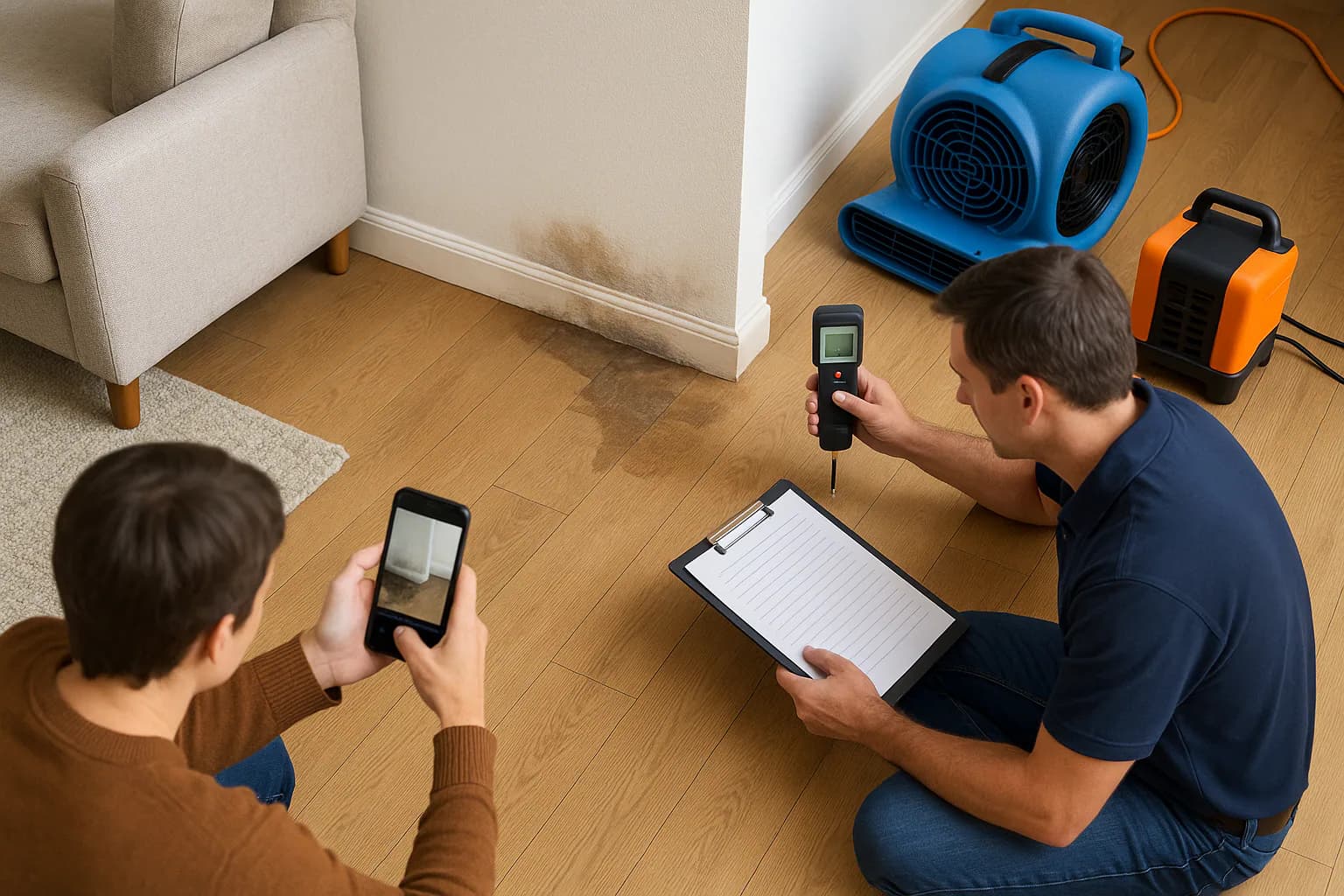
Restoration professionals may use extraction, air movement, dehumidification, and monitoring to help dry the affected space. Thermal imaging can help screen for temperature patterns, but it does not prove moisture or mold without direct measurement or inspection. The right drying plan depends on the source of the water and the materials affected.
How contaminated water is handled
Water from sewage or from some outside sources can be contaminated and requires careful handling. Local pros use sanitation steps and safe work practices based on the type of water involved. Owners should avoid contact with contaminated water and keep others out of the affected area until it is assessed.
The more contaminated the water, the more important it is to use professional cleanup methods. Cleanup decisions should be based on the source, the extent of the damage, and the condition of the building materials. A restoration plan should address both drying and sanitation where needed.
Mold concerns are tied to moisture control
Mold guidance from the EPA focuses on moisture control rather than certainty about what will or will not grow. Fast drying and prompt cleanup reduce the conditions that allow mold to grow. If materials stay wet for too long, a pro may need to decide what can be cleaned, what can be dried, and what may need to be removed based on the extent of damage.
Homeowners should not rely on appearance alone to judge whether moisture has been resolved. Persistent dampness, musty odors, and visible water staining can indicate that more drying or inspection is needed. The goal is to remove the moisture source and dry affected materials thoroughly.
Insurance review, deductibles, and claim steps
The NAIC advises policyholders to review the policy, understand the deductible, and follow the insurer’s claim instructions. Coverage and claim outcomes depend on the cause of the loss and the policy terms. If an adjuster meeting is scheduled, keep the documentation organized and be prepared to explain the sequence of events clearly.
If the association is involved, ask how its master policy and any deductible may affect the claim. Some condo owners also carry loss assessment coverage, which may apply in certain situations when the association assesses unit owners for covered losses. The policy language controls, so owners should review the actual documents and ask the insurer questions directly.
When to call a local restoration pro
A local pro can help assess the source of the water, document the damage, and begin mitigation steps such as extraction, drying, and sanitation when needed. This is especially useful in condos, where shared walls, common systems, and neighboring units can complicate the work. The pros in your area can also coordinate with property management and help keep the affected areas organized for the claim review.
Explore Related Services
Connect with Local Water Damage Restoration Professionals
Water Restoration Pros connects property owners with independent restoration professionals for water mitigation and repairs. Prompt action helps safeguard your home and supports the insurance process.
Call (833) 968-0848Frequently asked questions
Does condo insurance cover water damage from a leaking appliance?
Who pays when water damage starts in a neighbor’s unit?
What should a condo owner document after water damage?
Sources reviewed (5)
- Insurance Information Institute — Facts + Statistics: Homeowners and renters insurance: Industry statistics for water-damage and freezing claim frequency and homeowners loss categories.
- NAIC - What You Need to Know When Filing a Homeowners Claim: NAIC guidance on reporting a claim, documenting damage, deductibles, contractors, and adjuster meetings.
- NAIC - Consumer Homeowners Insurance: NAIC consumer information on homeowners coverage, exclusions, inventories, and policy review.
- U.S. EPA - A Brief Guide to Mold, Moisture and Your Home: EPA guidance on moisture control, prompt drying, indoor humidity, and mold cleanup decisions.
- U.S. EPA - Mold Course Chapter 2: EPA guidance to dry wet building materials within about 24 to 48 hours when possible.