Skip to content
Water Restoration Pros

Water Damage Service

Water Extraction

Extraction is the equipment-driven work of pulling water out of the materials it has soaked into. Pumps and powerful extractors remove the bulk water from carpet, padding, and flooring so drying can take over. Water Restoration Pros helps property owners connect with water extraction help.

Service overview

Water extraction help that uses pumps and truck-mounted or portable extractors to pull bulk water from soaked materials before drying.

Recognize the problem

Does this situation call for water extraction?

Start with what you can safely observe. The source, the type of water, and the materials affected determine the response after an on-site assessment.

What you may notice

Carpet, padding, or flooring is saturated and squishy

Standing water needs to be pumped out before drying can start

Floodwater soaked materials and the bulk water has to come out

Water tracked across a floor and is sitting in the materials

You need extraction equipment, not just mopping and shop vacuums

How it commonly starts

Burst pipes and supply line failures that soak floors

Appliance overflows and fixture leaks

Storm flooding and rising water that reaches interior materials

Sewer or drain backups that leave contaminated water behind

Below-grade seepage into basements and lower levels

Why timing changes the outcome

Pumps and extractors pull far more water than household tools.

Removing bulk water fast limits how much material is lost. Contaminated water needs careful handling, not a household vacuum.

Thorough extraction shortens and improves the drying that follows.

In-depth guidance

What to know about water extraction

Extraction removes bulk water; drying removes what is trapped

Water extraction is the equipment side of getting water out. Truck-mounted units and portable extractors generate the suction needed to pull water out of carpet, padding, and flooring far more effectively than mopping or a shop vacuum. When floodwater or contaminated water is involved, extraction is handled with extra care, and saturated materials are often removed rather than salvaged.

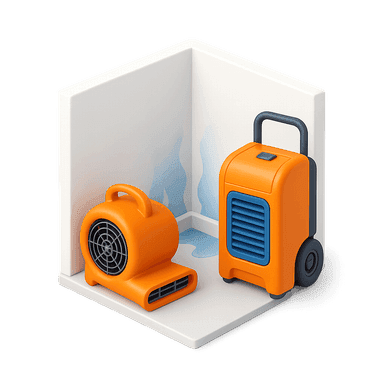
Extraction removes the bulk water you can pull out, but it does not finish the job. Moisture stays trapped inside subfloor, framing, and the deeper layers of materials. That is why drying has to follow: air movers and dehumidifiers, with moisture monitoring, bring those materials back to a dry, stable state. Skipping that step leaves hidden moisture behind that leads to odor and mold conditions.

Extraction equipment, explained

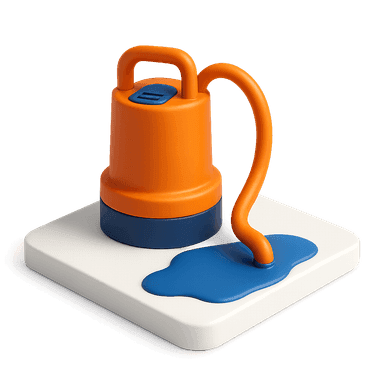
The word extraction covers a range of tools, and which one a pro reaches for depends on how much water there is and where it is sitting. Submersible and trash pumps are for high volumes of standing water, the kind that fills a basement or pools several inches deep, moving it out fast before any finer work begins. Once the bulk is gone, the job shifts to pulling water out of materials, and that is where extractors come in.

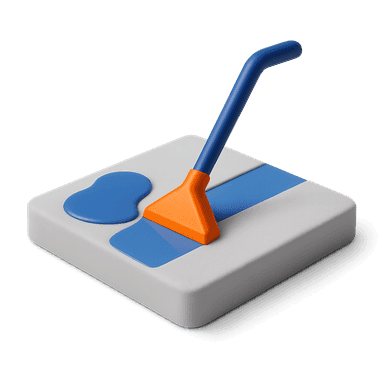
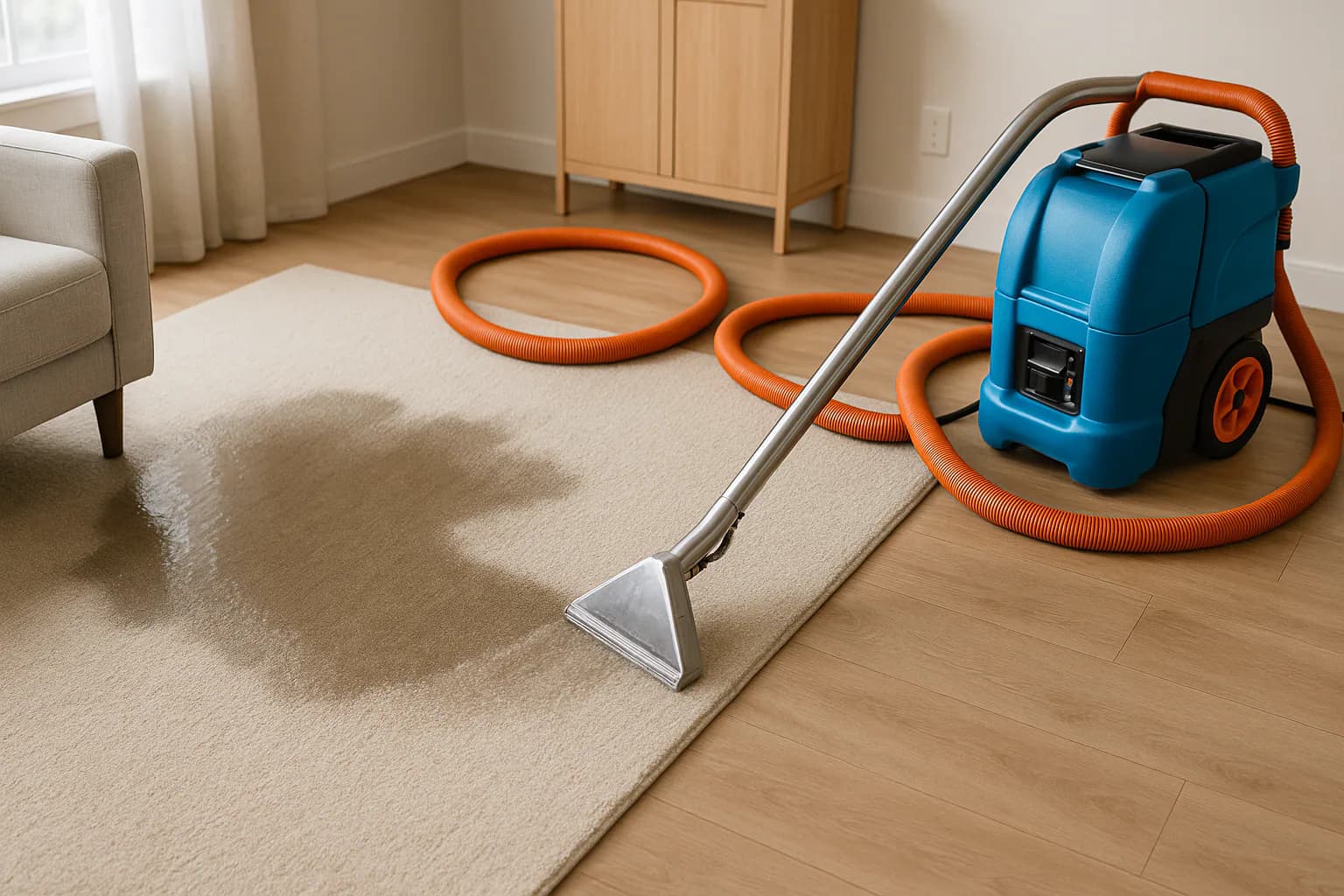
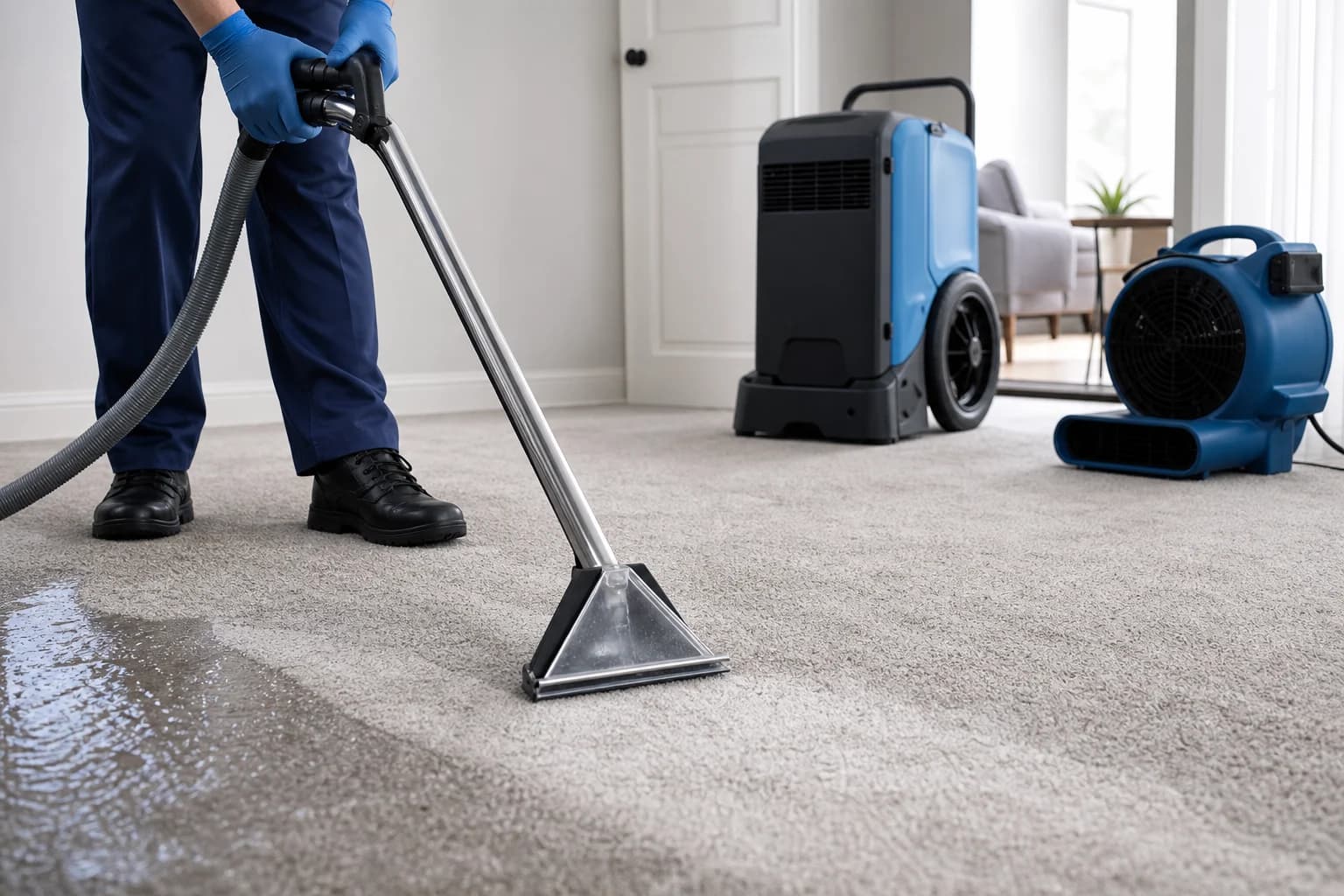
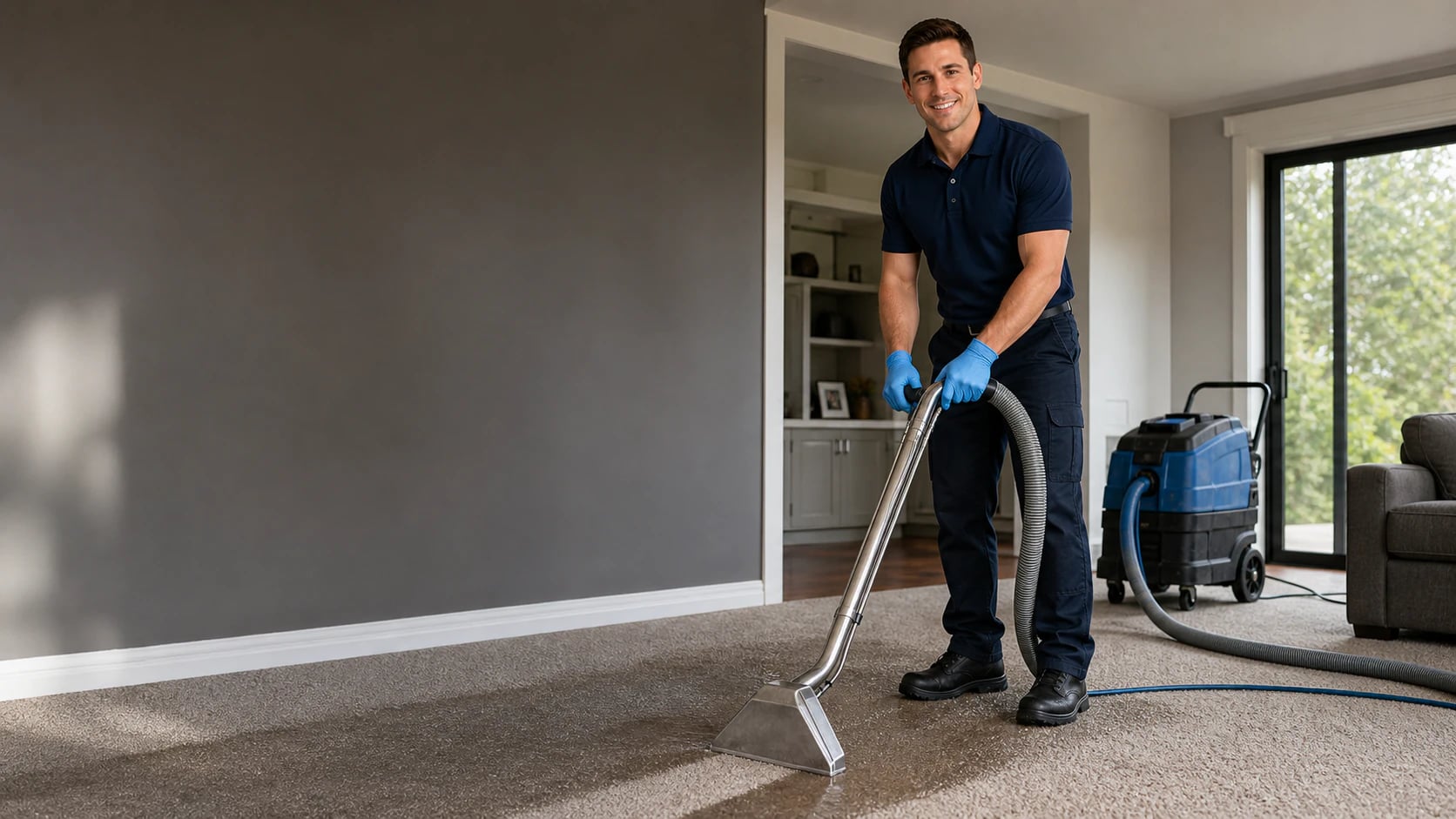
Truck-mounted extractors are powerful units that stay on the vehicle and run long hose lines into the building, delivering strong, sustained suction for large jobs. Portable extractors are smaller, self-contained machines that can be carried up stairs and into tight spaces a truck-mount cannot reach. Both pair with attachments: a wand glides over carpet and hard floors, while weighted or stationary tools sit on the carpet and use their weight to press and draw water up from the padding below. The right combination is what makes professional extraction pull far more water than mopping or a shop vacuum ever could.

Carpet and padding extraction, and contaminated water

Carpet is two layers over a subfloor, and each holds water differently. The face of the carpet gives up water fairly readily, but the padding underneath behaves like a thick sponge pressed against the floor, so passing a wand over the surface barely touches what is held below. Pros extract padding by using weighted tools that press down and draw water up through the carpet, or by detaching and lifting the carpet to extract and remove the padding directly when it is too saturated to recover. The subfloor beneath then has to be dried in its own right, because that is where moisture lingers after the carpet feels dry.

When the water is contaminated, the calculation changes. Gray and black water carry contaminants that soak into porous padding and carpet backing where they cannot be reliably cleaned, so extracting that water is often paired with removing and discarding the padding, and frequently the carpet, rather than trying to salvage it. Hard, non-porous surfaces underneath can usually be cleaned and sanitized, but the porous layers that drank up contaminated water are generally not worth saving.
Cost and scope

What affects water extraction cost

Water extraction cost is driven by the volume of water, how accessible it is, whether it is contaminated, and what surfaces it soaked. Understand the factors, then connect with a pro for an accurate assessment.

A written estimate should connect each charge to the source, affected materials, access, contamination conditions, drying work, and repairs found during the assessment.

National planning range

Standard residential planning range

$700-$1,400 per project

Resolved from the approved Water Restoration Pros pricing methodology and standardized scope.

Cost ranges are estimates developed from standardized project scopes and reviewed pricing inputs. Government labor and regional cost data are used where applicable. See our Pricing Methodology for the exact sources, calculations, and review date. Actual prices vary by property, scope, materials or equipment, location, and provider.

Volume of water

Removing a small amount of standing water is far simpler than extracting a flooded area. More water means more equipment, more passes, and more time.

Accessibility

Water in an open, easy-to-reach room is quicker to extract than water in a basement, crawl space, or under built-in features that are hard to access.

Contamination

Clean water is straightforward to extract. Contaminated water calls for careful handling and protective measures that add to the job.

Carpet and padding versus hard surfaces

Water sitting on a sealed hard surface extracts quickly. Water absorbed into carpet, padding, and subfloor takes more equipment and effort to pull out.

Read the full water extraction cost guide

Professional response

How the work moves from damage to a dry property

The exact scope changes with the water source and affected materials, but a measured restoration response generally moves through three phases.

Assess and stabilize

Assess the water and materials

Determine the category of water and which soaked materials need extraction versus removal.

Pump out standing water

Use pumps to clear pooled and standing water before the extractors go to work.

Remove and dry

Extract from materials

Use truck-mounted or portable extraction units to pull water out of carpet, padding, and flooring.

Work the trapped water

Pull water from padding and seams where it hides and continues to wick into materials.

Verify and recover

Hand off to drying

With bulk water removed, set air movers and dehumidifiers so trapped moisture can be dried out.

What to expect from the first visit

Assess the water and materials

Determine the category of water and which soaked materials need extraction versus removal.

Pump out standing water

Use pumps to clear pooled and standing water before the extractors go to work.

Extract from materials

Use truck-mounted or portable extraction units to pull water out of carpet, padding, and flooring.

Work the trapped water

Pull water from padding and seams where it hides and continues to wick into materials.

Questions to ask before approving the scope

How will the assessment document standing versus absorbed water?

The answer should be specific to the property and reflected in the written scope.

Which conditions determine whether water extraction is the right service path?

The answer should be specific to the property and reflected in the written scope.

What work, specialist responsibilities, measurements, and completion records will be included in writing?

The answer should be specific to the property and reflected in the written scope.

Before help arrives

What you can do now

Only take steps you can complete safely. Leave the area and wait for qualified help if there is an electrical, structural, or contamination risk.

Stop the water source if you can reach it safely.

Turn off power to the area if water is near outlets or electrical.

Do not use a household vacuum to remove the water.

Note whether the water was clean or contaminated.

Call to connect with water extraction help.

These are general precautions for water extraction; conditions at the property determine what is safe and appropriate.

Frequently asked questions

What is water extraction?
Water extraction is the equipment-driven removal of water from soaked materials. Pumps and truck-mounted or portable extractors pull water out of carpet, padding, and flooring so the bulk water is gone before drying begins.
Why does drying have to follow extraction?
Extraction removes the bulk water you can pull out, but moisture stays trapped inside subfloor, framing, and deeper materials. Drying with air movers, dehumidifiers, and monitoring removes that trapped moisture, which extraction alone cannot reach.
Can I just use a shop vacuum to extract water?
A shop vacuum pulls a fraction of what professional extractors remove, and it is not safe for contaminated water. Truck-mounted and portable extraction units pull far more water and are built to handle the volume left by a real water event.
Is extraction safe when the water is contaminated?
Contaminated water needs careful handling and the right equipment, not a household vacuum. Saturated materials are often removed rather than salvaged, and the work is done to keep people and pets away from the contaminated water.
What is the difference between a truck-mounted and a portable extractor?
A truck-mounted extractor stays on the vehicle and runs hose lines into the building, giving strong, sustained suction that suits large jobs. A portable extractor is a smaller, self-contained unit that can be carried upstairs and into tight spaces a truck-mount cannot reach. Many jobs use both, depending on the volume of water and the layout of the property.
Why is wet padding sometimes removed instead of just extracted?
Padding holds water like a sponge against the subfloor and dries very slowly, so heavily saturated padding is often lifted and removed rather than dried in place. When the water is contaminated, padding and frequently the carpet are usually discarded, because the contaminants soak into those porous layers in a way that cannot be reliably cleaned.
Technical and safety sources (4)

These sources support restoration, safety, moisture, cleanup, and scope guidance. They do not serve as numeric pricing provenance.

Need help with water extraction?

Call Water Restoration Pros to connect with water extraction help in your area.

Call (833) 968-0848 · No-obligation · Availability varies by area

(833) 968-0848Check