When water is actively spreading through your home, it's easy to feel overwhelmed and unsure where to start. Having a clear order of operations helps you act quickly without missing the steps that matter most. This checklist walks through what to do first, in the order that generally makes the most sense, so you can protect people, limit the damage, and get the right help on the way.
Safety Comes Before Everything Else
Water and electricity are a dangerous combination. Do not enter a flooded room if water has reached outlets, appliances, or the electrical panel, and never touch electrical components while standing in water. If you cannot act safely, wait for professionals.
The Emergency Checklist, Step by Step
- 1
Make sure everyone is safe
Get family members and pets out of the affected area. Watch for slip hazards, sagging ceilings, and any sign of electrical risk before you go in. Safety should always be the top priority. Move to higher ground if necessary and avoid rooms that are at risk of ceiling collapse due to saturation.
- 2
Cut the power if it's safe to do so
If water is near outlets or wiring and you can reach the breaker panel without standing in water, shut off power to the affected area. If there is any doubt, leave it alone and call an electrician or the utility. Electricity and water can be a deadly mix, and it's crucial to avoid any risk of electric shock.
- 3
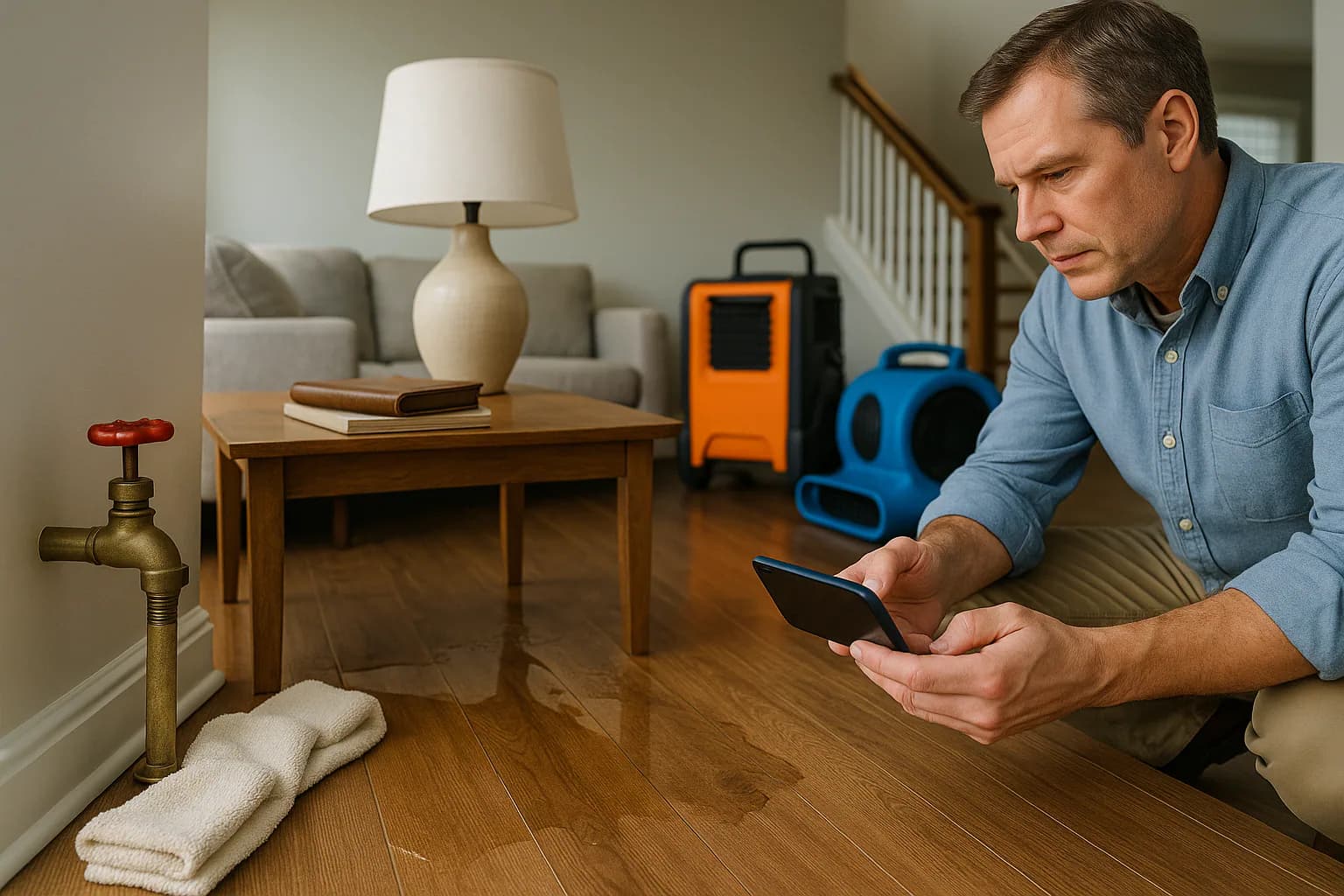
Stop the source of the water
Shut off the supply at the fixture if you can, or close the home's main water shutoff valve. Knowing where that valve is ahead of time saves precious minutes. Quick action can prevent further damage and help mitigate the overall impact of the incident.
- 4
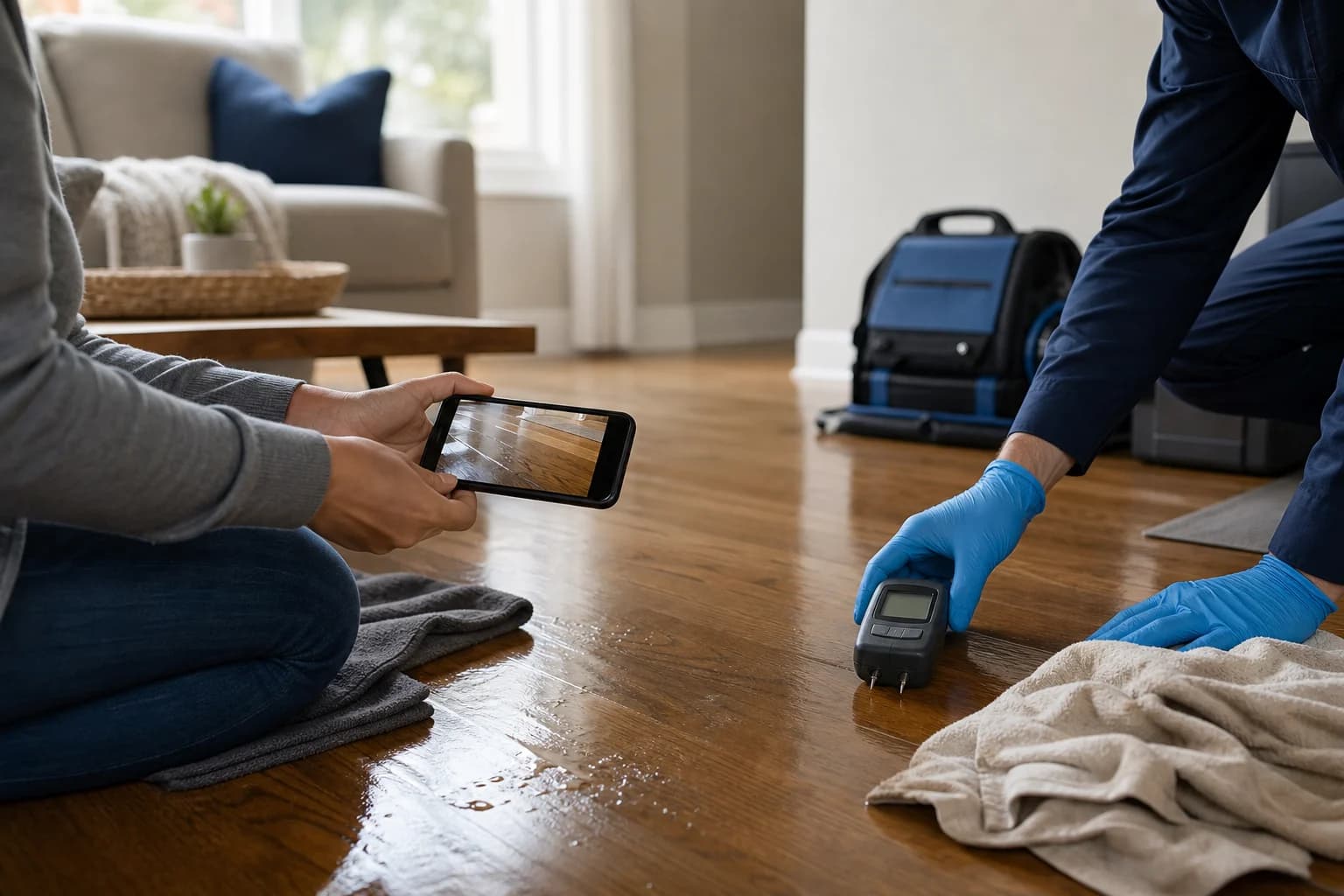
Document the damage
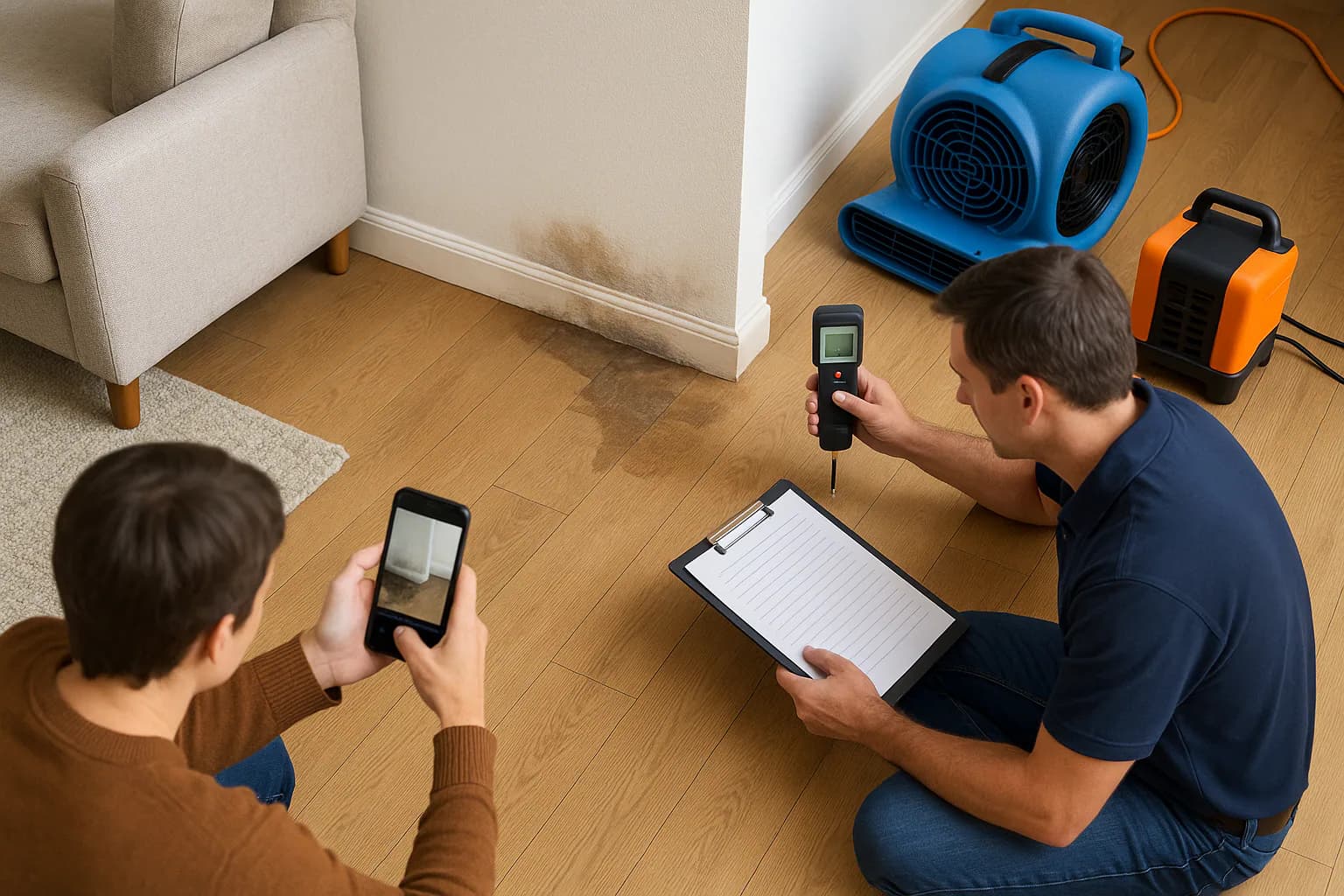
Photograph and video the affected areas and belongings before you move anything. Capture wide shots and close-ups, and note the date, time, and likely cause. This documentation is critical for insurance claims and helps restoration professionals assess the extent of the damage.
- 5
Begin basic mitigation
If the water is clean and it's safe, move valuables and furniture to a dry area, blot or mop standing water, and improve airflow. Avoid contact with any water that may be contaminated. Quick drying reduces the conditions that allow mold to grow, which can start developing within 24–48 hours.
- 6
Call to get connected with help
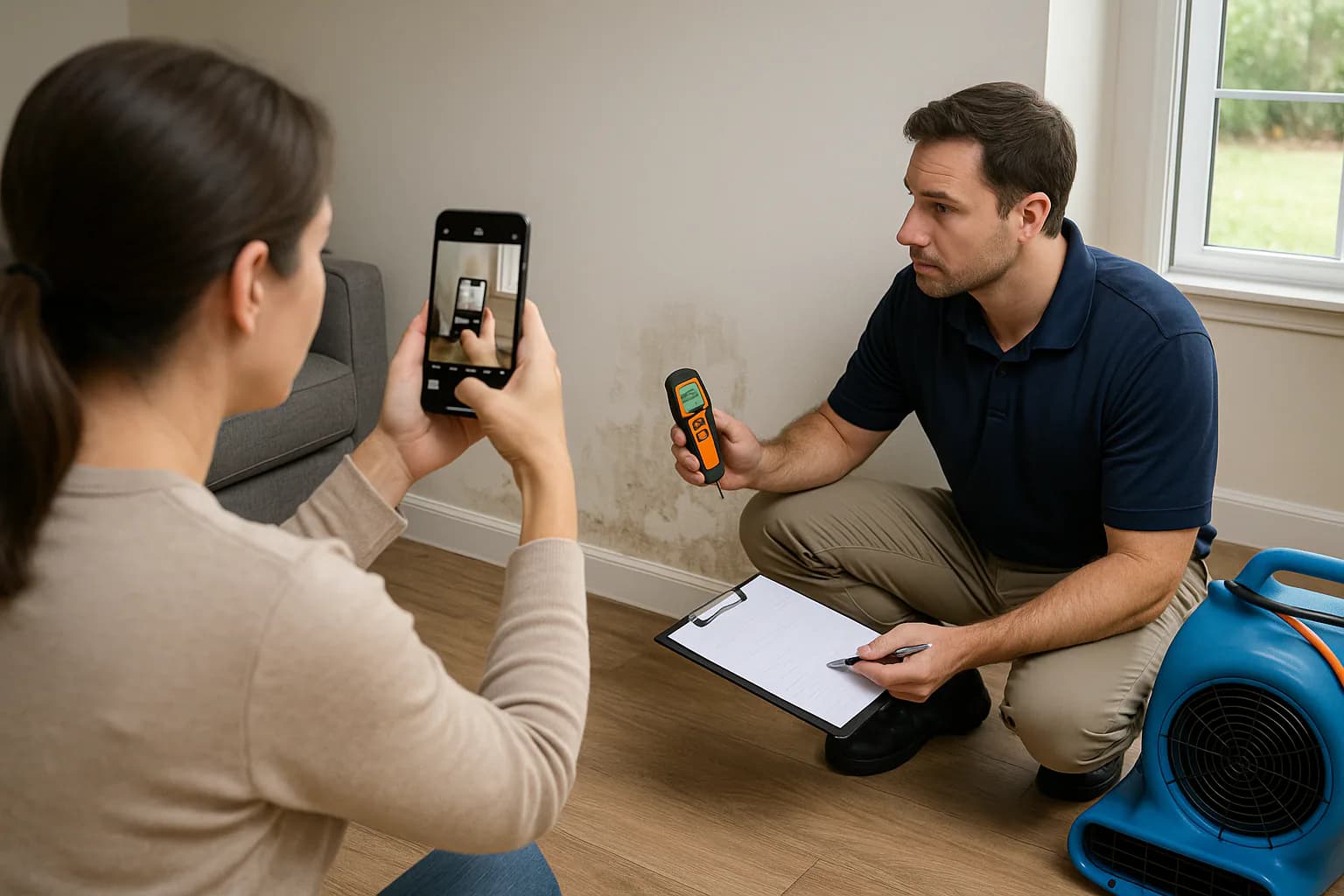
Reach out to get connected with restoration professionals that service your area. The sooner extraction and drying begin, the less secondary damage tends to follow. Professionals can assess the situation, use specialized equipment, and help ensure that the property is thoroughly dried.
Find and Use Your Main Water Shutoff
Stopping the water at its source is one of the most effective things you can do in the first few minutes. For a single fixture, look for the shutoff valve underneath or behind it. For a larger or unclear leak, the home's main shutoff is the surest way to stop the flow. It is often near where the water line enters the house, by the water meter, or in a basement or utility area. Knowing its location before an emergency means you won't be searching while water spreads.
Document Before You Clean Up
Insurers generally want to see the damage in its original state. Take photos and video before moving belongings or starting cleanup, and hold on to records of any emergency work. Coverage always depends on your specific policy, so confirm details with your insurer.
What to Avoid
- Don't enter standing water that may be in contact with electricity
- Don't handle sewage, floodwater, or any water you can't confirm is clean without proper protection
- Don't use a household vacuum to remove water
- Don't wait to start drying once the area is safe, since moisture spreads quickly into walls and floors
Water damage tends to worsen the longer it sits, moving from surfaces into drywall, subfloors, and insulation. Once people are safe and the source is stopped, the priority shifts to drying the space out and assessing what was affected. Restoration professionals can extract standing water, set up drying equipment, and document the damage so the recovery starts on solid footing.
Documentation Mini-Checklist
Thorough documentation is crucial for insurance claims and recovery. Start by taking clear photos and videos of all affected areas and items, capturing both wide angles and detailed close-ups. Make notes of the date, time, and apparent cause of the water intrusion. Keep a written inventory of damaged belongings, including descriptions and approximate values. This information helps restoration professionals understand the scope and insurers determine coverage.
What to Have Ready Before Emergencies
Preparation can make a significant difference when an emergency occurs. Familiarize yourself with the location of your home's main water shutoff valve and ensure it's easily accessible. Keep a list of emergency contacts, including utility companies and restoration services, in a known location. Store copies of insurance policy numbers and contact information in a secure, easily accessible place. Taking photos of each room and major belongings can also help in documenting pre-damage conditions.
Insurance-Call Script
Contacting your insurance company promptly is essential after water damage. When you call, be prepared to provide your policy number and details about the incident, such as the cause, when it occurred, and what areas are affected. Ask about coverage specifics, including whether the damage is covered and the next steps for claims processing. Inquire if they need specific documentation and what the timeline might be for an adjuster to visit. Clear communication helps streamline the claims process.
Apartment and Condo Variations
Water damage in apartments or condos often involves additional challenges due to shared infrastructure and neighboring units. Start by notifying building management immediately, as they may need to access shared systems or contact other residents. Determine if the building has specific protocols for water emergencies and follow them closely. Document your own unit's damage thoroughly but be aware that shared walls and floors may require cooperation with neighbors and management for full remediation.
Related Services
Water Spreading Right Now?
Once everyone is safe and the source is stopped, fast drying limits the damage. Call Water Restoration Pros to get connected with restoration professionals that service your area and can begin extraction and document what happened.
Call (833) 968-0848Frequently asked questions
What is the very first thing to do in a water emergency?
Should I shut off the power during a water leak?
How quickly do I need to act after water damage?
Can I clean up the water myself?
Sources reviewed (2)
- U.S. EPA - Mold Course Chapter 2: EPA guidance to dry wet building materials within about 24 to 48 hours when possible.
- U.S. EPA - A Brief Guide to Mold, Moisture and Your Home: EPA guidance on moisture control, prompt drying, indoor humidity, and mold cleanup decisions.