A clear service answer
Is water damage restoration the right service for this loss?
Full-scope water damage restoration help covering water removal, drying, cleanup, and the path back to a restored property.
The central service decision
Stabilize, restore, or coordinate repairs
Does the loss require a coordinated plan for removal, drying, cleaning, and repair rather than one isolated task?
- Review
- source and water movement
- Review
- affected assemblies and contamination
- Review
- drying, cleaning, and repair boundaries
When it may fit
You have standing water or active water spreading through the property. Walls, floors, ceilings, or carpet are wet after a leak or flood. You can smell musty moisture or notice damp building materials. Water has soaked into drywall, insulation, subfloor, or framing.
How the problem may start
Burst or leaking pipes and failed plumbing connections. Appliance failures such as water heaters, washing machines, and dishwashers. Roof leaks, storm intrusion, and wind-driven rain. Sewage or drain backups.
Service context in Louisiana
Regional conditions that can affect the plan
Local planning context
What can shape the assessment in Louisiana
Louisiana's low elevation, high water table, and Gulf exposure make it one of the most flood-prone states, with much of New Orleans sitting below sea level. Water Restoration Pros helps Louisiana property owners connect with water damage restoration help across the state.
Inland flooding context
FEMA's county-level National Risk Index records inland flooding as relatively low for Louisiana counties. This is regional context, not a finding about a specific address.
Climate and drying context in Louisiana
Louisiana is hot, humid, and low-lying, with a Gulf coastline exposed to hurricanes and storm surge and a high water table throughout much of the state. Heavy rain and tropical systems frequently cause flooding, and constant humidity makes fast drying and moisture control essential.
Hurricanes context
FEMA's county-level National Risk Index records hurricanes as relatively low for Louisiana counties. This is regional context, not a finding about a specific address.
Winter weather context
FEMA's county-level National Risk Index records winter weather as relatively low for Louisiana counties. This is regional context, not a finding about a specific address.
Planning and access consideration
Storm surge and flood water may be contaminated and handled with caution
Planning and access consideration
Areas below sea level can hold water and need careful moisture control
Planning and access consideration
Persistent humidity makes thorough drying and dehumidification critical
Strong wind context
FEMA's county-level National Risk Index records strong wind as relatively low for Louisiana counties. This is regional context, not a finding about a specific address.
Regional water-loss scenario
Hurricanes and storm surge along the Gulf coast
Professional service plan
How water damage restoration work moves forward
Assess and contain
Assess the situation
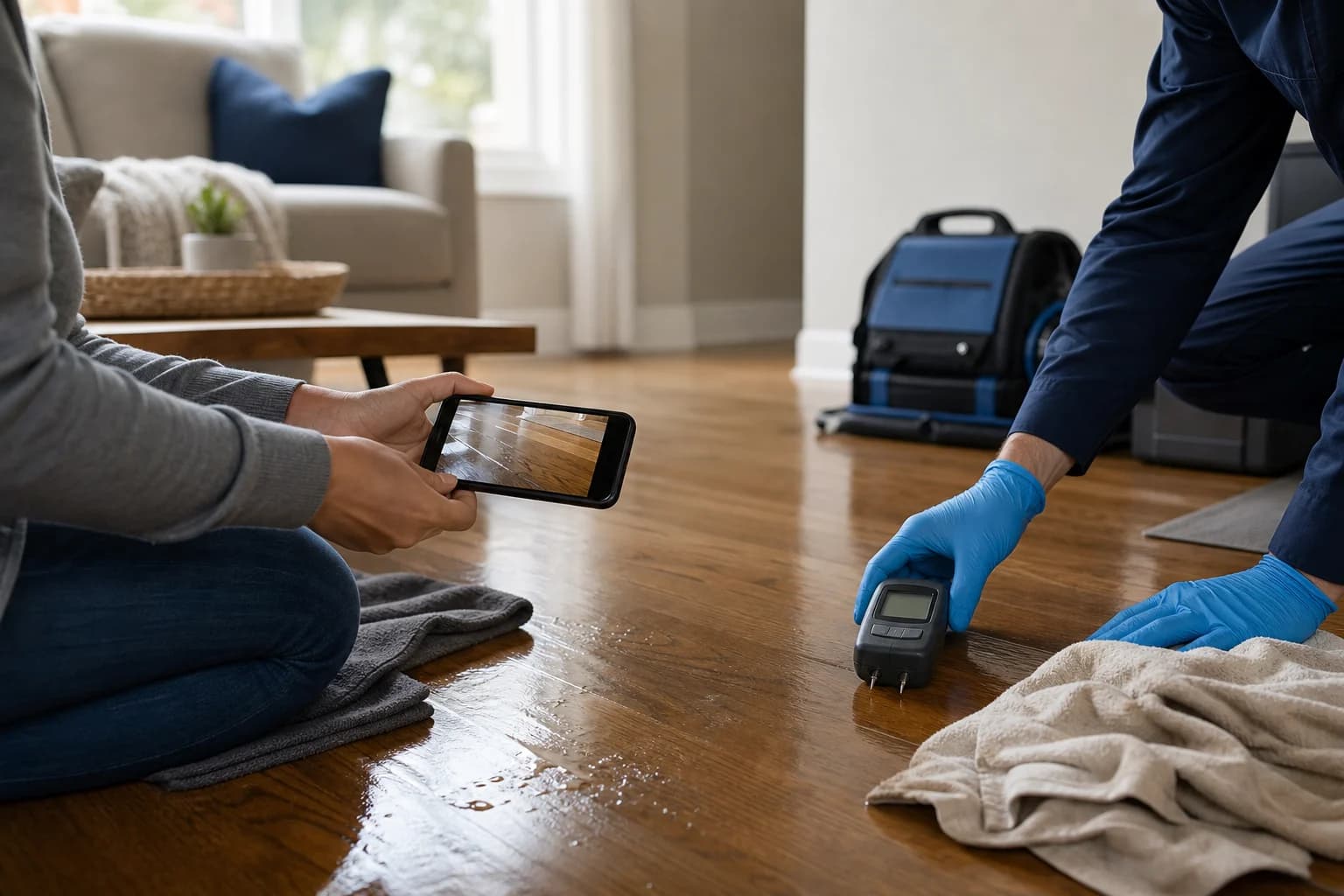
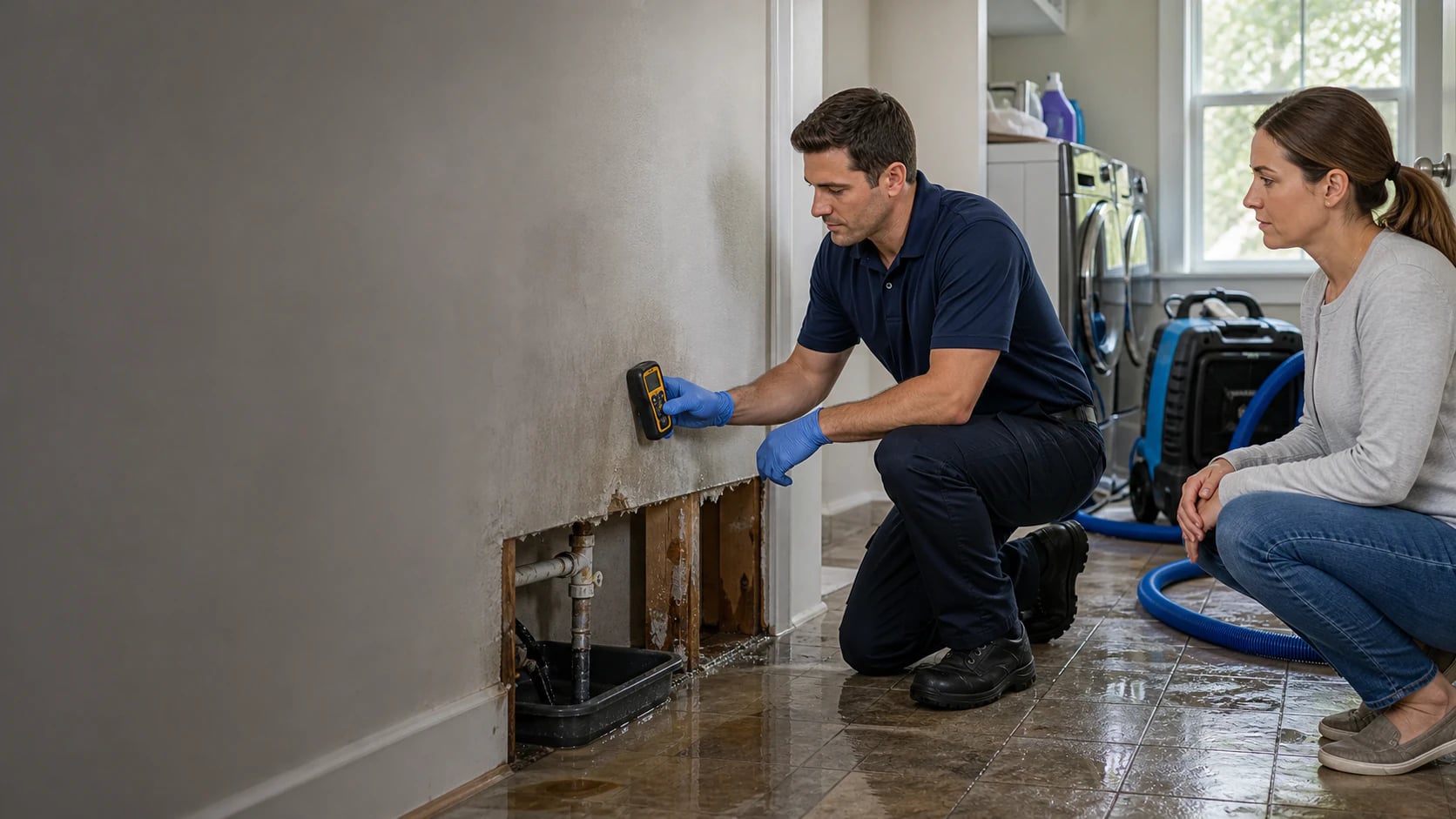
Identify the water source, the category of water, and how far moisture has traveled into rooms and materials.
Stop and contain the source
Confirm the leak or intrusion is stopped and contain the affected area so water stops spreading.
Extract standing water
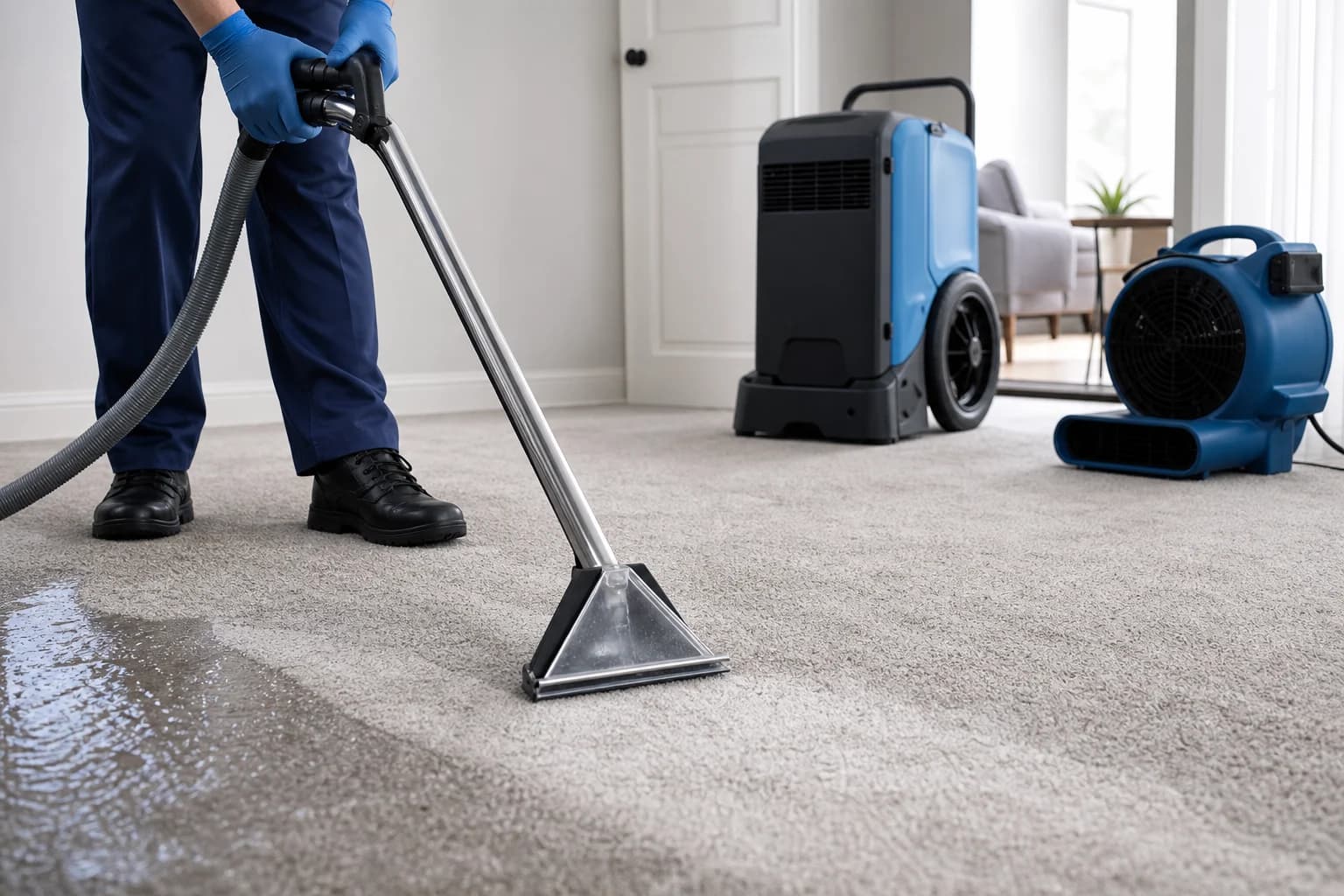
Use pumps and extraction equipment to remove standing water from floors, carpet, and low areas.
Remove and dry
Remove unsalvageable materials
Remove saturated drywall, padding, or insulation when needed so trapped moisture can escape.
Set drying equipment
Position air movers and dehumidifiers to dry framing, subfloor, and remaining building materials.
Verify and recover
Monitor moisture
Track moisture readings until materials reach a dry, stable target instead of guessing by feel.
Clean and plan repairs
Clean affected areas and plan the repair or reconstruction steps to restore the property.
Scope and outcome
What changes the amount of work
How quickly the water was extracted and drying began. Whether the water was clean, gray, or contaminated black water. How far moisture traveled into walls, subfloors, and cavities. How many materials can be dried and saved versus removed and replaced.
Local conditions like humidity that affect drying time. Clean water is the least complex to handle. Gray water and contaminated black water require more careful handling, sanitation, and material removal, which increases scope. A single wet room is very different from water that spread across multiple rooms or levels. More affected square footage means more extraction, drying equipment, and labor. Drying salvageable drywall and framing is one thing; removing and replacing saturated flooring, cabinets, or insulation is another. Dense materials also take longer to dry.
Cost and scope
What affects water damage restoration cost in Louisiana
Water damage restoration cost depends on the category of water, the size of the affected area, the materials involved, and how much drying and repair are needed. Use this guide to understand the drivers, then connect with a pro for an accurate assessment.
A written estimate should connect each charge to the source, affected materials, access, contamination conditions, drying work, and repairs found during the assessment.
National planning range for this location
Standard clean-water mitigation & drying (1–3 rooms / 100–500 sq. ft.)
$2,200-$4,400 per project
Includes extraction, limited ordinary material removal, drying equipment, routine monitoring, and cleanup. Reconstruction, source repair, contents replacement, and premium finishes are separate.
National planning range used for this location until reviewed local economic inputs are available.
Cost ranges are estimates developed from standardized project scopes and reviewed pricing inputs. Government labor and regional cost data are used where applicable. See our Pricing Methodology for the exact sources, calculations, and review date. Actual prices vary by property, scope, materials or equipment, location, and provider.
Water category
Clean water is the least complex to handle. Gray water and contaminated black water require more careful handling, sanitation, and material removal, which increases scope.
Size of the affected area
A single wet room is very different from water that spread across multiple rooms or levels. More affected square footage means more extraction, drying equipment, and labor.
Materials affected
Drying salvageable drywall and framing is one thing; removing and replacing saturated flooring, cabinets, or insulation is another. Dense materials also take longer to dry.
Drying time and equipment
The number of air movers and dehumidifiers and the number of days of monitoring all factor in. Slow-drying or below-grade spaces extend the timeline.
What happens next
What to expect from the first visit
Assess the situation
Identify the water source, the category of water, and how far moisture has traveled into rooms and materials.
Stop and contain the source
Confirm the leak or intrusion is stopped and contain the affected area so water stops spreading.
Extract standing water
Use pumps and extraction equipment to remove standing water from floors, carpet, and low areas.
Remove unsalvageable materials
Remove saturated drywall, padding, or insulation when needed so trapped moisture can escape.
Before approving the scope
Questions that make a proposal easier to compare
How will the assessment document source and water movement?
The answer should be specific to the property and reflected in the written scope.
Which conditions determine whether water damage restoration is the right service path?
The answer should be specific to the property and reflected in the written scope.
What work, specialist responsibilities, measurements, and completion records will be included in writing?
The answer should be specific to the property and reflected in the written scope.
Documentation
Keep the property record organized
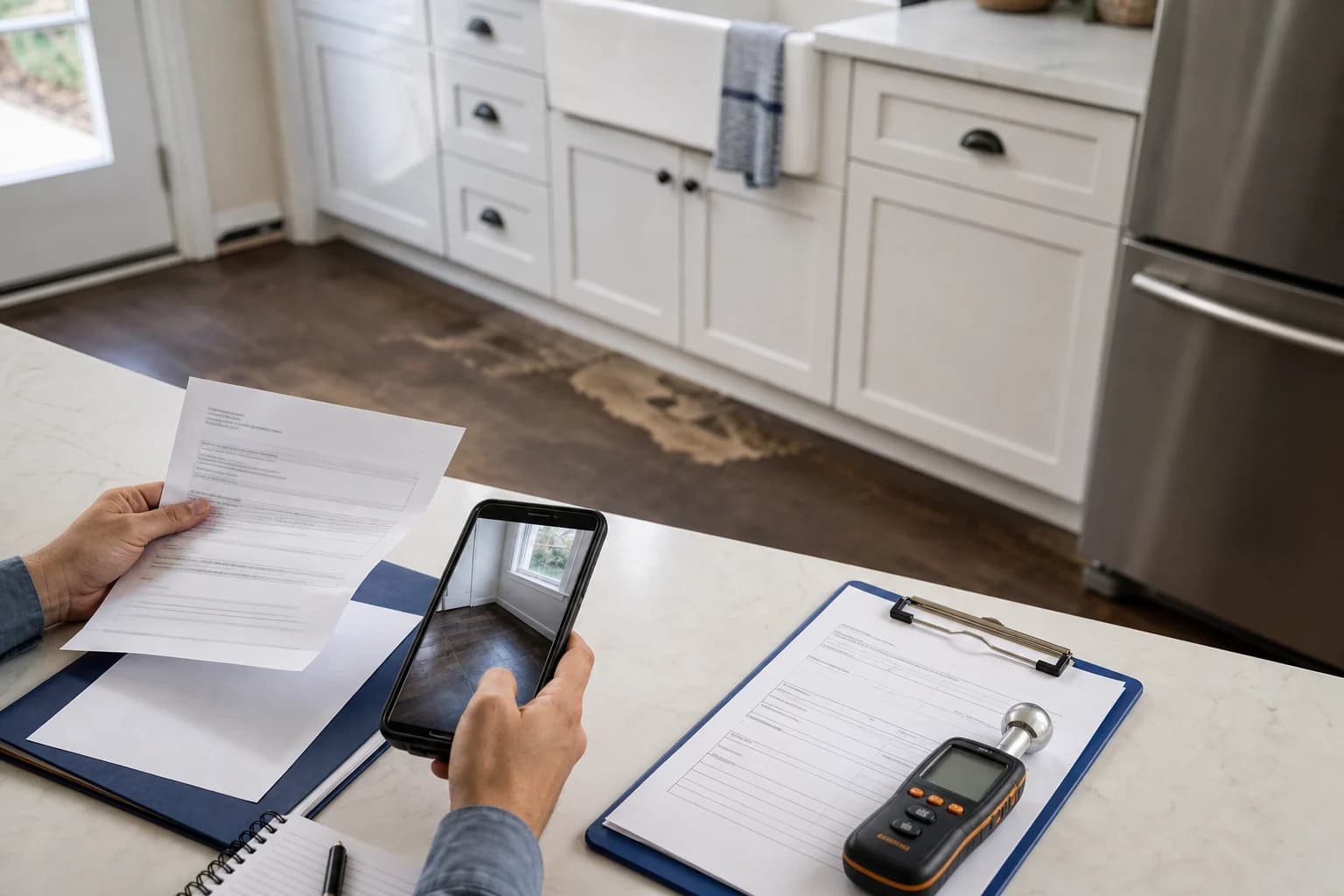
Coverage depends on the water source, policy language, exclusions, endorsements, limits, deductible, and claim facts. When conditions are safe, document the apparent source, affected rooms, visible damage, and reasonable steps taken to limit additional loss. Review the policy and follow the insurer's claim instructions.
This is general information, not insurance or legal advice.
Read the water damage insurance claim guideCity service directory
Water Damage Restoration help across Louisiana
- Water Damage Restoration in Alexandria
- Water Damage Restoration in Baton Rouge
- Water Damage Restoration in Bossier City
- Water Damage Restoration in Houma
- Water Damage Restoration in Kenner
- Water Damage Restoration in Lafayette
- Water Damage Restoration in Lake Charles
- Water Damage Restoration in Metairie
- Water Damage Restoration in Monroe
- Water Damage Restoration in New Orleans
- Water Damage Restoration in Shreveport
Questions property owners ask
Water Damage Restoration in Louisiana: FAQs
What can affect water damage restoration in Louisiana?
What should a water damage restoration assessment cover in Louisiana?
What is water damage restoration?
How fast should I act after water damage?
Does Water Restoration Pros do the restoration work directly?
Technical and safety sources (9)
These sources support restoration, safety, moisture, cleanup, local context, and scope guidance. They do not serve as numeric pricing provenance.
- U.S. EPA - Flooded Home: EPA guidance on safety, cleanup, moisture control, and drying after a home is flooded.
- U.S. EPA - A Brief Guide to Mold, Moisture and Your Home: EPA guidance on moisture control, prompt drying, indoor humidity, and mold cleanup decisions.
- NAIC - Consumer Homeowners Insurance: NAIC consumer information on homeowners coverage, exclusions, inventories, and policy review.
- NAIC - What You Need to Know When Filing a Homeowners Claim: NAIC guidance on reporting a claim, documenting damage, deductibles, contractors, and adjuster meetings.
- FEMA National Risk Index: Counties: FEMA county-level hazard ratings used for conservative regional context.
- FEMA National Risk Index Technical Documentation: FEMA documentation for National Risk Index measures, scoring, and limitations.
- CDC - Reentering Your Flooded Home Safely: CDC guidance on electrical hazards, standing water, ventilation, cleanup, and reentry after flooding.
- U.S. EPA - Mold Course Chapter 2: EPA guidance on responding promptly to wet building materials and evaluating moisture conditions.
- FloodSmart.gov - National Flood Insurance Program: Federal consumer information about flood insurance and the distinction between flood and homeowners coverage.