Skip to content
Water Restoration Pros

Water Damage Service

Water Removal

When water collects in a space, getting it out is the first move. Water removal is the broad job of clearing standing and accumulated water, from flooded rooms to basements and crawlspaces, so drying can follow. Water Restoration Pros helps property owners connect with water removal help.

Service overview

Water removal help that clears standing and accumulated water from a space, including basement and crawlspace pump-out, so drying can begin.

Recognize the problem

Does this situation call for water removal?

Start with what you can safely observe. The source, the type of water, and the materials affected determine the response after an on-site assessment.

What you may notice

Standing water has collected on floors or pooled in rooms

A basement or crawlspace has water sitting in it

Water keeps accumulating and needs to be pumped out

You need the space cleared of water before drying can start

Water has spread into a lower level and is not draining on its own

How it commonly starts

Burst pipes and supply line failures indoors

Heavy rain, storm runoff, and rising groundwater

Sump pump failure in a basement or crawlspace

Sewer or drain backups that flood lower levels

Appliance overflows and failed water heaters

Why timing changes the outcome

Standing water keeps spreading and soaking materials deeper.

Fast removal limits how much flooring and drywall is lost. Water in a basement or crawlspace raises humidity throughout the home.

Clearing the water early shortens the drying that has to follow.

In-depth guidance

What to know about water removal

Water removal, water extraction, and what comes next

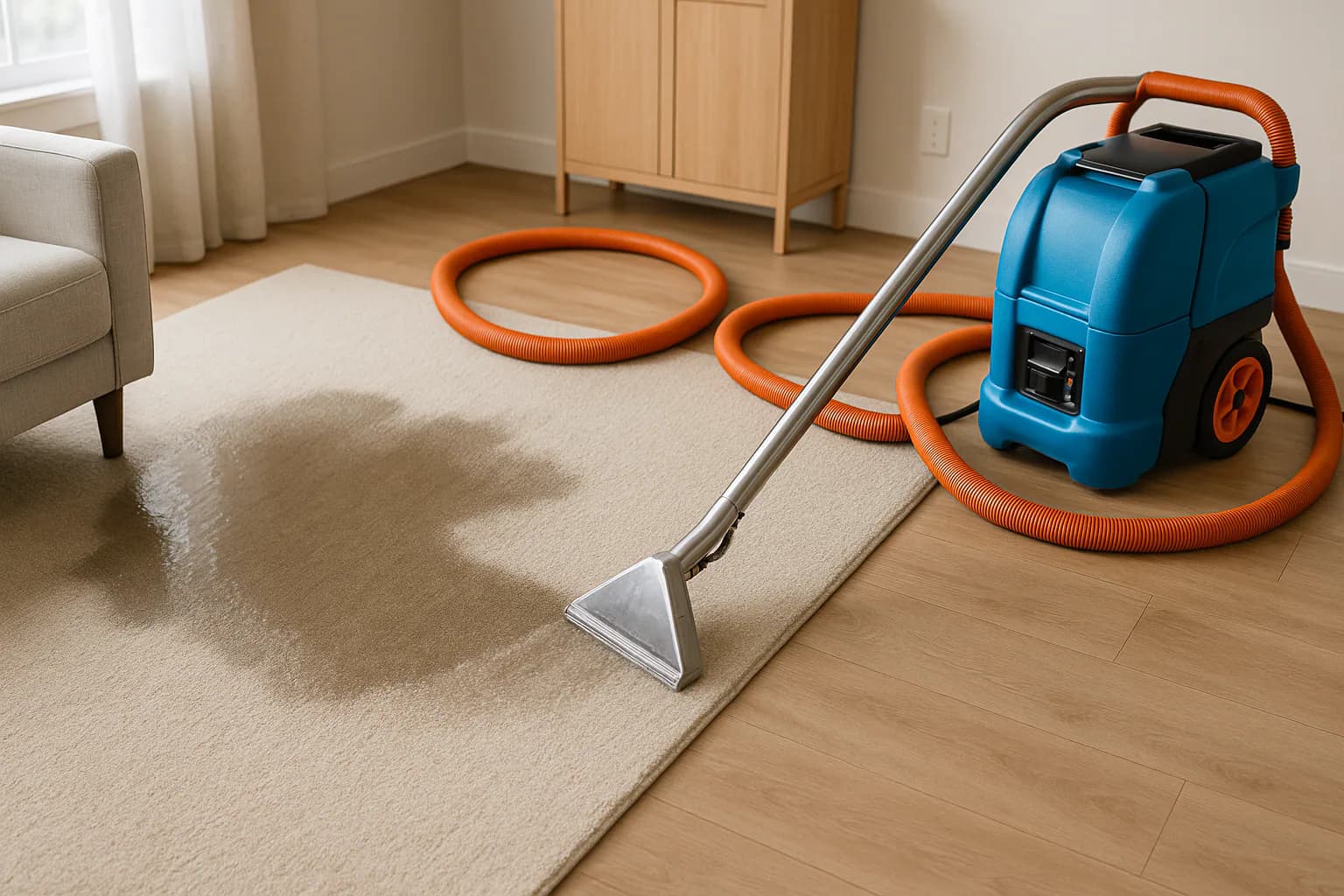
Water removal is the broad service of getting standing water out of a space. It covers pumping out a flooded room, a basement, or a crawlspace, and clearing accumulated water so the area is no longer underwater. Extraction is a more equipment-focused part of that work, the pulling of water out of carpet, padding, and flooring, but the goal of removal overall is to get the standing water out of the space.

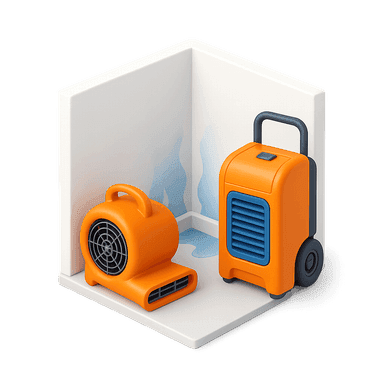
Removing the water is not the end. Once the standing water is gone, materials like subfloor, framing, and drywall are still holding moisture. Drying is the step that follows, using air movers and dehumidifiers with monitoring to bring those materials back to a dry, stable state.
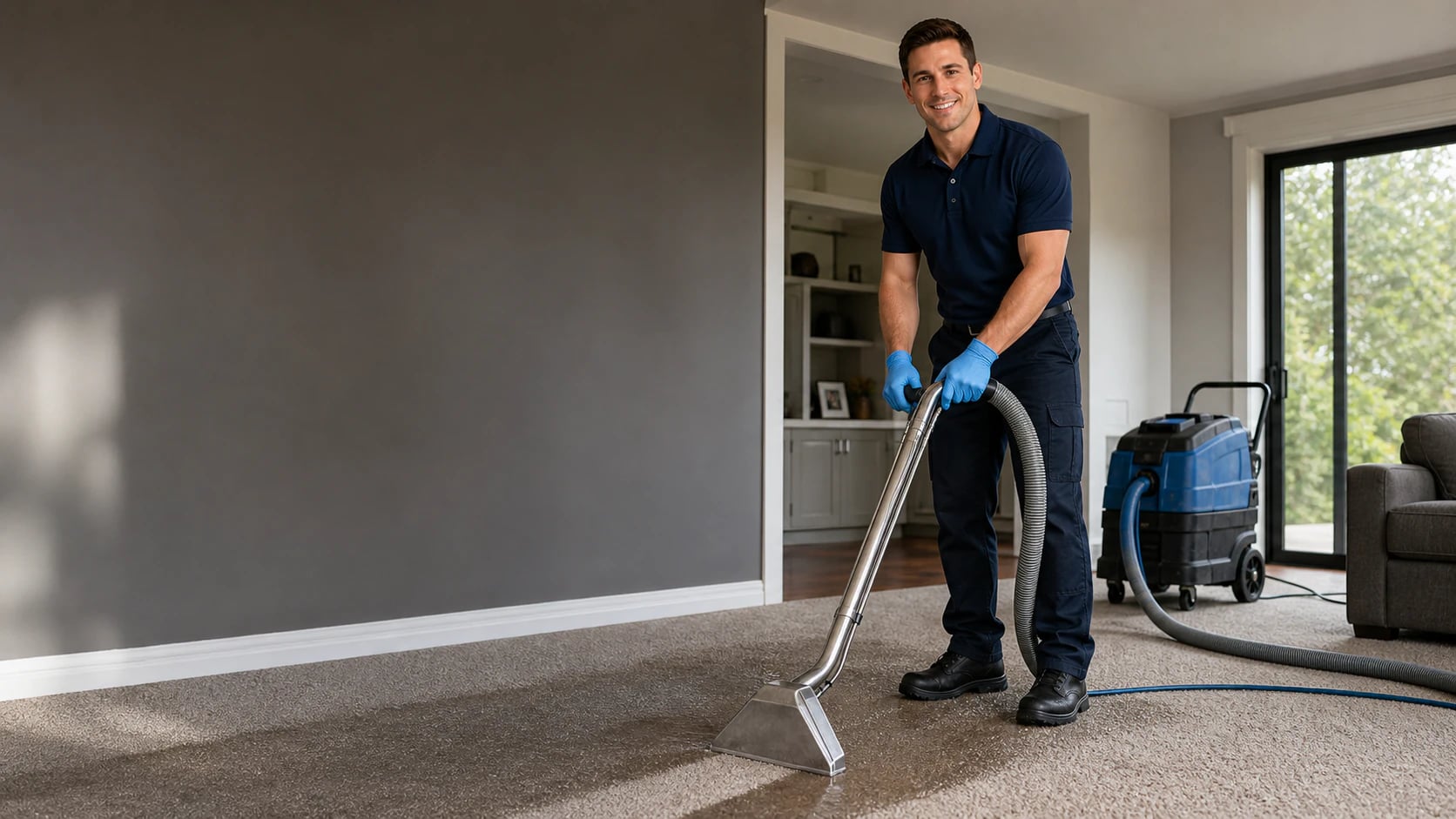
Standing water vs. trapped moisture

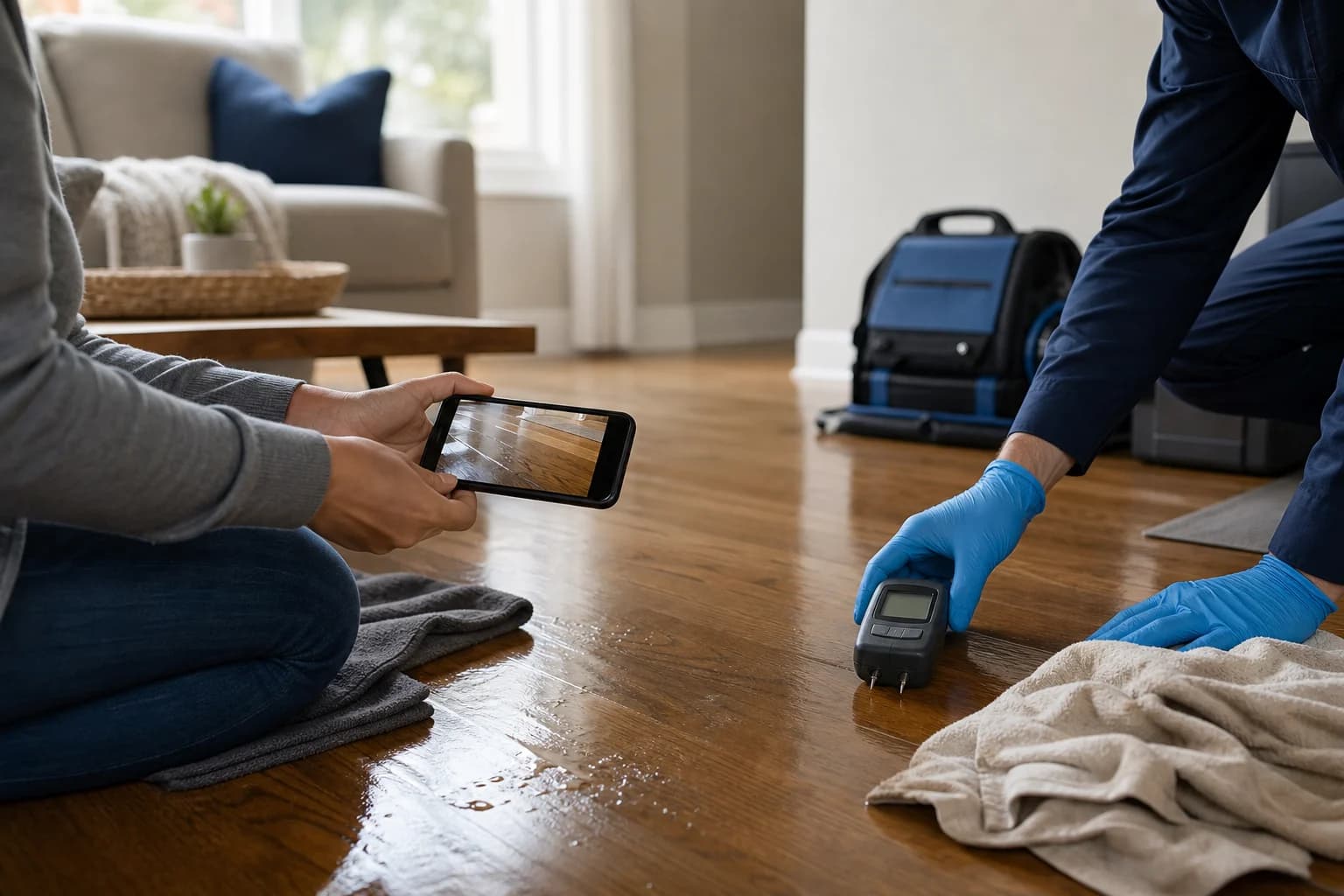
It is easy to assume a space is handled once the visible water is gone, but the standing water on the floor is only the part that is easy to see and pump out. As it sat, that water was being drawn into everything porous around it: drywall wicking it up the wall, carpet and padding holding it against the slab, subfloor and framing soaking it in along the grain. Removing the standing water clears the puddle; it does not pull the moisture back out of the materials that absorbed it.

That distinction is why a floor can look dry and feel only slightly damp while drywall behind the baseboard, the subfloor underfoot, and the studs inside the wall are still saturated. Restoration pros treat removal and drying as two different problems: pumps and extractors deal with the standing water, and moisture meters then reveal the trapped moisture that has to be dried out before repairs go back in.

How water category and speed change the job

Not all water is treated the same way, and the source matters as much as the amount. Restoration pros generally sort water into three categories: clean water from a supply line or a fresh-water source, gray water carrying some contamination such as washing-machine or dishwasher discharge, and black water from sewage, drain backups, or floodwater that may carry harmful contaminants. The higher the category, the more careful the handling and the more likely that porous materials it touched are removed rather than dried in place.

Time also pushes water from one category toward a worse one. Clean water that sits can degrade as it picks up contaminants and feeds microbial growth, so a clean-water event handled quickly is a very different job than the same water left for days. That is why fast action is not just about limiting how much material is lost: acting quickly can keep the water in a lower, more manageable category and keep more of the affected materials salvageable.

Professional response

How the work moves from damage to a dry property

The exact scope changes with the water source and affected materials, but a measured restoration response generally moves through three phases.

Assess and stabilize

Assess the space

Check for electrical and contamination hazards and find where the water has collected and how deep it sits.

Stop the source

Confirm the supply is off or the intrusion is contained so more water stops accumulating.

Remove and dry

Pump out standing water

Use pumps to clear standing water from rooms, basements, and crawlspaces where it has pooled.

Clear remaining water

Pull out the water left in low spots and crevices that pumps alone leave behind.

Verify and recover

Transition to drying

With the standing water gone, set air movers and dehumidifiers so the space and its materials can dry.

What to expect from the first visit

Assess the space

Check for electrical and contamination hazards and find where the water has collected and how deep it sits.

Stop the source

Confirm the supply is off or the intrusion is contained so more water stops accumulating.

Pump out standing water

Use pumps to clear standing water from rooms, basements, and crawlspaces where it has pooled.

Clear remaining water

Pull out the water left in low spots and crevices that pumps alone leave behind.

Questions to ask before approving the scope

How will the assessment document water depth and volume?

The answer should be specific to the property and reflected in the written scope.

Which conditions determine whether water removal is the right service path?

The answer should be specific to the property and reflected in the written scope.

What work, specialist responsibilities, measurements, and completion records will be included in writing?

The answer should be specific to the property and reflected in the written scope.

Before help arrives

What you can do now

Only take steps you can complete safely. Leave the area and wait for qualified help if there is an electrical, structural, or contamination risk.

Stop the water source if you can reach it safely.

Turn off power to the area if water is near outlets or electrical.

Stay out of water that may be contaminated or hide hazards.

Lift cords, electronics, and valuables out of the water.

Call to connect with water removal help.

These are general precautions for water removal; conditions at the property determine what is safe and appropriate.

Frequently asked questions

What is water removal?
Water removal is the broad job of getting standing and accumulated water out of a space, including pumping out flooded rooms, basements, and crawlspaces, so the area is cleared and drying can follow.
What is the difference between water removal and water extraction?
Water removal is the overall service of clearing standing water from a space. Extraction is the more equipment-driven part of that work, pulling water out of carpet, padding, and flooring. Removal is the broader goal; extraction is part of how it gets done.
What happens after the water is removed?
Drying. Even after standing water is gone, subfloor, framing, and drywall still hold moisture. Air movers and dehumidifiers run with moisture monitoring until those materials reach a dry, stable state.
How fast should water be removed?
As fast as safely possible. Standing water keeps spreading and soaking materials deeper, so quick removal limits the damage and shortens the drying that follows.
If the floor looks dry, is the water removal finished?
Not necessarily. A dry-looking floor can sit over a soaked subfloor, and drywall can stay saturated behind a baseboard that feels only damp. Restoration pros use moisture meters to find water that has been absorbed into materials, since that trapped moisture has to be dried out even after the standing water is gone.
Does the type of water affect how removal is handled?
Yes. Clean water from a supply line is handled differently than gray water from an appliance or black water from a sewage backup or floodwater. Higher-category water calls for more careful handling, and porous materials it soaked into are more often removed rather than dried in place, which is one reason acting quickly matters.
Technical and safety sources (4)

These sources support restoration, safety, moisture, cleanup, and scope guidance. They do not serve as numeric pricing provenance.

Need help with water removal?

Call Water Restoration Pros to connect with water removal help in your area.

Call (833) 968-0848 · No-obligation · Availability varies by area

(833) 968-0848Check