
Average insurance payout for water damage: what the published number shows
Published claim averages can offer a rough benchmark, but they do not predict any single homeowner’s payout. It also reports that these claims made up 22.6% of homeowners losses in 2023, with about 1 in 67 insured homes filing a water or freezing claim each year.
Those figures show that water damage is common, but they do not account for the details that drive an individual claim. Cause, policy language, exclusions, deductibles, documentation, damage extent, and policy limits can all affect the result.
Why your claim may differ from the average
Two water damage claims can look similar at first and still lead to very different outcomes. A small leak, a larger loss affecting multiple rooms, or damage that spreads into hidden spaces can all change the scope of repairs. The type of water also matters for how the damage is handled and documented, especially when the water is contaminated or associated with sewage or flooding.
The average payout is only a reference point. It does not tell a homeowner how much a specific insurer will pay for a specific loss.
What actually affects the payout amount
Several policy and claim details shape the final number:
- Policy limits: the maximum amount the policy may pay for a covered loss.
- Deductible: the amount the homeowner pays before any covered payment applies.
- Cause of damage: coverage can depend on how the damage happened and what the policy covers or excludes.
- Documentation: photos, videos, inventories, and inspection notes help show what was damaged.
- Coverage basis: some policies use replacement cost, while others use actual cash value, which can reduce payment for age and wear.
Because these factors vary, the same type of loss can produce different claim results from one home to another.
Replacement cost and actual cash value
Homeowners insurance may pay on a replacement cost basis or an actual cash value basis. Replacement cost generally refers to the cost to replace damaged property, while actual cash value reflects depreciation. The policy language controls which method applies, so homeowners should review the declarations page and the coverage terms before a loss if possible.
The National Association of Insurance Commissioners recommends reviewing the policy carefully and understanding exclusions, inventories, and coverage details before filing a claim. That review can help homeowners know what the policy may cover and where gaps may exist.
Document the damage early and clearly
The NAIC advises homeowners to report the claim promptly, document the damage, keep records of damaged items, and be prepared for meetings with the adjuster and contractors. Clear records can help show the scope of the loss and support the claim file.
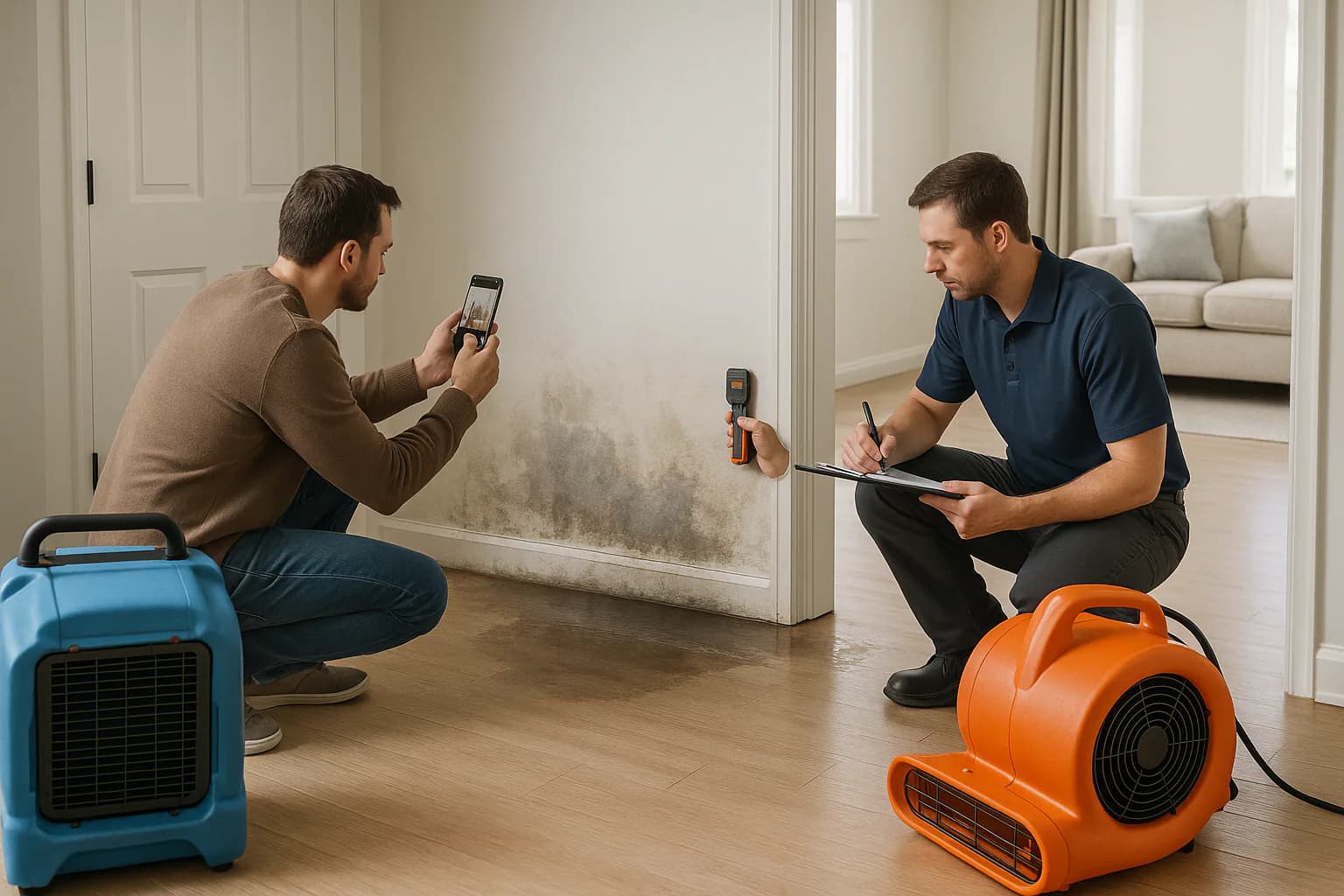
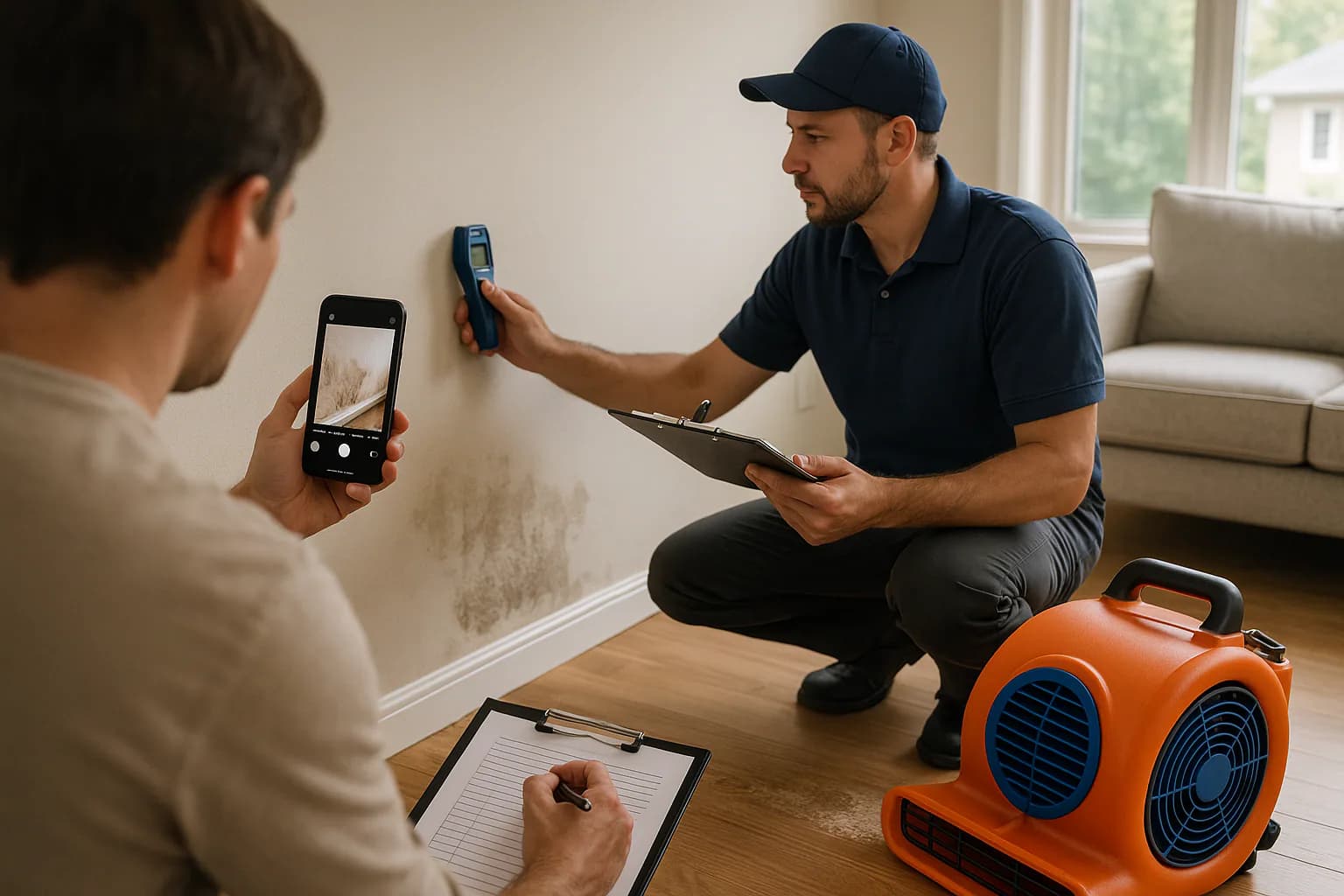
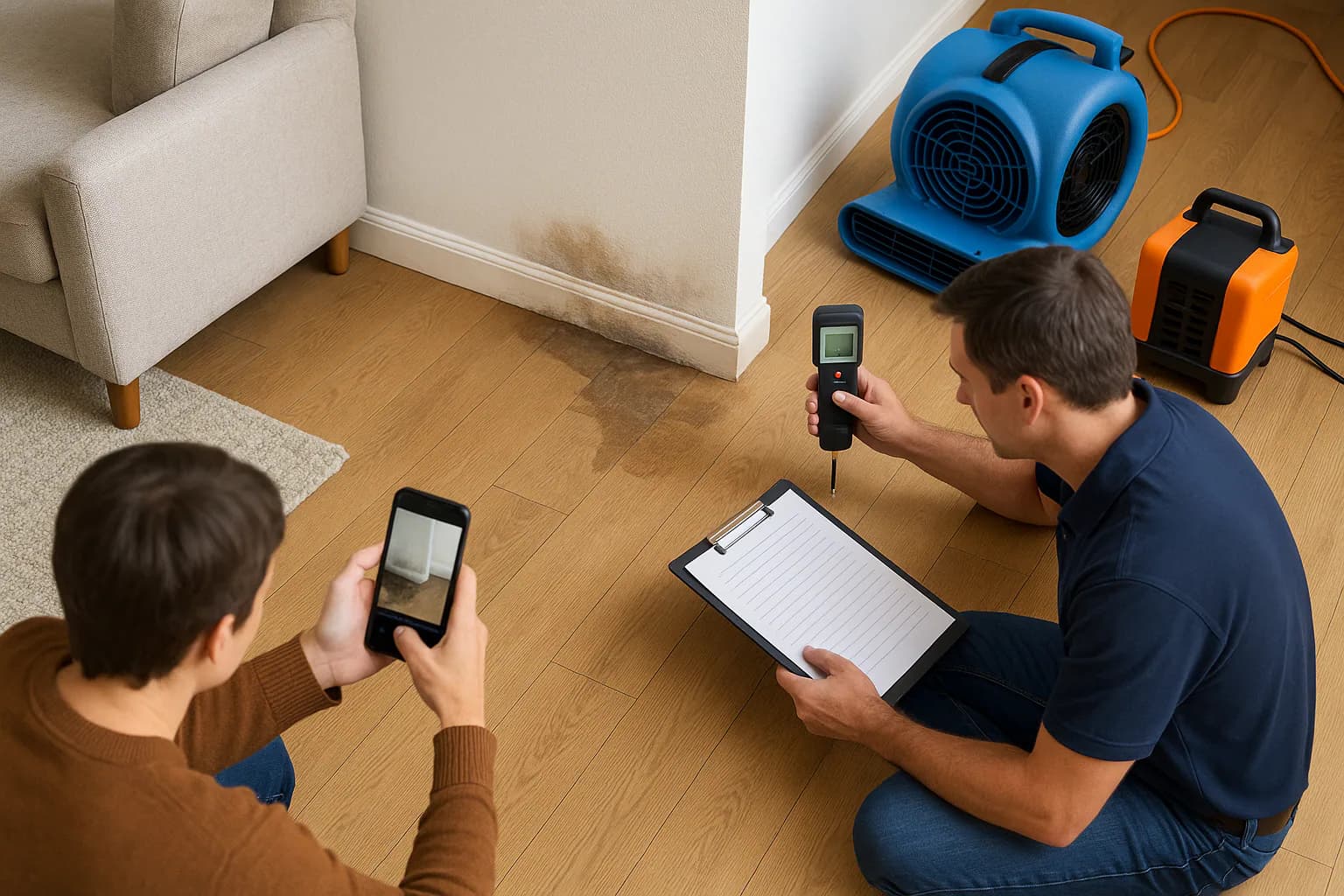
Photos and videos are useful when it is safe to take them. An inventory of damaged belongings, along with notes about where the damage occurred, can also help. If a local pro is brought in to assess the loss, that inspection can help identify visible and hidden affected areas for the claim record.
Drying and moisture control matter for the claim file
The EPA advises prompt drying and moisture control because wet materials should be dried within about 24 to 48 hours when possible. Fast drying reduces the conditions that allow mold to grow. That does not support mold will not develop, but it can help limit moisture-related deterioration.
The EPA also notes that indoor humidity and cleanup decisions matter. If materials are wet, the focus should be on drying, removing moisture, and deciding which materials can be cleaned or need removal based on the condition of the home and the extent of the damage.
When sewage or floodwater is involved
Water that comes from sewage or flooding can be contaminated. Homeowners should avoid exposure and follow public-health guidance. Safe handling and sanitation are important parts of the response, and a local pro can help assess the affected materials and the cleanup needs without assuming the water is clean.
Claims involving contaminated water may require more documentation because the damage can affect more materials and require different handling than a clean-water leak.
How to work with the insurer
The NAIC recommends reporting the claim, documenting the damage, keeping receipts and records, and meeting with the adjuster as needed. Homeowners should also review the policy, including exclusions and limits, and ask the insurer how the claim will be evaluated.
Coverage and claim outcomes depend on the cause, policy language, exclusions, endorsements, limits, deductible, and claim facts. The insurer can explain how the policy applies, but it is the policy terms that control the claim review.
What a local restoration pro can help document
Independent restoration professionals can inspect the affected area, identify moisture patterns, and help document what is visibly damaged and what may be hidden behind surfaces. They can also support drying and cleanup decisions based on the conditions in the home.
Thermal imaging can screen for temperature patterns, but it does not prove moisture or mold without direct measurement or inspection. For that reason, it is best used as part of a broader evaluation rather than as the only evidence in a claim file.
Explore Services for Water Damage
Need Help?
Connect with local professionals to assess and restore water damage effectively.
Call (833) 968-0848Frequently asked questions
What is the average insurance payout for water damage?
Why doesn’t the average payout tell me what I will receive?
What should I do first after water damage?
Does insurance pay the same way for every water damage claim?
What if the water is contaminated or from sewage?
Sources reviewed (5)
- Insurance Information Institute — Facts + Statistics: Homeowners and renters insurance: Industry statistics for water-damage and freezing claim frequency and homeowners loss categories.
- NAIC - Consumer Homeowners Insurance: NAIC consumer information on homeowners coverage, exclusions, inventories, and policy review.
- NAIC - What You Need to Know When Filing a Homeowners Claim: NAIC guidance on reporting a claim, documenting damage, deductibles, contractors, and adjuster meetings.
- U.S. EPA - A Brief Guide to Mold, Moisture and Your Home: EPA guidance on moisture control, prompt drying, indoor humidity, and mold cleanup decisions.
- U.S. EPA - Mold Course Chapter 2: EPA guidance to dry wet building materials within about 24 to 48 hours when possible.