Cost Guide
Water Damage Restoration Cost: What Affects the Price
There is no single price for water damage restoration, because every situation is different. What you can do is understand the factors that drive the cost so you know what to expect and what to ask. Water Restoration Pros connects you with professionals who can assess your specific situation.
Water damage restoration cost depends on the category of water, the size of the affected area, the materials involved, and how much drying and repair are needed. Use this guide to understand the drivers, then connect with a pro for an accurate assessment.
What affects the cost
Water category
Clean water is the least complex to handle. Gray water and contaminated black water require more careful handling, sanitation, and material removal, which increases scope.
Size of the affected area
A single wet room is very different from water that spread across multiple rooms or levels. More affected square footage means more extraction, drying equipment, and labor.
Materials affected
Drying salvageable drywall and framing is one thing; removing and replacing saturated flooring, cabinets, or insulation is another. Dense materials also take longer to dry.
Drying time and equipment
The number of air movers and dehumidifiers and the number of days of monitoring all factor in. Slow-drying or below-grade spaces extend the timeline.
Repairs and reconstruction
Once the structure is dry, putting things back, drywall, paint, flooring, and trim, is a separate part of the overall cost.
Restoration phases
See each phase before comparing totals
A water loss can involve several separate phases. Not every property needs every phase, so an itemized estimate should show what is included instead of blending all possible work into one number.
Emergency response and extraction
Initial response, standing-water removal, and the first moisture inspection.
Mitigation and structural drying
Controlled drying, routine monitoring, cleanup, and limited ordinary removal within the documented scope.
Material removal and sanitation
Added only when affected materials or contamination conditions require it.
Reconstruction when required
Rebuilding removed finishes is modeled separately from mitigation and source repair.
Reconstruction is a separate planning basis
The active standard-finish reconstruction range is $9-$19 per sq ft. It applies only to the rebuild area entered and excludes structural work, electrical, plumbing, cabinetry, premium finishes, contents, and source repair.
Model mitigation and reconstruction separatelyTypical cost ranges
Standard clean-water mitigation & drying (1–3 rooms / 100–500 sq. ft.)
$2,200-$4,400 per project
Includes extraction, limited ordinary material removal, drying equipment, routine monitoring, and cleanup. Reconstruction, source repair, contents replacement, and premium finishes are separate.
Cost ranges are estimates developed from standardized project scopes and reviewed pricing inputs. Government labor and regional cost data are used where applicable. See our Pricing Methodology for the exact sources, calculations, and review date. Actual prices vary by property, scope, materials or equipment, location, and provider.
Compare the scope before the price
Limited, typical, and complex project scopes
- Limited scope
- A contained affected area with accessible materials and little or no finish repair.
- Typical scope
- Multiple materials or rooms requiring removal, drying, monitoring, and cleanup.
- Complex scope
- Concealed spread, difficult access, contamination, specialty work, or reconstruction.
Planning ranges at a glance
Canonical planning range
The same approved national range is used wherever this standardized residential scope appears.
| Scope | Planning range | Method |
|---|---|---|
| Clean-water mitigation & drying, 1–3 rooms / 100–500 sq. ft. | $2,200-$4,400 per project | Extraction, limited ordinary removal, equipment, monitoring, and cleanup; reconstruction and source repair excluded |
What affects your total
- How quickly the water was extracted and drying began
- Whether the water was clean, gray, or contaminated black water
- How far moisture traveled into walls, subfloors, and cavities
- How many materials can be dried and saved versus removed and replaced
- Local conditions like humidity that affect drying time
Why no one can quote water damage over the phone
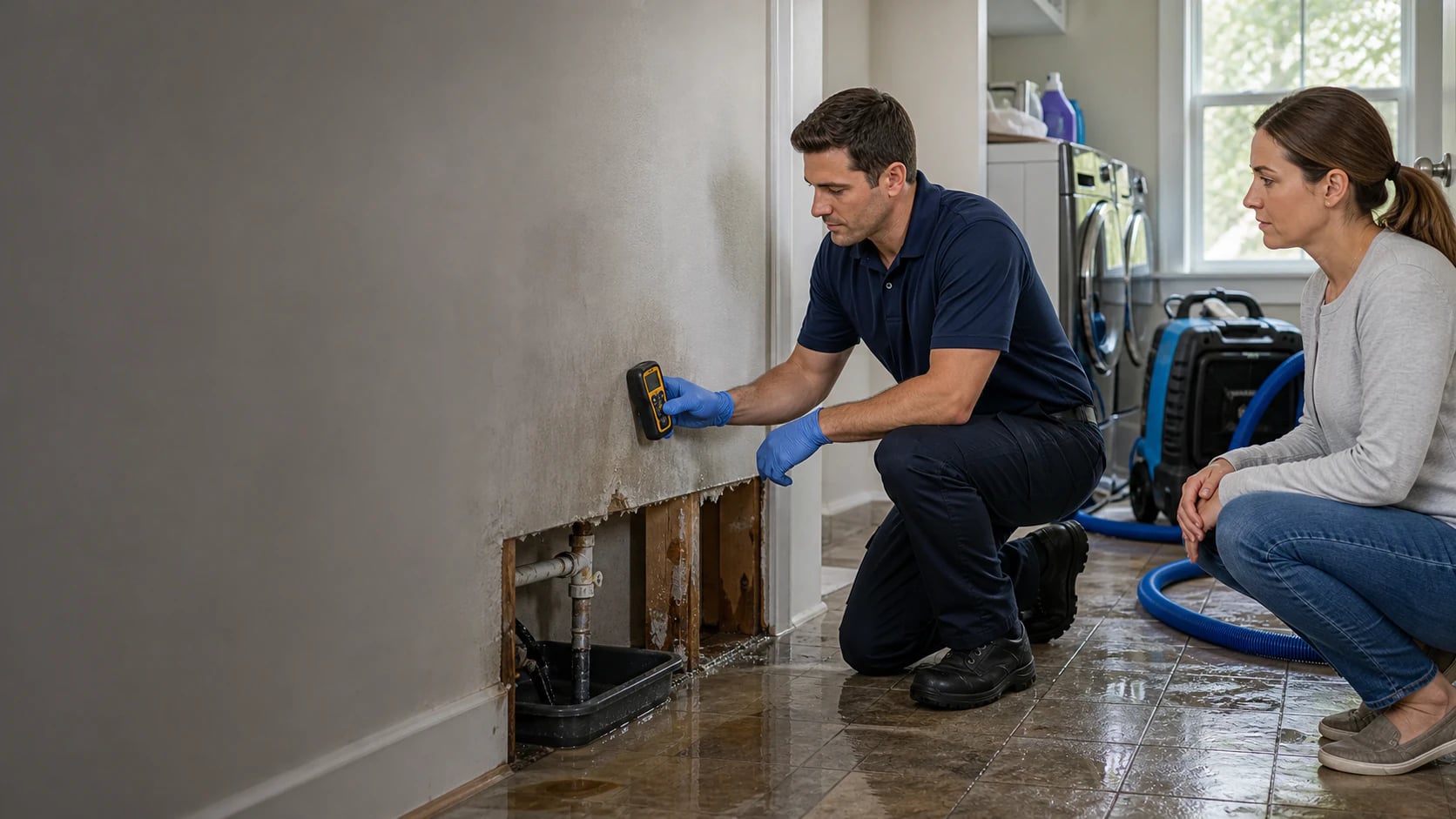
An accurate price depends on what is actually wet, how contaminated the water is, and how far it spread, which usually is not clear until someone assesses the property and takes moisture readings.
Be cautious of any support flat price before an assessment. The most reliable path is to have a professional evaluate the situation and explain the scope before work begins.
How Water Restoration Pros helps with cost
Water Restoration Pros does not set prices or perform the work. We connect you with restoration professionals that service your area who can assess your situation and walk you through the expected scope.
Acting quickly often helps limit the overall cost, since fast extraction and drying can reduce how much material is lost.
Cost by water category and class
Restoration pros price largely by the water’s contamination category and the severity class of the loss. Use a current itemized estimate because source, contamination, affected materials, drying time, and repairs can change the total.
Severity class matters too: a small Class 1 loss affecting little material is far less involved than a Class 3 or 4 loss where water has saturated walls, ceilings, and dense materials. Use a current itemized estimate because source, contamination, affected materials, drying time, and repairs can change the total.
- Confirm which rooms and material layers the affected-area measurement includes.
- Ask how the water source and contamination conditions change handling or removal.
- Separate extraction, equipment time, monitoring, material removal, and repairs on the estimate.
- Compare the documented scope and assumptions, not only the bottom-line total.
Cost by cause of water damage
The source of water damage significantly affects restoration costs. A burst pipe usually falls within the minor to moderate range because it involves clean water, manageable with prompt action. An appliance leak can escalate to moderate costs if water spreads to multiple rooms.
Sewage backups and storm flooding are more severe. Contaminated water requires extensive sanitation and material removal, often placing costs in the major range. Additionally, storm flooding from rising water is generally not covered by standard homeowners insurance, necessitating separate flood insurance.
- Burst pipe: Minor to moderate range
- Appliance leak: Moderate range
- Sewage backup: Major range
- Storm flooding: Major range
Line-by-line estimate components
A detailed estimate for water damage restoration usually includes several key components. Extraction is often the first step, requiring specialized equipment. Equipment days cover the use of air movers and dehumidifiers, essential for effective drying.
Moisture monitoring visits ensure that drying progresses as planned. Material removal may be necessary for soaked drywall or flooring, followed by antimicrobial treatment to reduce the conditions that allow mold growth. Reconstruction is a separate phase, rebuilding any removed materials.
- Extraction
- Equipment days
- Moisture monitoring
- Material removal
- Antimicrobial treatment
- Reconstruction
Insurance and out-of-pocket costs
Insurance can greatly influence out-of-pocket restoration costs. Deductibles are the homeowner's responsibility before insurance pays.
Coverage depends on whether the damage was sudden or gradual; insurers typically cover sudden incidents. Proper documentation of the damage and restoration process is crucial, as it affects claim approval and payout amounts.
Comparing two estimates fairly
When comparing restoration estimates, consider unit pricing versus lump sum offers. Unit pricing breaks down costs for each task, providing transparency. Pay attention to drying days; longer drying times may indicate thoroughness.
Ensure both estimates include similar scope items, such as equipment use and material removal. Be wary of estimates that seem unusually low, as they may omit essential services or lead to insufficient restoration.
- Unit pricing vs. lump sum
- Check drying days
- Scope inclusivity
- Watch for lowball estimates
Written estimate review
How to compare two estimates fairly
Compare the affected areas, measured quantities, material decisions, equipment, monitoring, cleaning, specialty work, and repairs included in each scope.
A lower total may describe less work rather than the same work at a lower price. Ask each provider to explain exclusions, allowances, change-order conditions, and the records supplied at completion.
Frequently asked questions
How much does water damage restoration cost?
Why does contaminated water cost more to handle?
Can acting fast lower the cost?
Is water damage restoration worth it for a small leak, or can homeowners handle it?
Why do estimates from two companies differ so much?
Does homeowners insurance usually cover the cost of restoration?
Technical and safety sources (2)
These sources support restoration, safety, moisture, cleanup, and scope guidance. They are not sources for the numeric cost ranges on this page.
- U.S. EPA - Flooded Home: EPA guidance on safety, cleanup, moisture control, and drying after a home is flooded.
- U.S. EPA - A Brief Guide to Mold, Moisture and Your Home: EPA guidance on moisture control, prompt drying, indoor humidity, and cleanup decisions.
Explore the service path
Related services
 Water Damage RestorationWhole-home help after leaks, flooding, wet materials, and standing water.View water damage restoration
 Emergency Water RemovalUrgent extraction of standing and active water from floors and rooms.View emergency water removal
 Structural DryingControlled drying of framing, drywall, subfloor, and building materials.View structural drying
Helpful guides
 Insurance & Claims
Does Homeowners Insurance Cover Water Damage?
Coverage depends heavily on the cause and your specific policy. Here's a general overview of how water damage claims are often approached and why documentation matters.
Read guide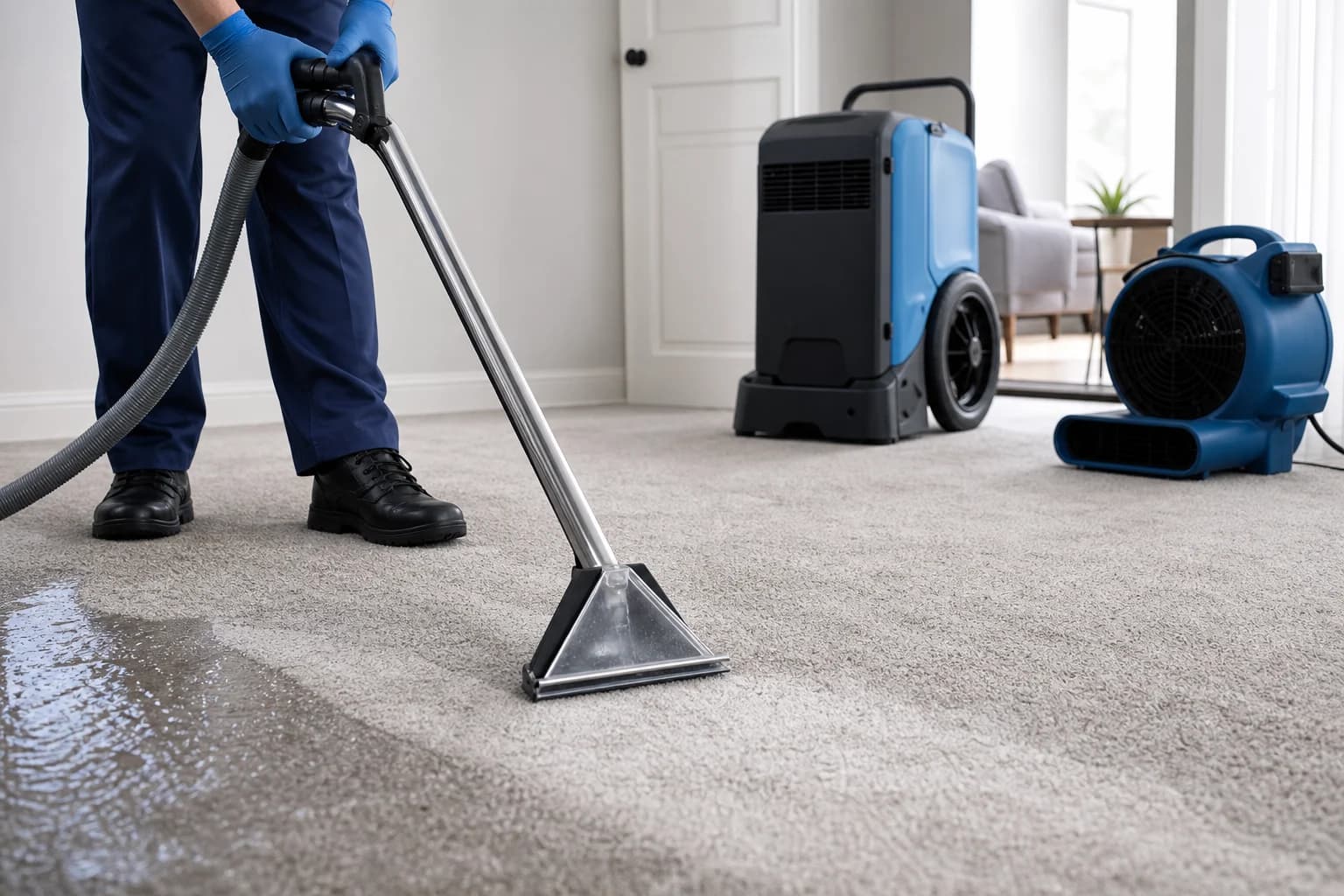 Drying & Restoration
Water Extraction vs. Water Damage Restoration
Water extraction and restoration are two distinct phases of recovery. Here is what each one involves and why your home typically needs both after water damage.
Read guide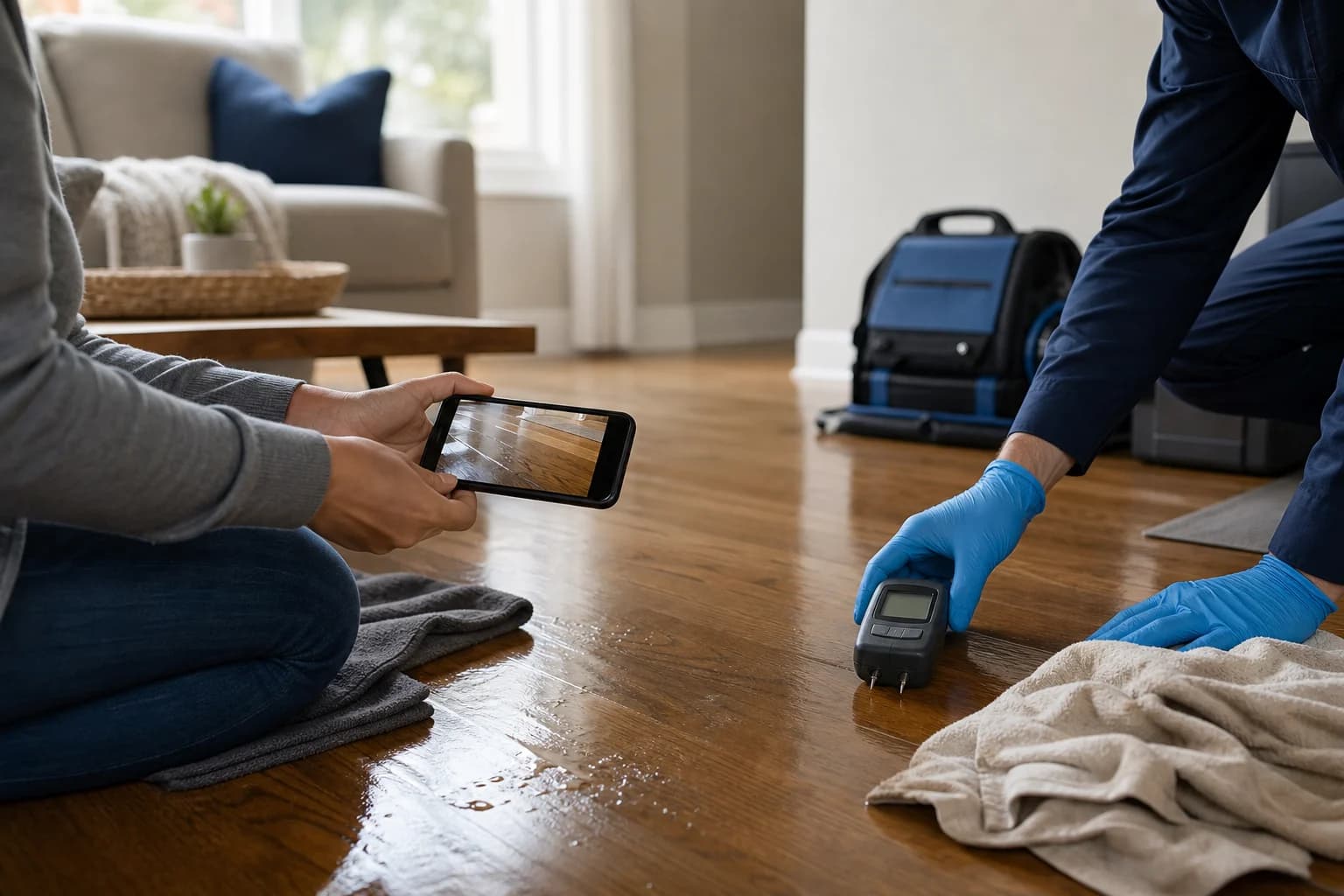 Emergency Response
What to Do Immediately After Water Damage
This guide explains what to do right after water damage occurs, with practical steps to limit further issues, keep your home safe, and help with insurance documentation.
Read guideWater damage can’t wait.
Fast response, expert care. Call Water Restoration Pros and we’ll connect you with help for leaks, flooding, burst pipes, water removal, and drying.
Call (833) 968-0848 · No-obligation · Availability varies by area