Water damage from an upstairs neighbor: start with the source
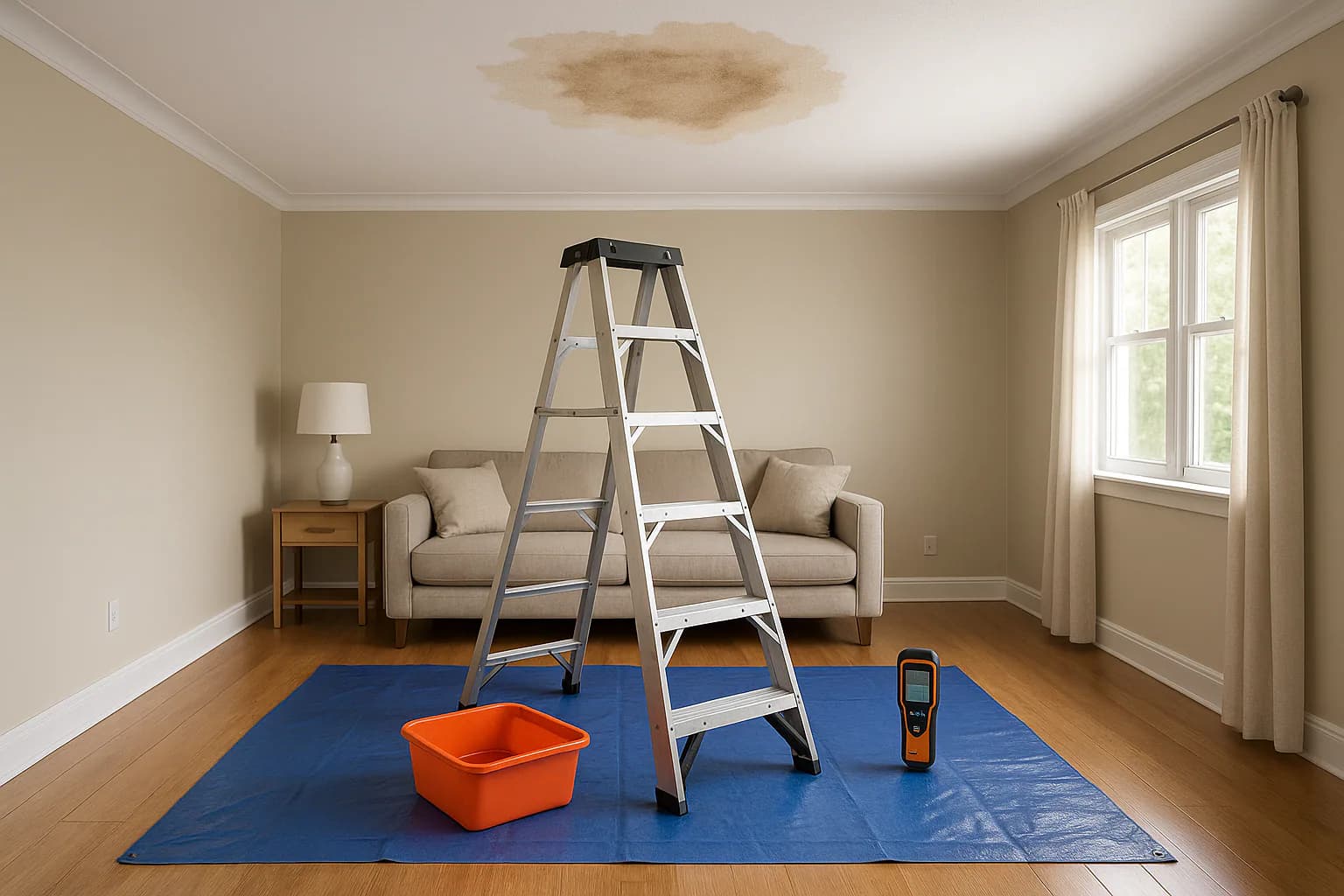
Water damage from an upstairs neighbor can spread quickly through ceilings, walls, and flooring in condos and apartments. The first priority is to stop the leak if it is safe to do so, then notify the neighbor and building management or the landlord. Fast action helps limit additional damage while responsibility and insurance questions are being sorted out.
If water has reached electrical equipment or standing water is present, do not enter the area or handle energized items. Once the source is controlled, a local pro can assess the affected materials and begin drying and cleanup steps.
Why prompt drying matters
The EPA advises drying wet building materials as soon as possible, and when possible within about 24 to 48 hours. Prompt drying reduces the conditions that allow mold to grow. Moisture can remain hidden behind walls, under flooring, or inside insulation, so visible surface drying alone may not be enough.
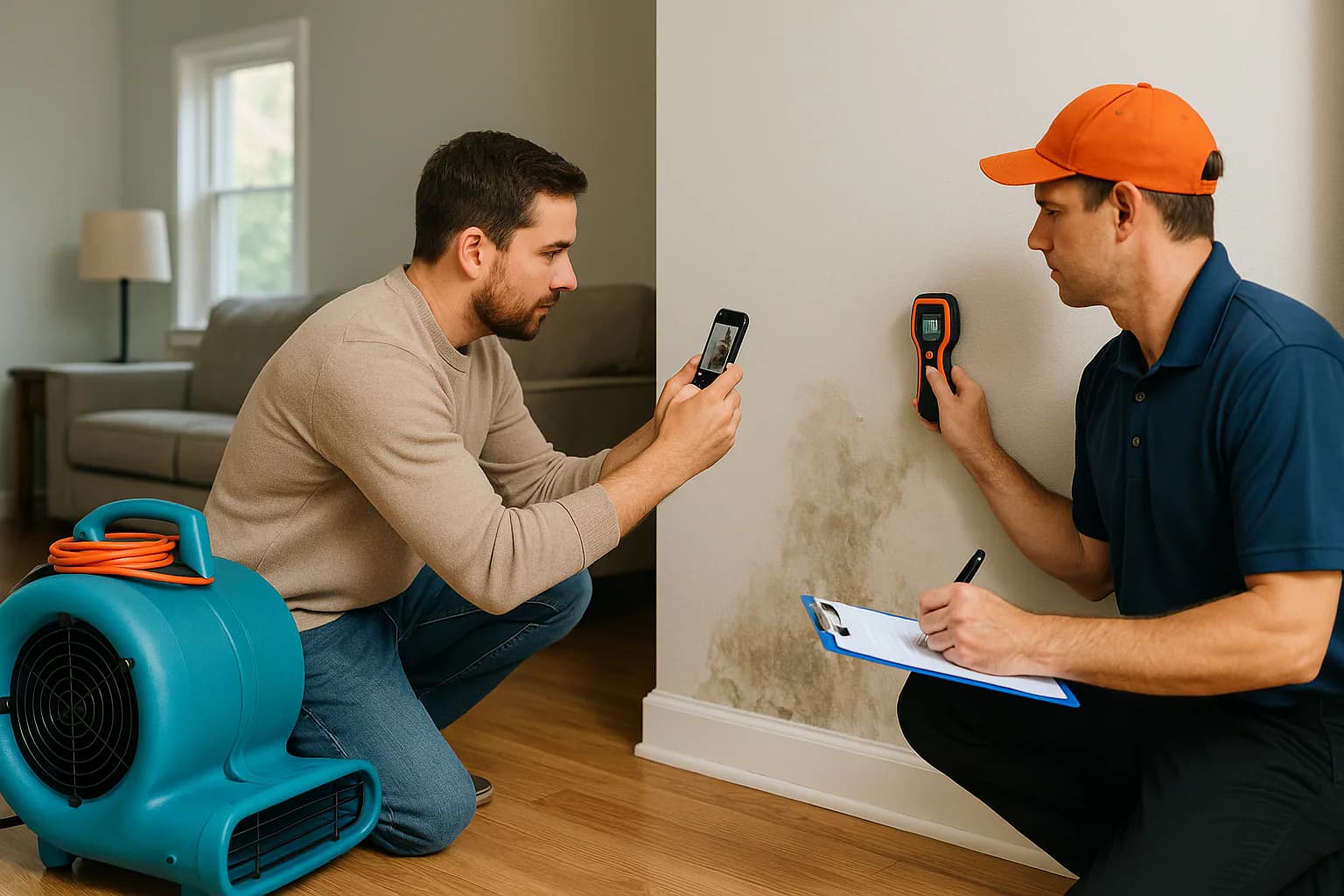
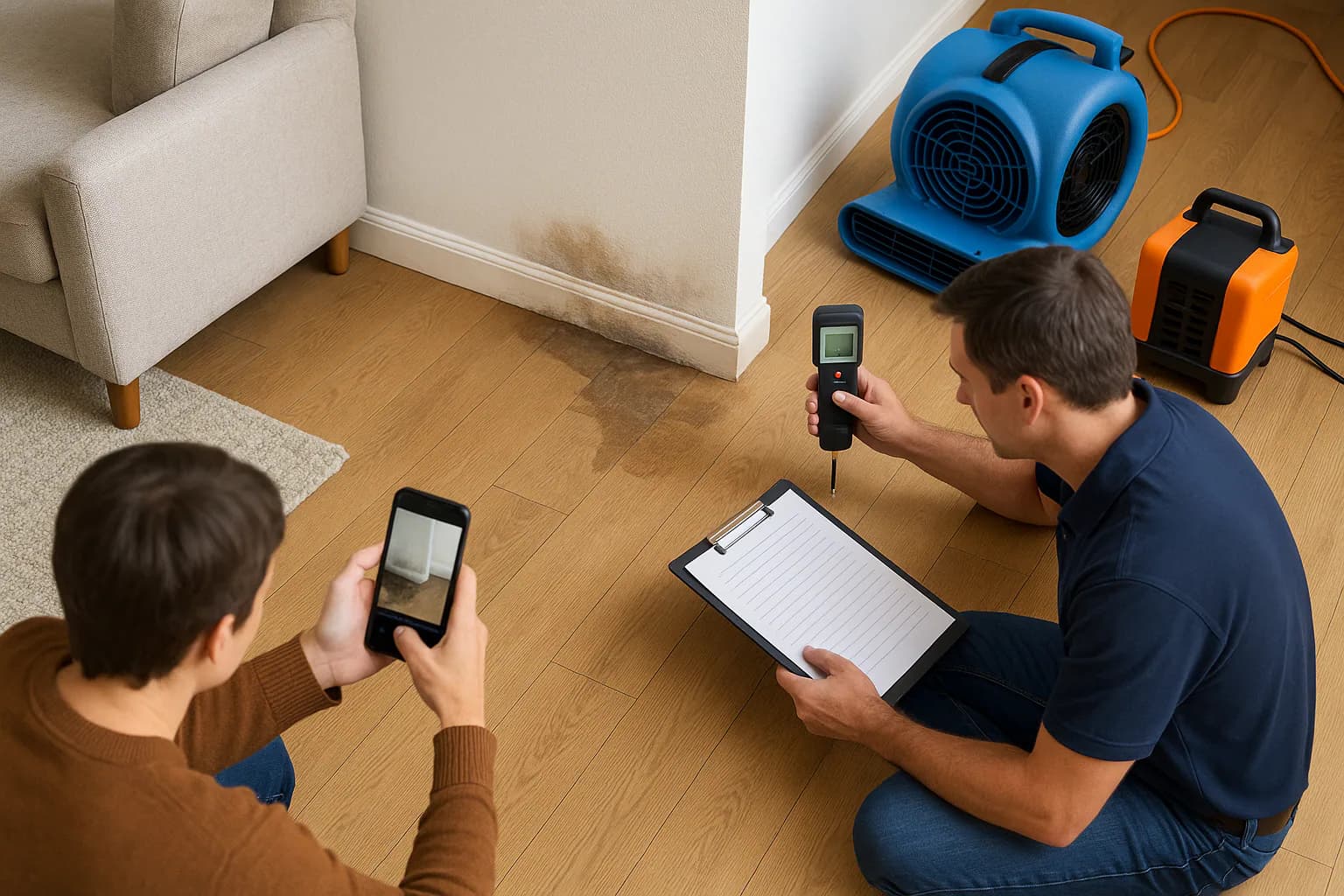
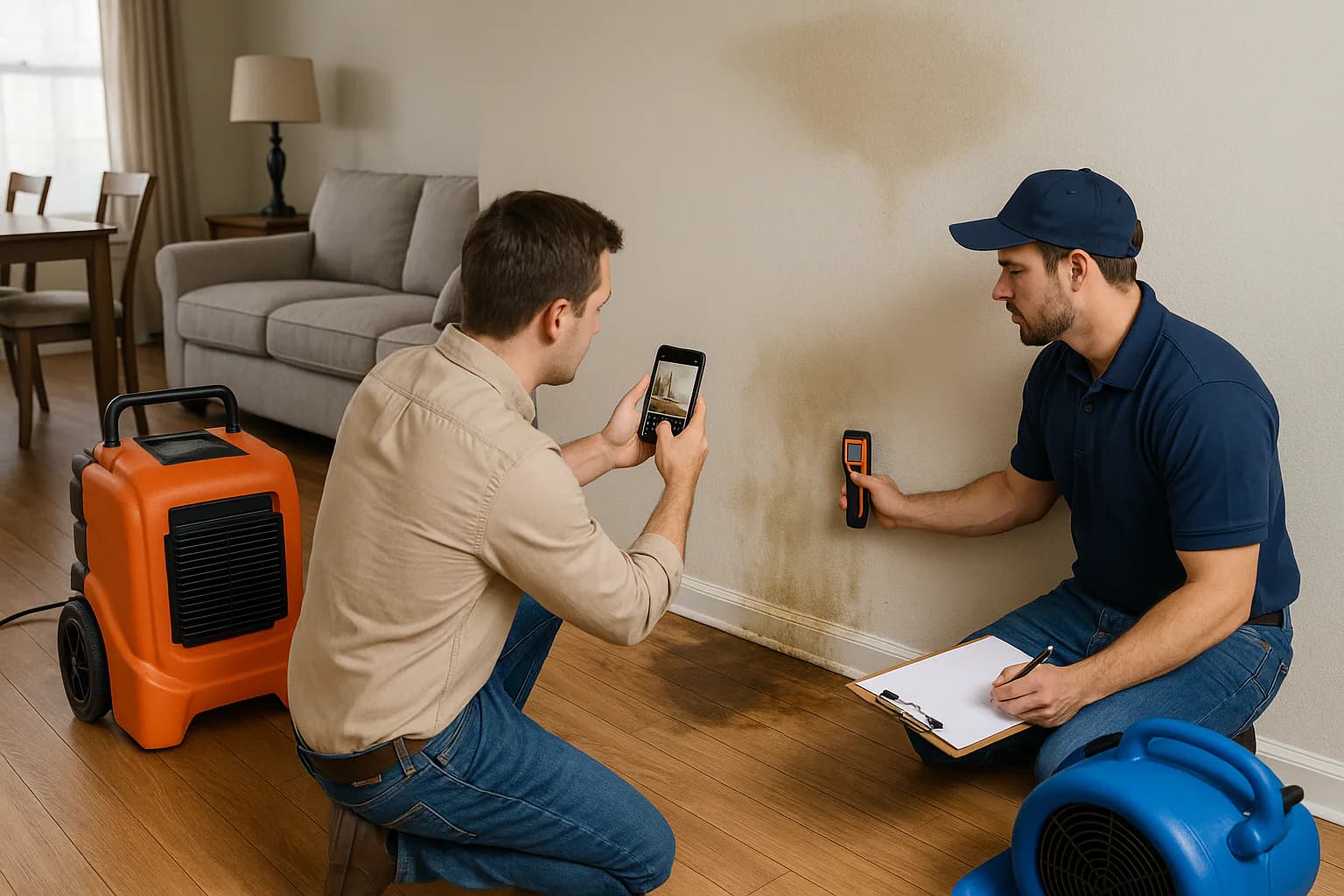
Restoration professionals use moisture meters and other tools to check affected areas and track drying progress. Thermal imaging can help screen for temperature patterns, but it does not prove moisture or mold without direct measurement or inspection.
Owner, neighbor, or HOA: how responsibility is usually sorted
Responsibility depends on the cause of the leak, the policy language, exclusions, endorsements, limits, deductible, and the facts of the claim. In a condo, the HOA or association documents may also affect which parts of the building are treated as common elements and which are part of the unit. A neighbor’s policy may come into play if their actions or maintenance issues are involved, but the claim outcome depends on the evidence and the policies involved.
Because coverage and liability are fact-specific, property owners should review the policy and contact the insurer promptly. The insurer can explain the claim process, what documentation is needed, and how deductibles and policy terms may apply.
Renters: what to check in your policy
Renters insurance may help with covered losses to personal belongings, but the exact response depends on the policy and the cause of the damage. It does not cover the building structure itself, which is usually handled by the owner or association. Renters should review their policy, note any exclusions or limits, and contact the insurer after the damage is discovered.
If the leak came from another unit, the neighbor’s policy or the building’s policy may also be part of the claim review. The result depends on the facts, so it helps to keep the focus on documentation and timely notice rather than assumptions about who will pay.
Document the damage before cleanup changes the scene
Take photos and videos of the affected rooms, damaged belongings, and the source of the leak if it can be seen safely. Keep records of when the damage was discovered, who was notified, and any messages exchanged with the neighbor, landlord, or HOA. The NAIC recommends documenting damage and keeping an inventory when filing a homeowners claim.
Save receipts for mitigation or repair-related expenses and keep copies of estimates and reports. Clear documentation can help the insurer understand the scope of the loss and the sequence of events.
- Photograph and video the damage before major cleanup begins.
- Write down when the leak started and when it was reported.
- Keep emails, texts, and call notes from the neighbor, landlord, HOA, and insurer.
- Save receipts and any itemized estimates or reports.
What a local restoration pro can help with
Independent restoration professionals can help with water extraction, drying, and cleanup of affected materials. They may also inspect hidden areas for moisture, set drying equipment, and monitor conditions until the space is dry enough for the next steps. Their role is to reduce further damage and support documented drying, not to decide insurance responsibility.
If the water is contaminated, safe handling and sanitation become more important. Potentially contaminated water should be treated carefully, and readers should avoid exposure and follow public-health guidance. A local pro can help evaluate the situation and recommend appropriate cleanup steps.
Mold concerns are a moisture problem first
Mold-related decisions should focus on moisture control. The EPA notes that wet materials should be dried quickly when possible, because reducing moisture lowers the conditions that allow mold to grow. If materials stay wet too long, some items may need to be removed or cleaned as part of the restoration process.
The goal is not to guess at mold growth, but to stop the moisture, dry the structure, and decide which materials can be cleaned or need replacement based on their condition.
Insurance claims: what helps the process move
The NAIC recommends reporting the claim promptly, documenting the damage, understanding the deductible, and keeping records of contractor estimates and adjuster meetings. The insurer may ask for an inventory of damaged items and details about the cause of loss. Coverage decisions depend on the policy and the facts, so it helps to provide clear, organized information.
Water damage is a common type of loss, and the Insurance Information Institute reports that water and freezing claims are a significant share of homeowners losses. That makes prompt reporting and careful documentation especially important when a neighbor’s leak affects more than one unit.
When to bring in help
If the leak is ongoing, the damage is spreading, or moisture has reached hidden areas, a local restoration professional can help assess the space and begin mitigation. If the building has multiple affected units, coordination with the neighbor, landlord, HOA, and insurer can help keep the response organized. The sooner the water is controlled and the materials are dried, the better the chance of limiting secondary damage.
Connect with Local Water Restoration Pros
Need Immediate Water Damage Help?
Contact a local pro through Water Restoration Pros to start the mitigation process right away.
Call (833) 968-0848Frequently asked questions
What should I do first if water comes from an upstairs neighbor?
Who is responsible for water damage from an upstairs neighbor?
Should I clean up the damage before the claim is reviewed?
Does renters insurance cover water damage from a neighbor?
How does a restoration professional help after a neighbor leak?
Sources reviewed (5)
- Insurance Information Institute — Facts + Statistics: Homeowners and renters insurance: Industry statistics for water-damage and freezing claim frequency and homeowners loss categories.
- NAIC - Consumer Homeowners Insurance: NAIC consumer information on homeowners coverage, exclusions, inventories, and policy review.
- NAIC - What You Need to Know When Filing a Homeowners Claim: NAIC guidance on reporting a claim, documenting damage, deductibles, contractors, and adjuster meetings.
- U.S. EPA - A Brief Guide to Mold, Moisture and Your Home: EPA guidance on moisture control, prompt drying, indoor humidity, and mold cleanup decisions.
- U.S. EPA - Mold Course Chapter 2: EPA guidance to dry wet building materials within about 24 to 48 hours when possible.