After water damage occurs, accurately measuring moisture levels is crucial for effective restoration. Simply feeling damp surfaces or noticing discoloration is not enough to confirm that a property has dried thoroughly. Restoration professionals use specialized tools and methods to measure moisture after water damage and ensure that drying is complete. These tools allow them to detect moisture that is not visible or accessible by touch, which helps prevent hidden issues that could worsen over time.
A documented measurement plan also gives property owners a clearer record of what was wet, where readings were taken, and how conditions changed during drying. That record can support communication among the restoration provider, property owner, and insurer without treating any single reading as proof by itself.
Why dry-to-the-touch is not a drying standard
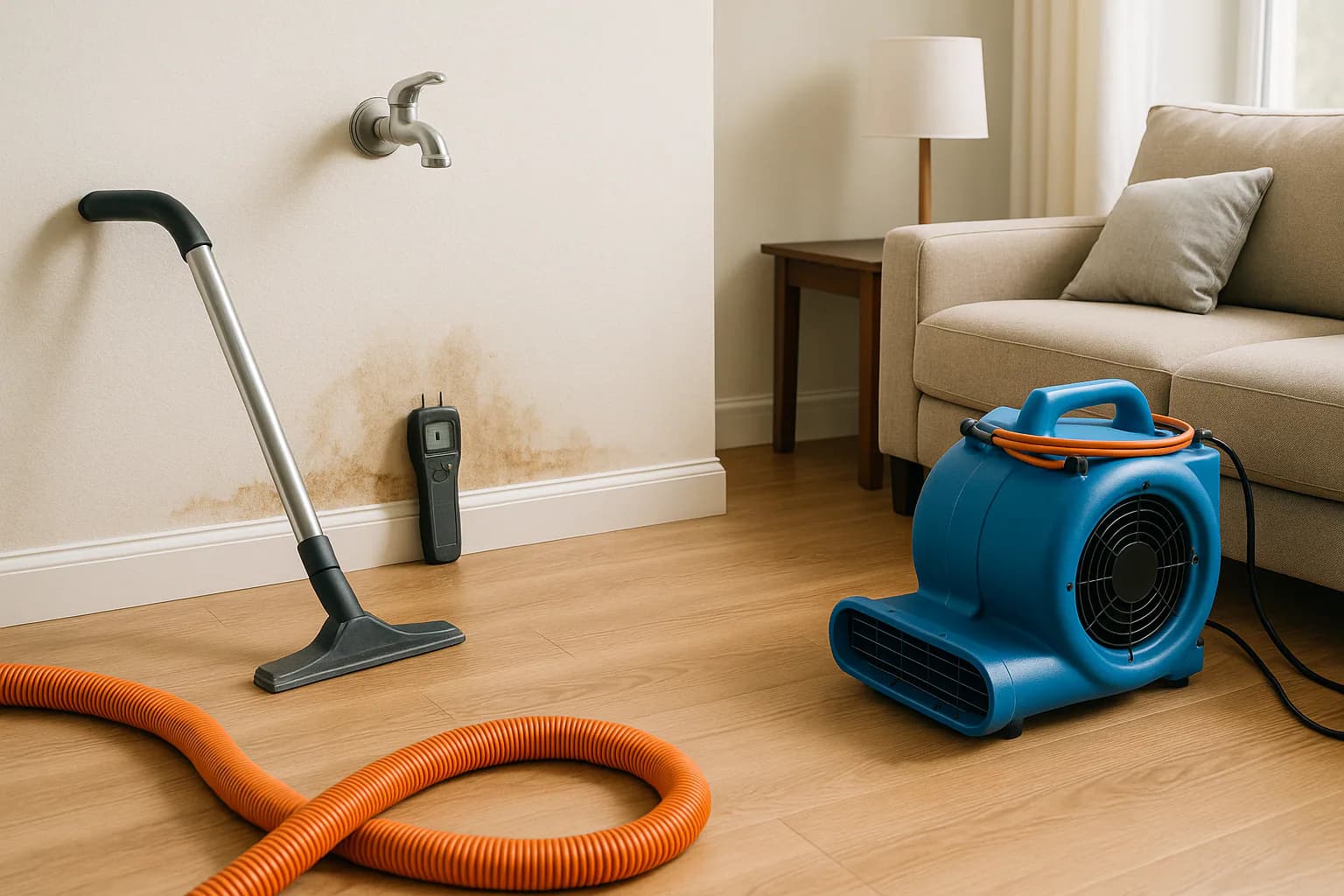
Touch and visual inspection alone cannot reliably prove that materials are dry. Many building materials, such as drywall and wood, can feel dry on the surface while still retaining moisture deeper inside. Color changes or surface appearance do not provide accurate moisture information either. Restoration professionals avoid relying on these methods because they can lead to incomplete drying, increasing the risk of mold growth and structural damage. The outer layers may dry quickly, but trapped moisture inside wall cavities or flooring assemblies can cause problems if left unaddressed.
Because of this, moisture measurement must involve tools that detect water content below the surface and provide objective, quantifiable data. These measurements allow for informed decisions about drying progress and the need for continued mitigation. Incomplete drying not only prolongs restoration but can also increase costs, as additional mitigation or reconstruction may be needed if moisture remains undetected. Professionals typically monitor moisture levels daily until readings align with dry baseline materials.
Moisture meters and what they actually show
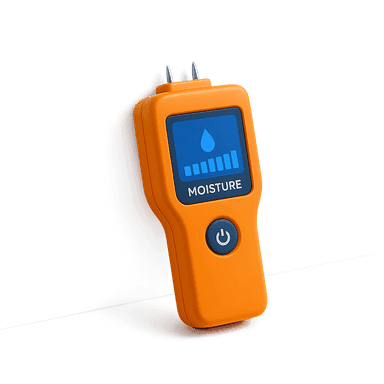
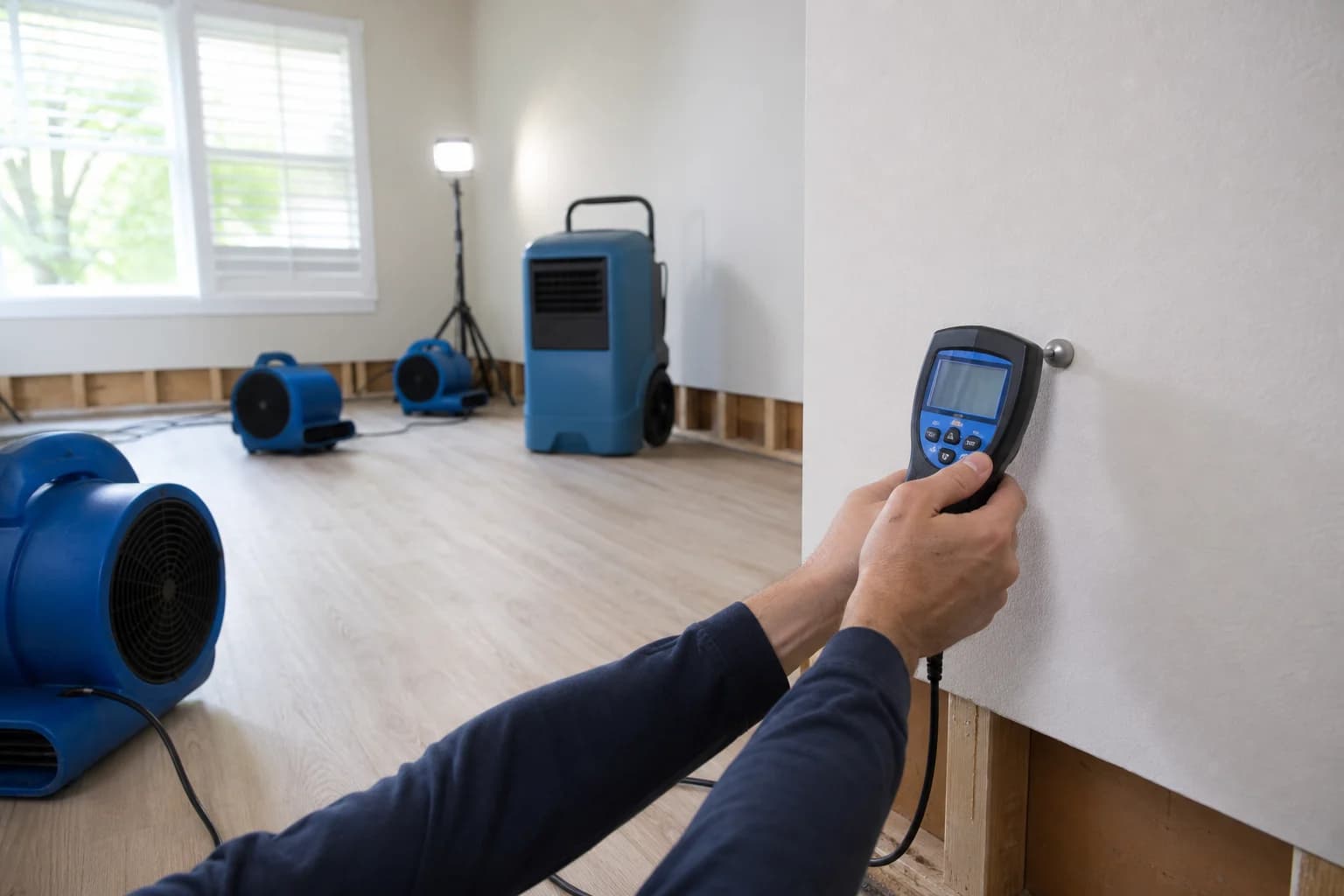
Moisture meters are key instruments used to measure moisture after water damage. There are two main types: non-penetrating and penetrating meters. Non-penetrating meters use electromagnetic signals to detect moisture near the surface without damaging materials. Penetrating meters use probes that insert into materials to measure moisture deeper within. Each type has strengths; for example, non-penetrating meters are useful for quick scans, while penetrating meters provide more precise data in thicker materials.
These meters provide readings that indicate the moisture content of materials. However, the readings alone do not define dryness; professionals compare these values to baseline readings from dry control samples of the same material. This comparison helps determine whether the moisture level has returned to an acceptable range. Without this reference, a single reading could be misleading due to material variation or ambient conditions. Accurate interpretation informs whether drying efforts can be ceased or must continue.
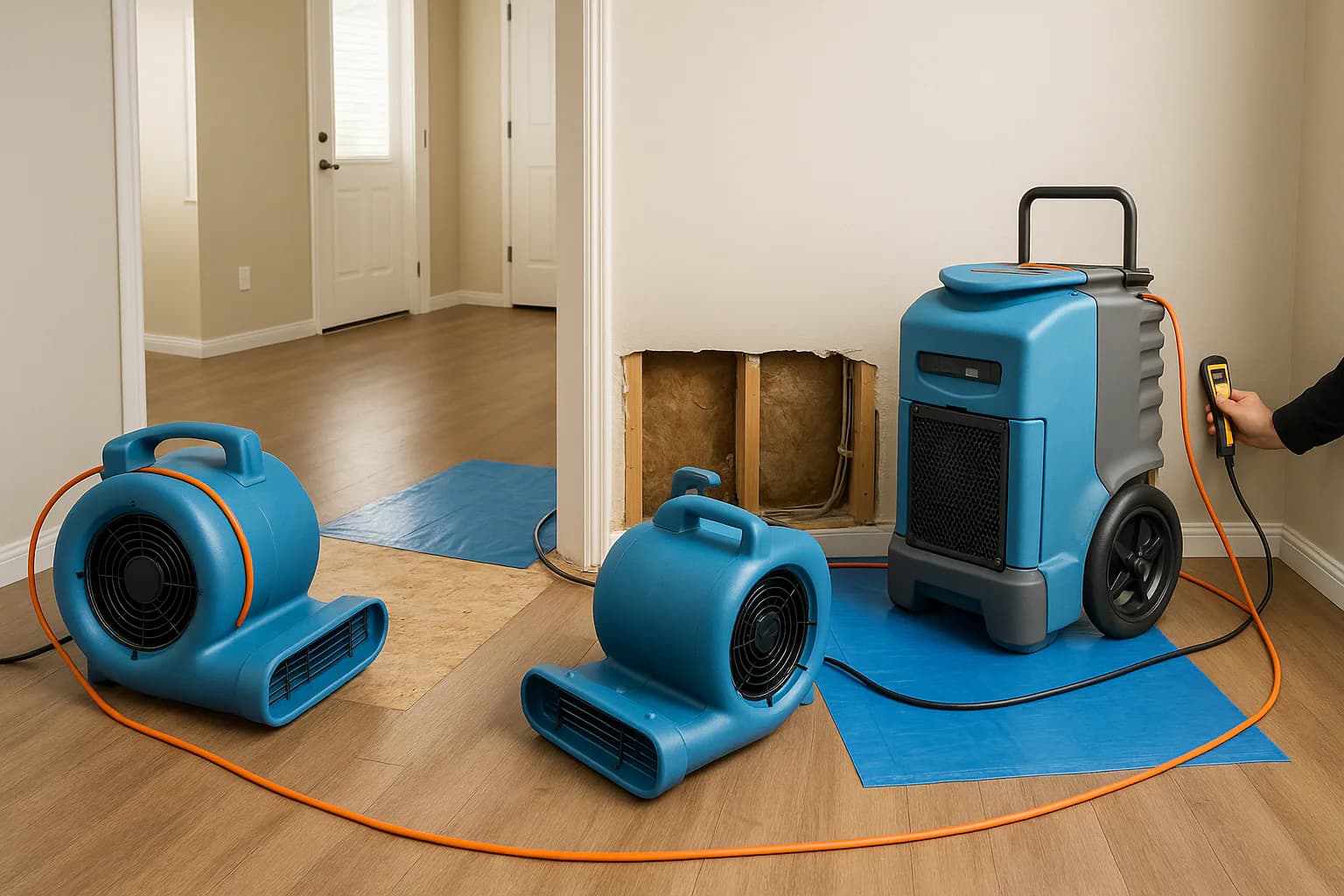
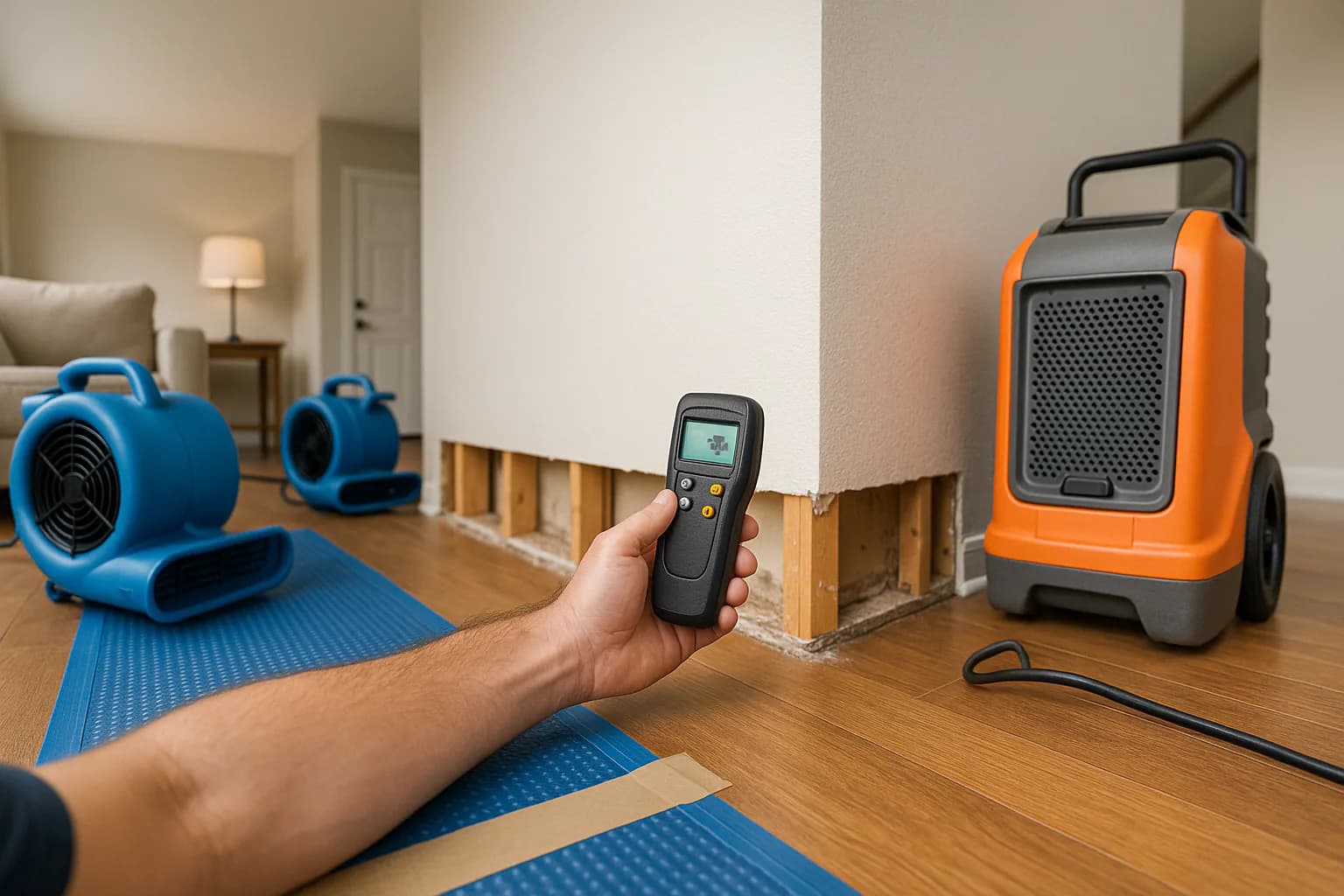
Moisture meters help identify hidden wet areas that are not visible to the naked eye, guiding targeted drying efforts. They also allow for daily monitoring to track drying progress over time. Consistent monitoring ensures that drying equipment is effectively placed and adjusted as needed to address persistent moisture pockets before reconstruction begins.
Temperature, humidity, and infrared screening
Measuring temperature and humidity is also an essential part of verifying drying after water damage. Thermo-hygrometers record ambient temperature and relative humidity, which influence drying rates and mold prevention. Restoration professionals use this data to adjust drying equipment and conditions for optimal results. For example, controlling humidity helps speed moisture evaporation while avoiding conditions that could lead to condensation or mold growth.
Infrared cameras serve as screening tools by detecting temperature differences on surfaces. Cooler areas may indicate moisture presence since evaporation causes surface cooling. While infrared cameras help quickly identify suspect areas, they cannot measure moisture content directly and are used alongside moisture meters for confirmation. Professionals also understand that infrared images can give false positives due to shadows, insulation differences, or airflow, so these cameras guide further inspection rather than replace moisture measurement tools.
How a drying map tracks progress
A drying map is a documented plan that tracks moisture measurements and drying equipment placement throughout the restoration process. It visually represents affected areas and moisture levels collected from meters and sensors. This documentation helps ensure that no areas are overlooked and that the drying plan evolves based on daily measurement data.
Daily or periodic readings make the map useful as a trend, not just a snapshot. If one area stops improving, the team can investigate airflow, trapped water, vapor barriers, or an overlooked moisture source before moving equipment. Consistent locations and notes make changes easier to compare.
- Identifies wet and dry zones in the structure
- Monitors drying equipment locations
- Documents moisture meter readings over time
- Supports mitigation and reconstruction planning
What a verified dry result looks like
A verified dry result is achieved when moisture meter readings return to levels consistent with dry control materials, ambient relative humidity and temperature indicate stable drying conditions, and infrared screening shows no hidden moisture. This comprehensive confirmation ensures that materials are sufficiently dry to reduce the risk of mold growth, which according to EPA guidance should be addressed promptly within 24–48 hours after exposure to moisture. Achieving verified dryness typically takes several days to a week, depending on conditions and water category.
Verification helps avoid ending drying based only on elapsed time or surface appearance. The final record should identify the materials checked, comparison method, reading locations, ambient conditions, and remaining concerns. Repair decisions can then be based on documented conditions and the requirements of the materials involved.
Important drying timeline
Wet materials should be dried within 24–48 hours to minimize conditions favorable to mold growth. Moldy areas larger than 10 square feet typically require professional assessment.
Related Water Damage Restoration Services
Connect with Local Water Damage Restoration Professionals
If your property has experienced water damage, restoration professionals in your area can help measure moisture accurately and plan effective drying. Contact Water Restoration Pros to be connected with trusted independent experts.
Call (833) 968-0848Frequently asked questions
Why is it important to measure moisture after water damage?
Can I use a moisture meter myself to check for water damage?
Does homeowners insurance cover water damage restoration?
Sources reviewed (2)
- U.S. EPA - Mold Course Chapter 2: EPA guidance to dry wet building materials within about 24 to 48 hours when possible.
- U.S. EPA - A Brief Guide to Mold, Moisture and Your Home: EPA guidance on moisture control, prompt drying, indoor humidity, and mold cleanup decisions.