Vinyl plank flooring offers a durable and water-resistant surface, making it a popular choice for many homes and businesses. However, water resistance in the plank material does not support the entire floor is protected from water damage. When water enters the floor assembly, the next steps depend on more than just the visible surface.
Water can seep through seams, gaps around walls, or damaged areas, affecting the underlayment and subfloor below. The extent of the damage, the type of water involved, and the flooring installation method all play a role in deciding whether wet vinyl plank flooring can be saved. Local restoration professionals connected through Water Restoration Pros use careful assessment to guide repair or replacement decisions.
Water-resistant planks vs. water-damaged floors
Many vinyl plank products are labeled as water-resistant or waterproof. This refers to the plank itself, which is designed to repel water from spills or surface moisture. However, a floor is more than just the planks—it includes seams, perimeter gaps, underlayment, and subfloor material. These components often allow water to pass through or collect underneath, especially if water spreads from an appliance leak, plumbing failure, or storm event.
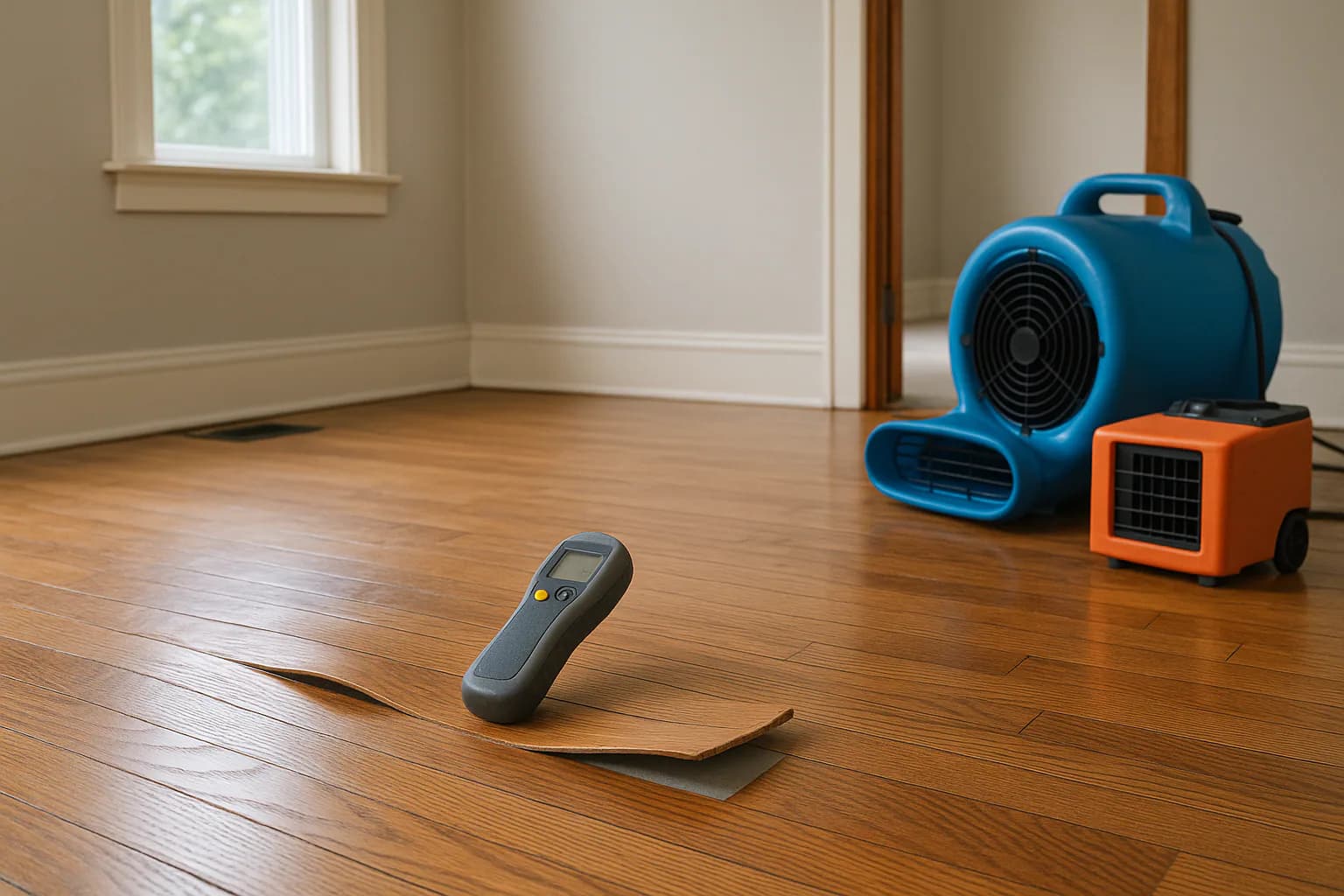
Water entering at the seams or along the perimeter can travel beneath the planks, leading to trapped moisture. Over time, this can cause the underlayment or subfloor to swell, warp, or deteriorate. A floor that appears fine on the surface may have hidden problems beneath. Restoration professionals look for signs such as buckling, cupping, or a musty odor. Moisture under the floor can also create conditions that allow mold growth if not addressed promptly.
How water enters and gets trapped
Water can reach beneath vinyl plank flooring in several ways. Seams between planks and edges where the flooring meets walls or transitions are common entry points. Floating floors, which are not glued down, can allow water to spread underneath more readily than glue-down products.
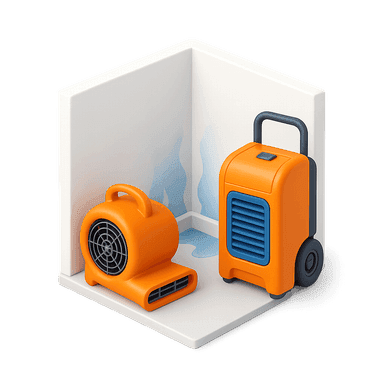
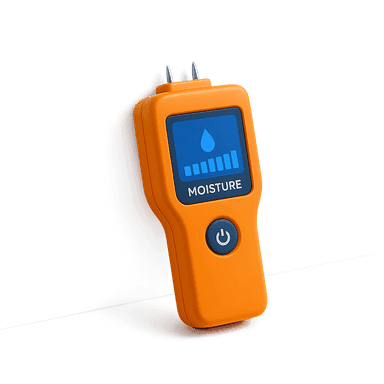
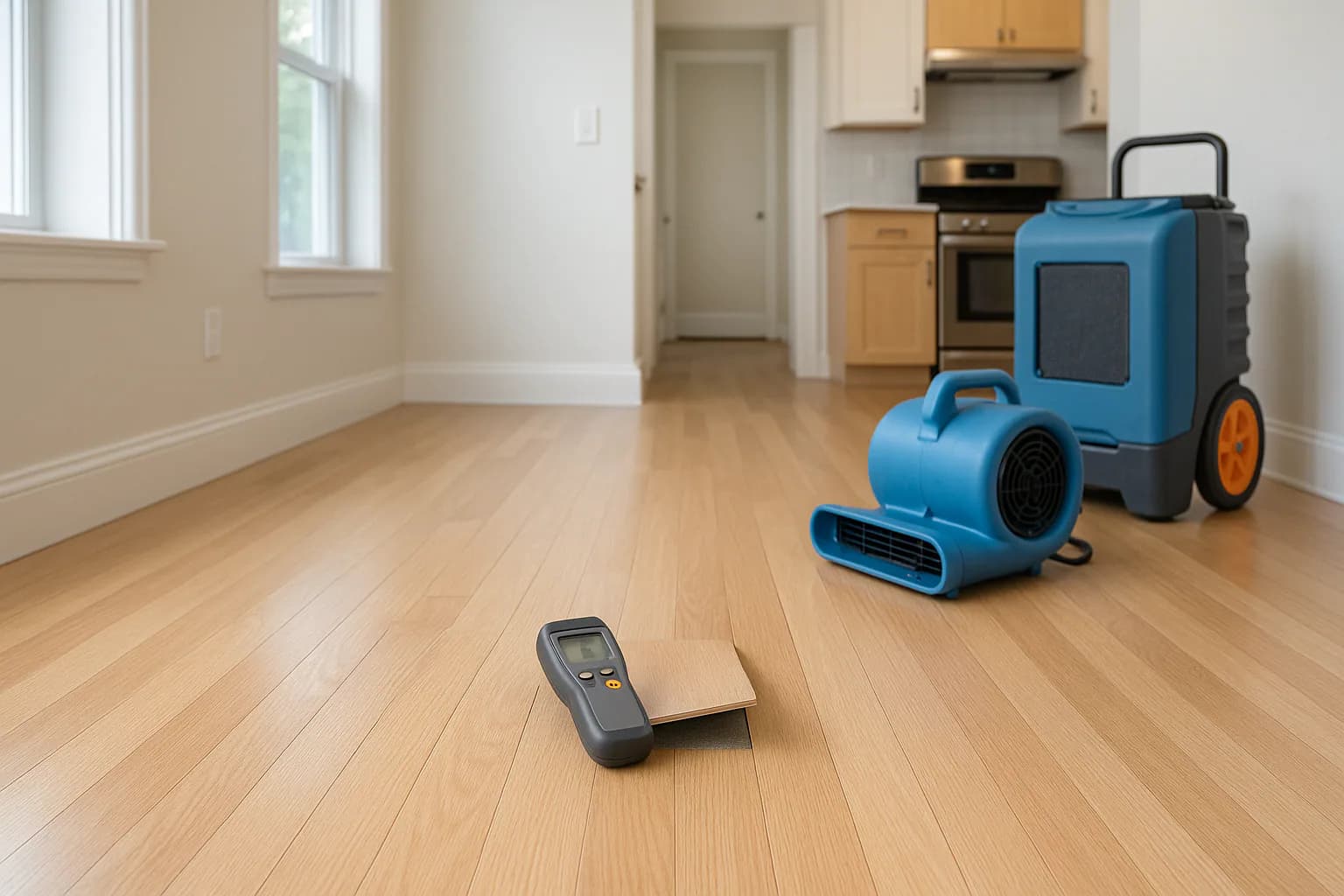
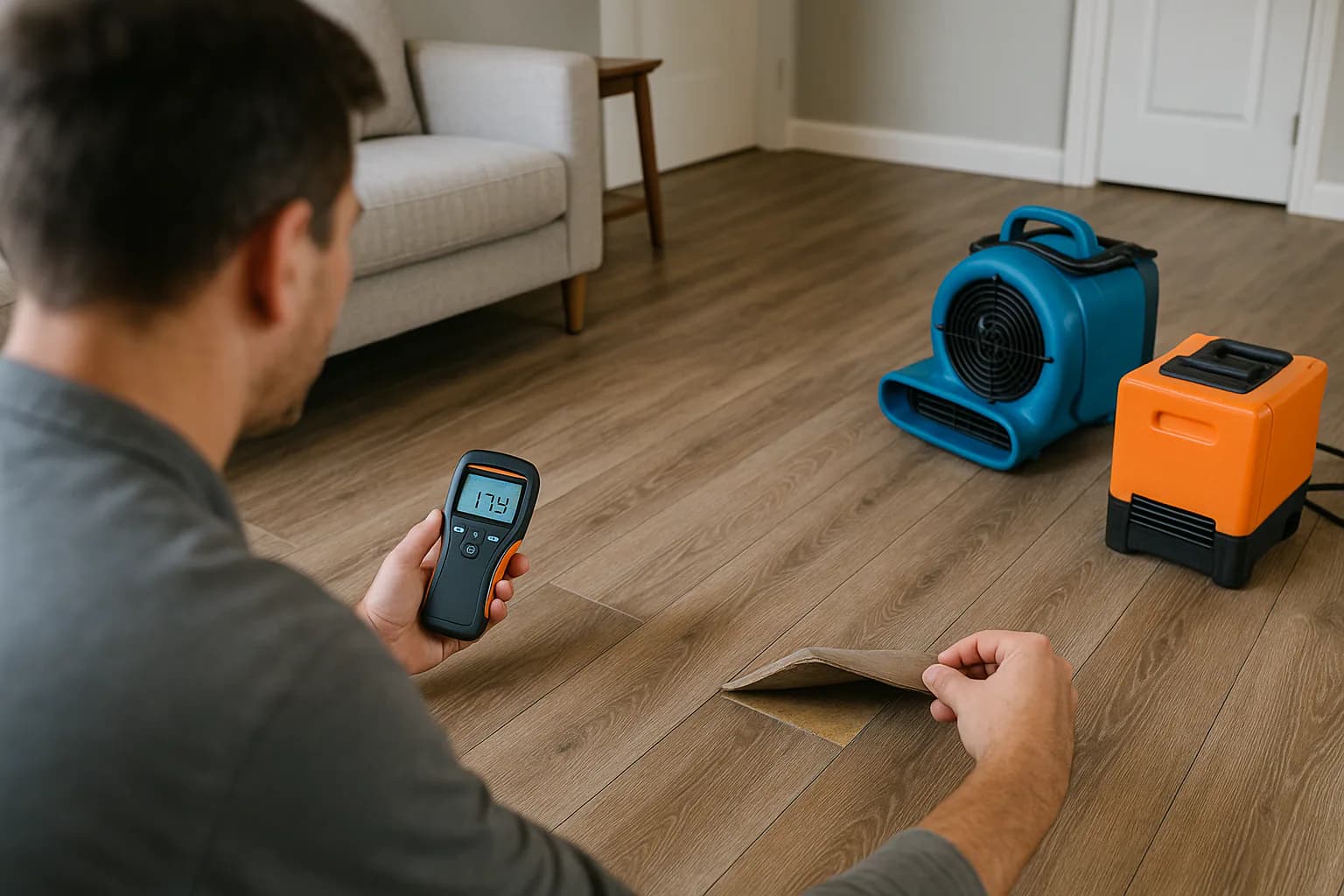
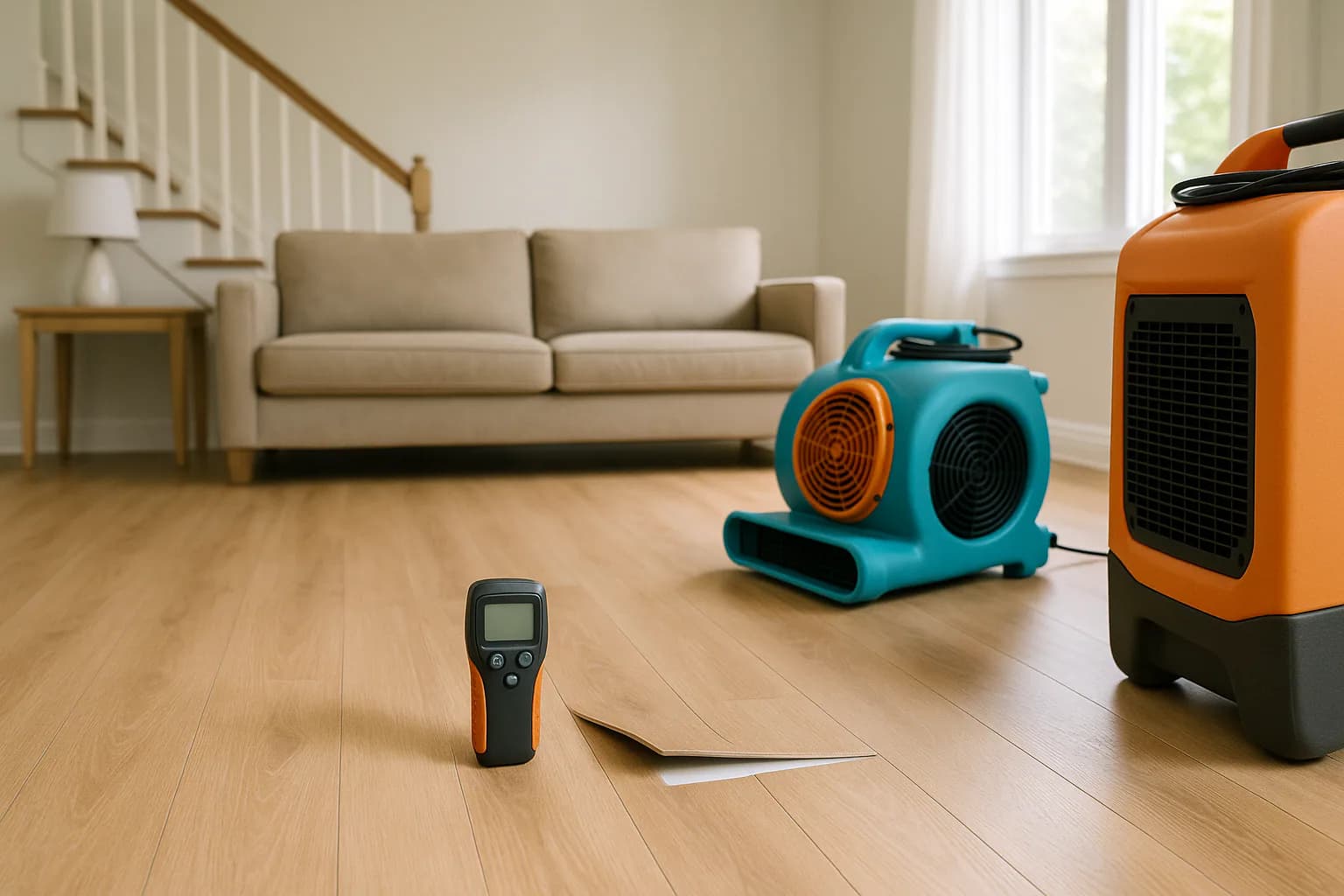
Once water is beneath the planks, it can saturate the underlayment and subfloor. Even a small spill can migrate under the surface if not cleaned promptly. According to EPA guidance, wet materials should be dried within 24 to 48 hours to reduce conditions that allow mold to grow. Restoration professionals use moisture detection tools to check for hidden water and determine how much of the assembly is affected.
If moisture is trapped for more than a day or two, professional assessment is recommended. Moisture left under the flooring can cause ongoing damage and complicate repairs. In some cases, the planks themselves remain undamaged, but the underlayment or subfloor may require drying or replacement.
Installation types: floating, glue-down, and rigid-core
Vinyl plank flooring is installed using different methods, and each affects how water damage is addressed. Floating floors are placed over an underlayment without adhesive. These can be easier to remove for drying, but also allow water to move freely beneath the floor. Glue-down planks are attached directly to the subfloor using adhesive, which can be weakened or damaged by water. Rigid-core planks offer a solid, water-resistant core, but water around edges or beneath the floor can still cause damage to the overall assembly.
Restoration professionals identify the installation type before planning repairs. With floating floors, planks can often be lifted to access and dry the underlayment and subfloor. Glue-down floors may require more careful removal, as water can compromise the adhesive bond and damage the planks during the process. Rigid-core products can resist water at the surface, but hidden moisture beneath must still be addressed. Misidentifying the installation type can lead to incomplete drying or unnecessary damage during removal.
Water source and contamination: clean vs. dirty water
The source and type of water affecting the vinyl plank flooring are key factors in deciding whether the floor can be saved. Clean water (Category 1), such as from a broken supply line, is less likely to cause long-term problems if dried quickly. Gray water (Category 2), like that from appliances, and contaminated or black water (Category 3), such as sewage or floodwater, require more extensive removal and sanitation.
Contaminated water can carry bacteria and other substances that make it difficult to safely reuse materials. Planks affected by Category 2 or 3 water are usually removed and not reinstalled due to sanitation concerns. Restoration professionals inspect and categorize the water source during their assessment, which guides the removal and cleaning process.
- Identify the source and category of water: clean, gray, or contaminated.
- Clean water increases the chance for salvage if dried promptly; contaminated water usually requires removal and safe disposal of affected materials.
- Carefully remove planks to prevent damage and allow full drying of underlayment and subfloor.
- Dry all materials within 24–48 hours to reduce the risk of mold-friendly conditions.
Tip
According to the EPA, drying wet materials within 24–48 hours reduces conditions that allow mold to grow. Moldy areas larger than about 10 square feet generally require professional attention.
Careful removal, drying, and reinstallation decisions
The ability to remove, dry, and reinstall vinyl planks depends on several factors. For floating floors exposed to clean water, undamaged planks can often be lifted, dried, and reinstalled after thorough drying of the underlying materials. Glue-down planks are more likely to be damaged during removal, especially if the adhesive or backing has been compromised by water. Rigid-core floors may allow some drying if water has not penetrated the plank seams.
Restoration professionals use tools to monitor moisture levels in the subfloor and underlayment before any reinstallation. If the planks show signs of warping, swelling, or visible damage, they may need to be replaced. Attempting to reinstall flooring over damp or damaged underlayment increases the risk of further issues, including plank movement or conditions that allow mold growth. Each situation is unique, and the approach depends on the assessment by local professionals.
Subfloor and underlayment: verifying dryness before repairs
Before reinstalling any vinyl plank flooring, it is crucial to confirm that the subfloor and underlayment are dry and undamaged. Restoration professionals use moisture meters to test these layers. Installing flooring over a damp subfloor can lead to warping, adhesive failure, or future repairs.
If the subfloor or underlayment is swollen, deteriorated, or moldy, it may need to be replaced before new or dried planks are installed. Reconstruction after water damage may cost more than mitigation, depending on the materials and finishes. Timely drying and repairs help prevent the need for extensive reconstruction. Professional assessment ensures that hidden moisture issues do not go unresolved, preserving the stability and appearance of the finished floor.
Related restoration services
Connect with local water damage restoration pros
If your vinyl plank flooring is wet, connect with local restoration professionals for careful assessment, water extraction, and drying. Local pros can help determine the next steps to restore your floor.
Call (833) 968-0848Frequently asked questions
How quickly should vinyl plank flooring be dried after water exposure?
Is water damage to vinyl plank floors covered by insurance?
Can vinyl plank flooring be reused after water damage?
Sources reviewed (2)
- U.S. EPA - A Brief Guide to Mold, Moisture and Your Home: EPA guidance on moisture control, prompt drying, indoor humidity, and mold cleanup decisions.
- U.S. EPA - Mold Course Chapter 2: EPA guidance to dry wet building materials within about 24 to 48 hours when possible.