Laminate flooring is a popular choice for many homes due to its affordability and appearance. However, when laminate flooring gets wet, homeowners often wonder, can wet laminate flooring be saved? Understanding how laminate reacts to moisture can help property owners make informed decisions about restoration or replacement. Water exposure may not always cause immediate visible damage, so recognizing the subtle effects on laminate materials is essential for timely and effective action.
Moisture problems in laminate flooring can lead to more extensive structural issues if not addressed promptly. Since laminate flooring is composed of multiple layers, water can affect each differently. Property owners should be aware of how the layers interact with water and what restoration professionals typically do to evaluate and mitigate damage. This knowledge can help in making decisions about drying, repair, or replacement.
Why laminate reacts badly to water
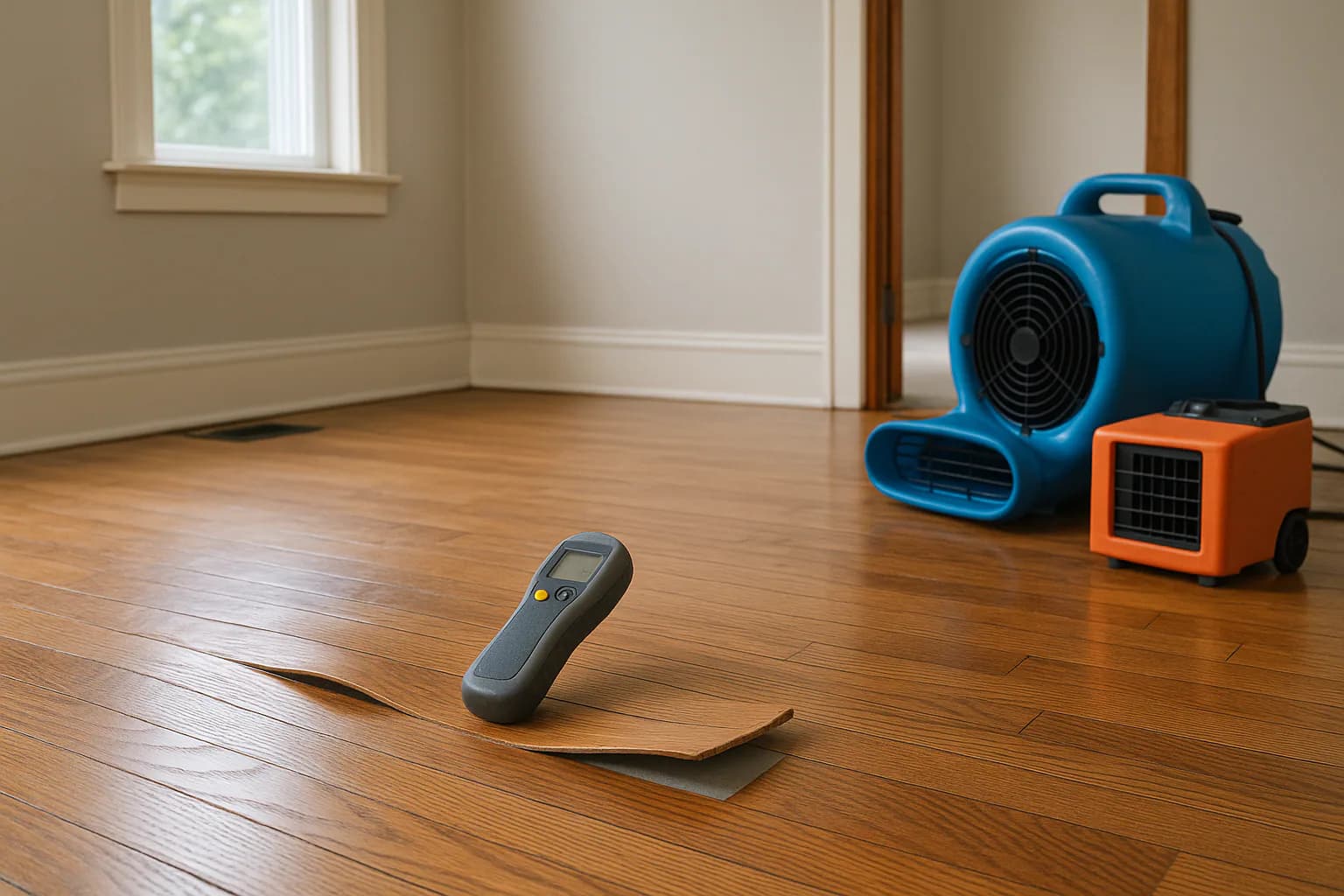
Laminate flooring typically has a protective wear layer that resists some water. However, the fiberboard core beneath is highly absorbent. When water seeps into the seams or edges, it can saturate the core and the underlayment below. This causes the boards to swell, warp, or develop soft spots that reduce structural integrity. Because the core and underlayment materials are engineered wood products, they are vulnerable to moisture damage and do not dry out easily once saturated.
The wear layer on laminate flooring is designed primarily for scratch and stain resistance, not prolonged water exposure. Even if the surface appears intact, water can penetrate through gaps at the edges or seams, especially if the flooring was installed without proper moisture barriers. Once the fiberboard core absorbs water, it can expand and lose strength. The subfloor and underlayment beneath may also trap moisture, prolonging drying times and increasing the chance of further damage or mold growth if not addressed properly.
Signs the damage has reached the core
Surface appearance alone is not a reliable indicator of laminate flooring condition after water exposure. Signs that water has penetrated the core include:
- Edge swelling making boards thicker or raised above adjacent boards
- Peaked or separated seams where boards no longer fit tightly together
- Soft or spongy spots underfoot indicating weakening of the fiberboard
- Persistent musty or damp odors suggesting trapped moisture beneath or between layers
- Visible warping or buckling of boards that do not return to flatness once dry
Restoration professionals look carefully for these signs when assessing water damage to laminate flooring. Sometimes the wear layer can look undamaged while the core is swollen or compromised. It is also common for seams to peak or separate as the boards expand unevenly. Odors may linger if moisture remains trapped under the flooring or in the subfloor, signaling that drying has been incomplete. Soft spots indicate loss of structural support and may be a safety concern.
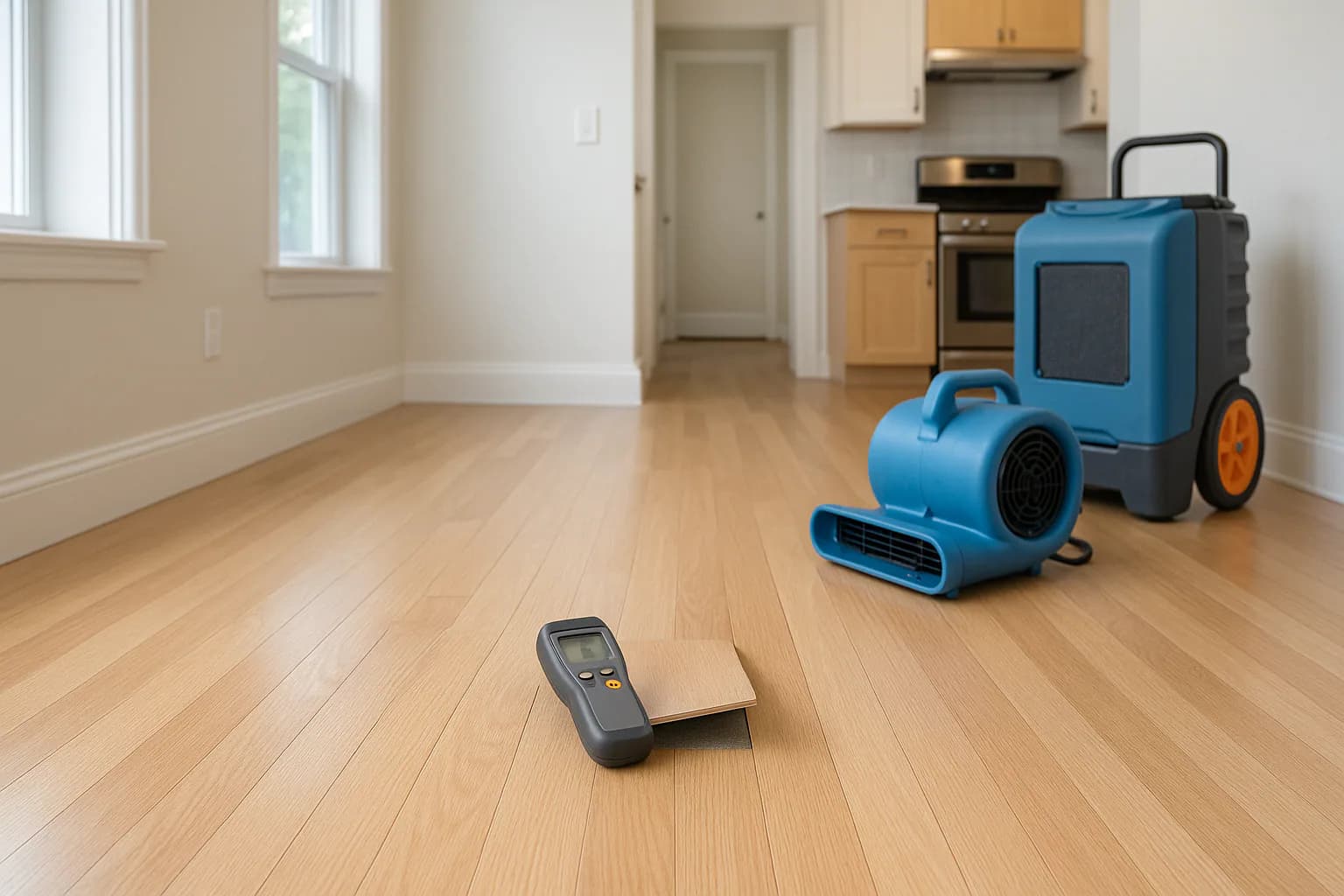
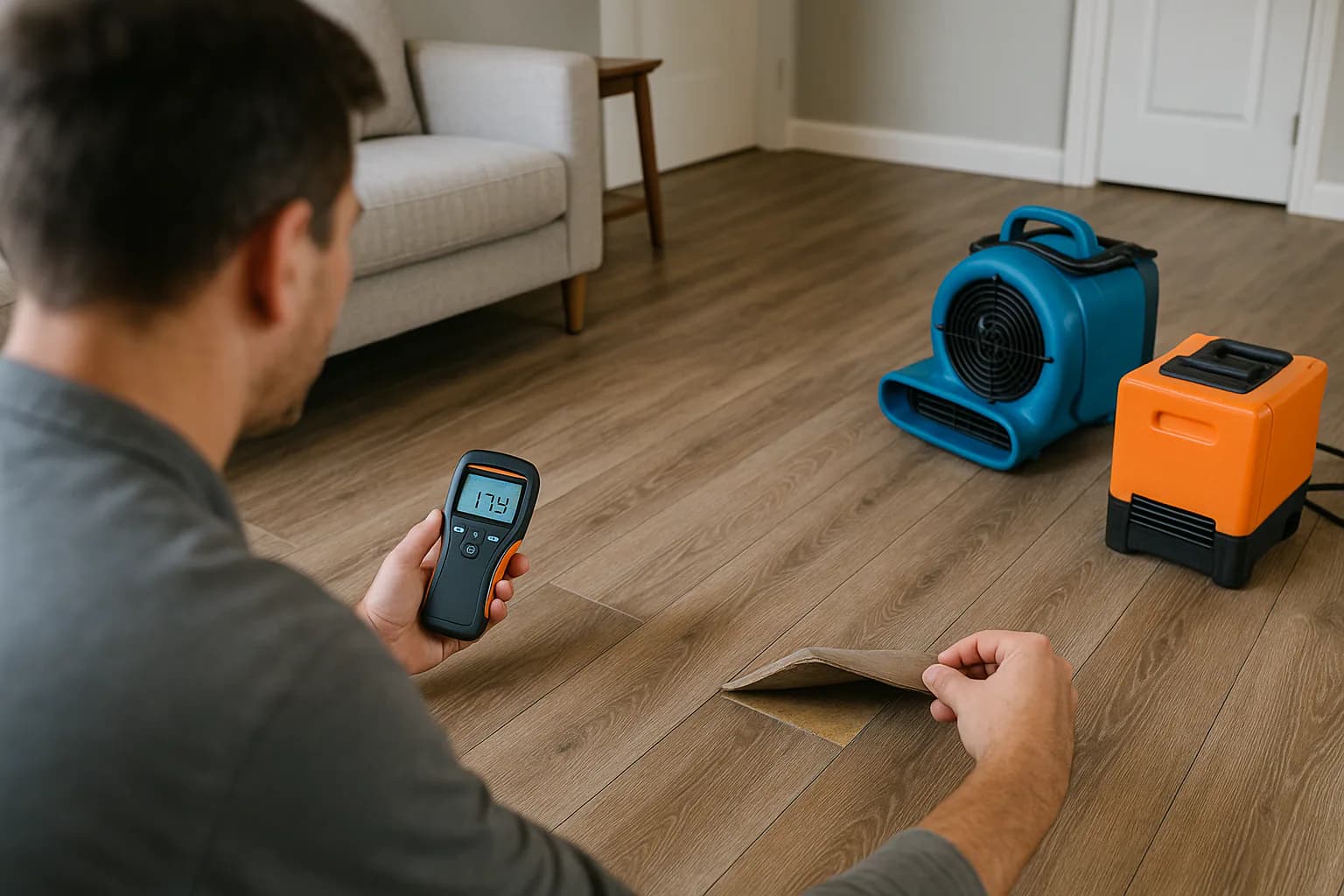
Swollen boards generally do not return to their original shape after drying. Even when laminate appears dry on the surface, underlying damage may require replacement of affected boards or entire sections. Restoration professionals may use moisture meters and inspection tools to determine how far moisture traveled beyond visible symptoms.
When a small wet area may be recoverable
If the wet area is limited and the water was clean (Category 1), quick action may allow some laminate flooring to be saved. The key factors include drying the boards and the subfloor within 24–48 hours to limit mold growth as recommended by EPA guidance. Limited disassembly of affected boards can help promote faster drying by exposing the core and underlayment to air circulation.
During mitigation, restoration professionals carefully identify all affected boards, removing any standing water promptly to prevent further soaking. They may carefully remove or lift the damaged boards to improve air flow underneath and around the fiberboard core. This exposes trapped moisture and accelerates evaporation, helping to avoid long-term damage. Monitoring moisture levels throughout this process is critical to confirm effective drying and prevent conditions that allow mold growth, especially since mold can develop within 24–48 hours in wet materials.
- 1
Identify the wet area
Locate all affected boards and inspect for visible swelling or separation.
- 2
Remove moisture promptly
Use water extraction tools or towels to remove standing water.
- 3
Disassemble affected boards
Carefully lift or remove damaged sections to allow air flow to the core and subfloor.
- 4
Use drying equipment
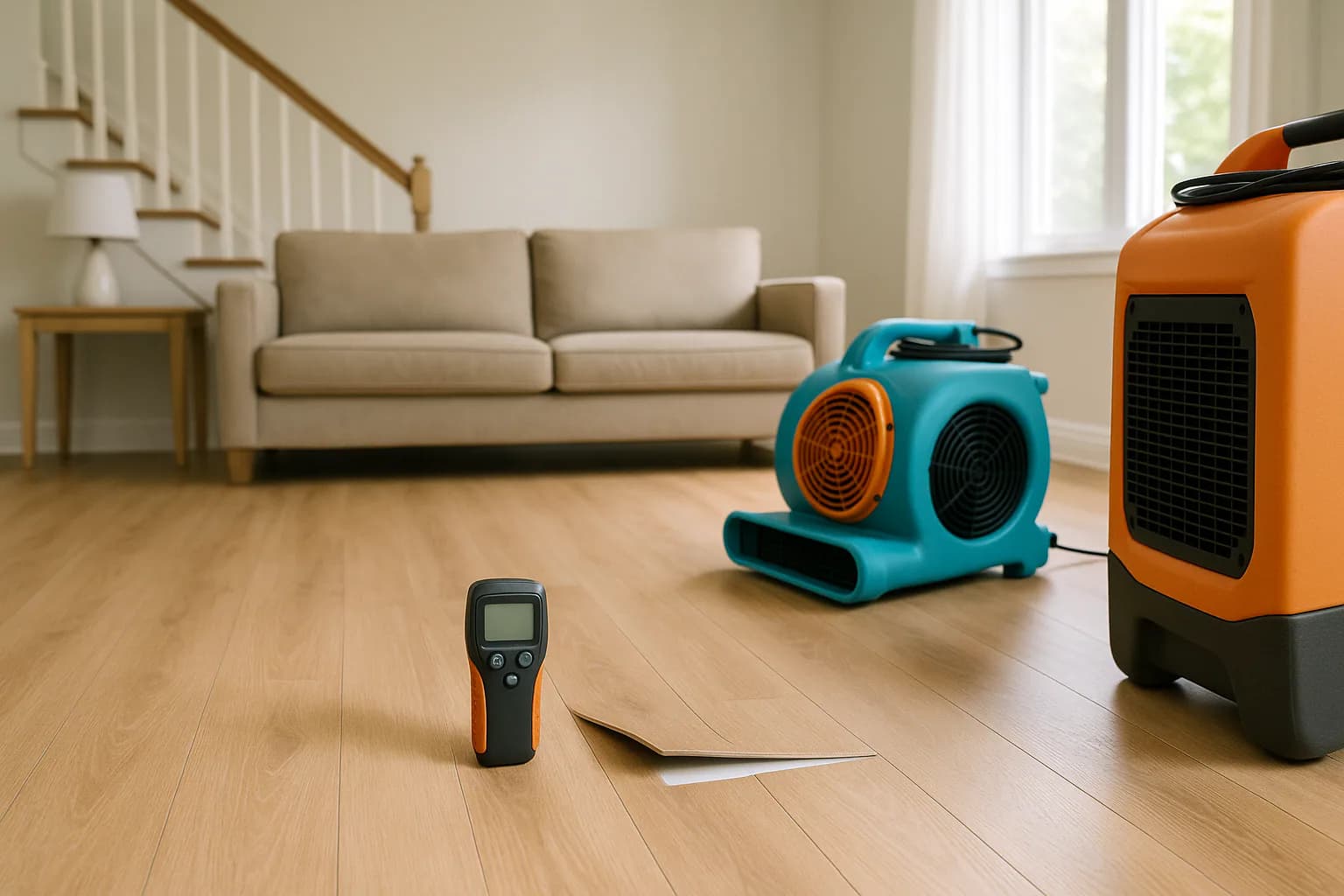
Deploy fans, dehumidifiers, or structural drying equipment to speed evaporation.
- 5
Monitor moisture levels
Check regularly to confirm drying progress and reduce the conditions that allow mold growth.
Important drying window
Materials wet with clean water should be dried within 24–48 hours to reduce conditions that allow mold to grow. Larger moldy areas generally require professional intervention.
When removal and replacement make more sense
If laminate flooring has been exposed to contaminated water (Category 2 or 3), such as gray water or black water from sewage or flooding, removal and replacement is usually necessary. Contaminated water poses sanitation risks, so safe handling and disposal are critical. Additionally, visibly swollen or warped boards rarely return to their original shape once dried. In these cases, replacement avoids ongoing structural or aesthetic problems.
Salvage is not determined by appearance alone. A professional may consider the source of the water, how long the floor stayed wet, visible swelling at seams, moisture in the underlayment or subfloor, and the manufacturer requirements for the installation. Those conditions can support a repair decision without promising that individual planks can be reused.
Dry the subfloor before installing anything new
Even after removing damaged laminate, moisture trapped in the subfloor can cause future issues such as mold growth or damage to new flooring. Restoration professionals use moisture detection tools, including moisture meters and thermal imaging, to assess subfloor dryness accurately. This step ensures that hidden pockets of moisture are identified and addressed before new flooring is installed.
Structural drying techniques involve using specialized equipment such as air movers, dehumidifiers, and sometimes heat to thoroughly dry the subfloor and surrounding materials. This process can take several days depending on moisture levels and environmental conditions. Proper drying is essential to prevent recurring problems like mold growth or flooring failure. Restoration pros follow industry best practices to confirm dryness before proceeding with reconstruction, helping to protect the investment in new flooring.
Related Water Damage Restoration Services
Connect with Local Water Damage Restoration Pros
For assistance with wet laminate flooring or other water damage issues, contact restoration professionals in your area. They provide expert mitigation, drying, and repair services to help protect your property.
Call (833) 968-0848Frequently asked questions
Can laminate flooring be dried and reused after flooding?
How long does it take to dry wet laminate flooring?
Does homeowners insurance cover laminate flooring water damage?
Sources reviewed (2)
- U.S. EPA - A Brief Guide to Mold, Moisture and Your Home: EPA guidance on moisture control, prompt drying, indoor humidity, and mold cleanup decisions.
- U.S. EPA - Mold Course Chapter 2: EPA guidance to dry wet building materials within about 24 to 48 hours when possible.