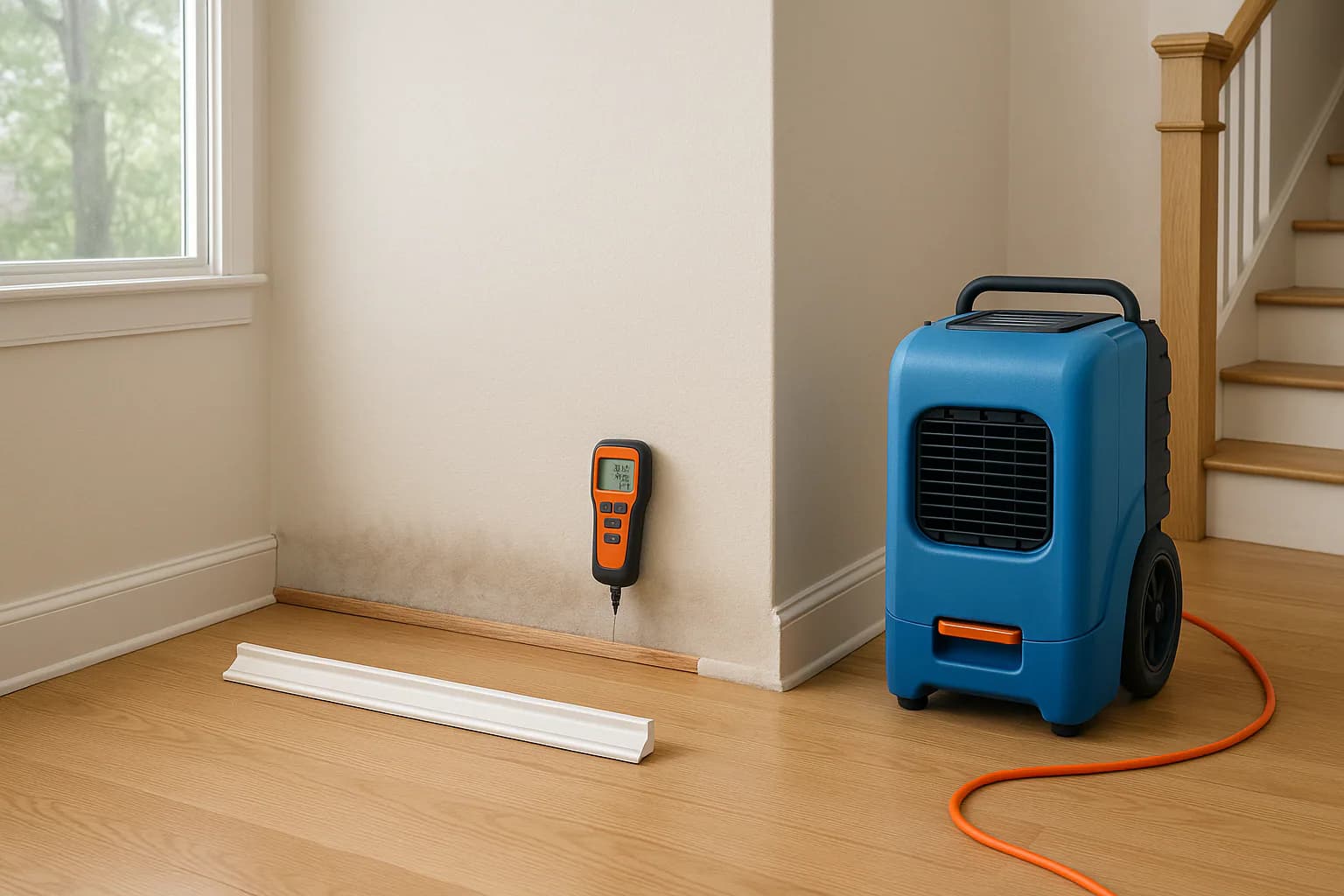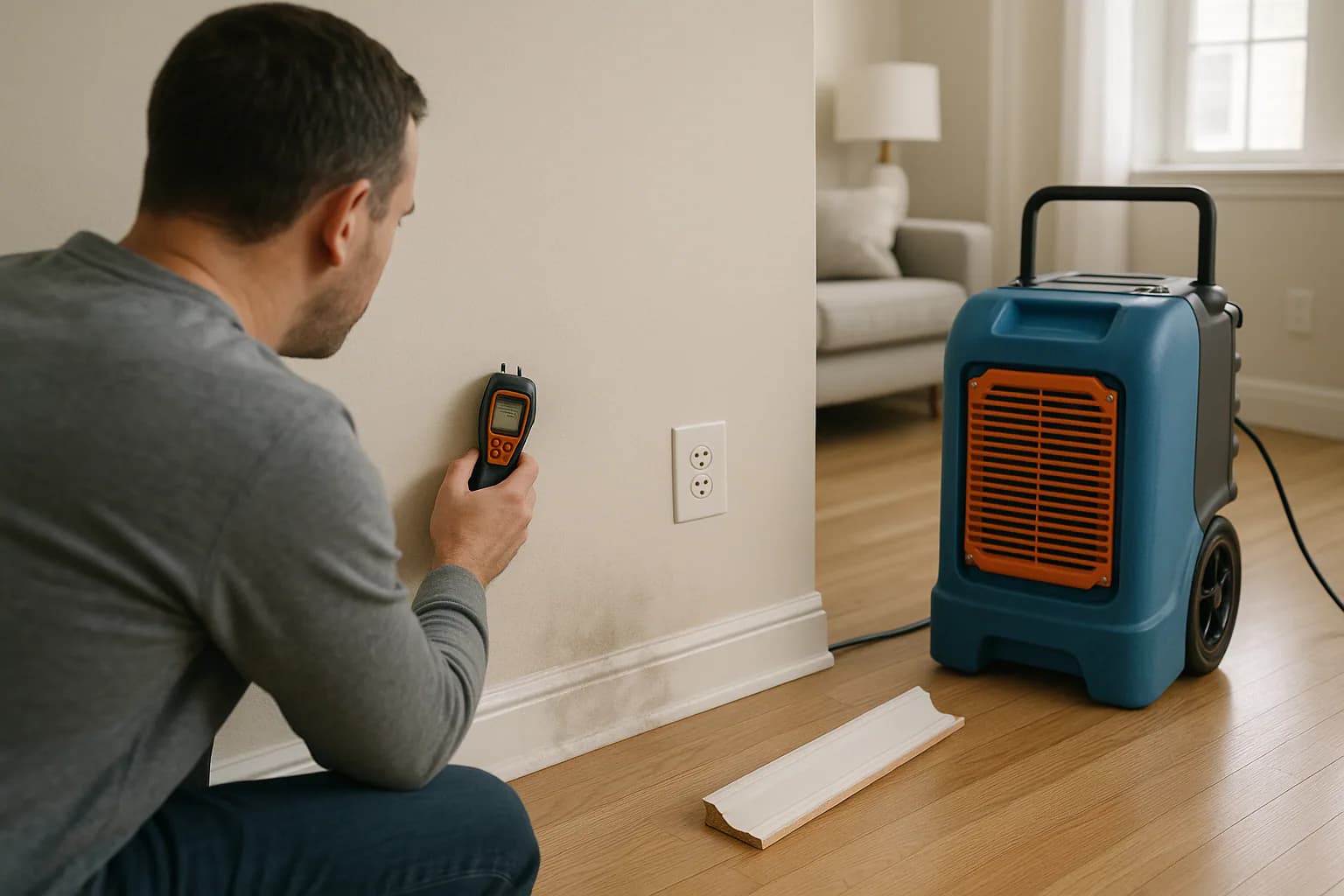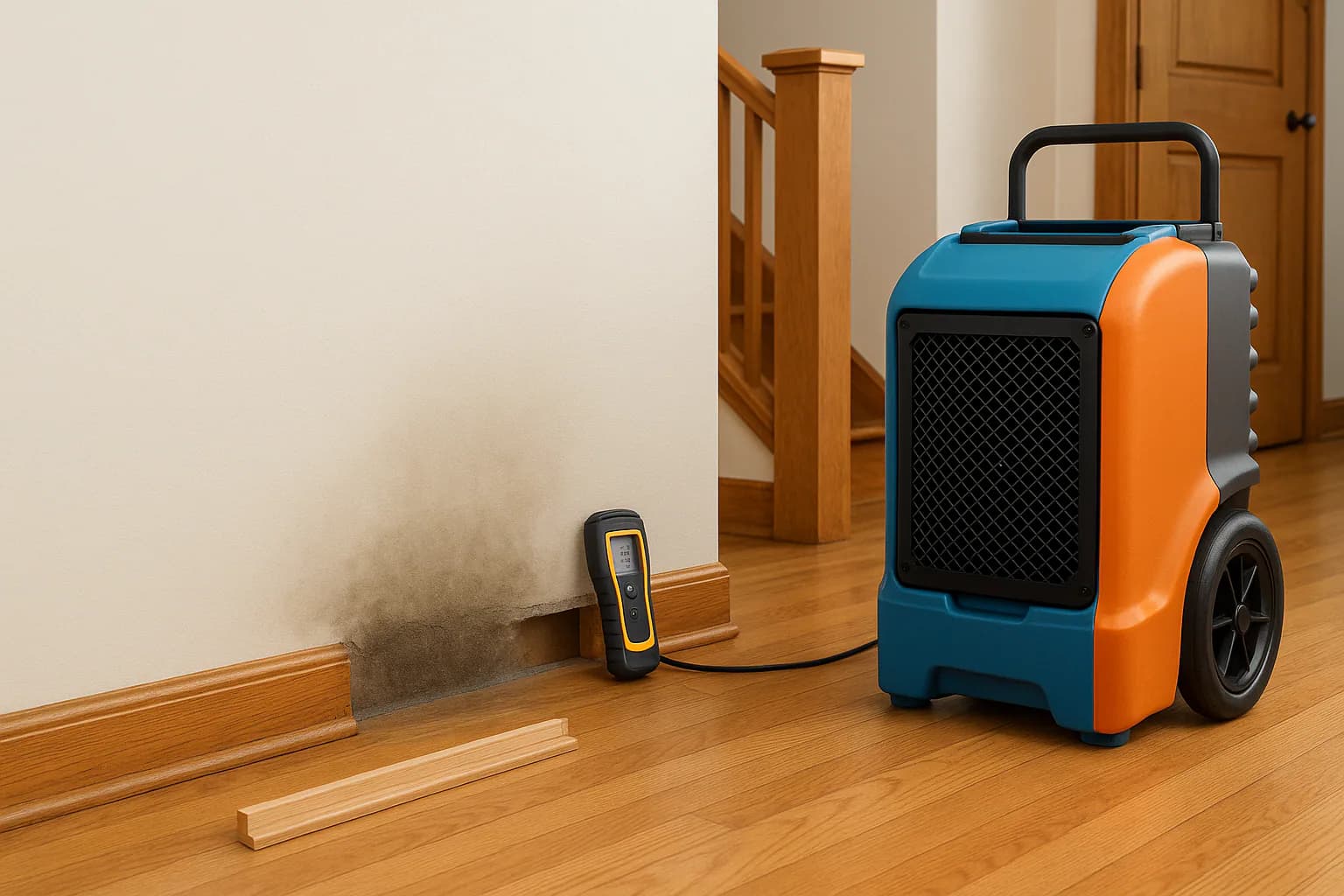
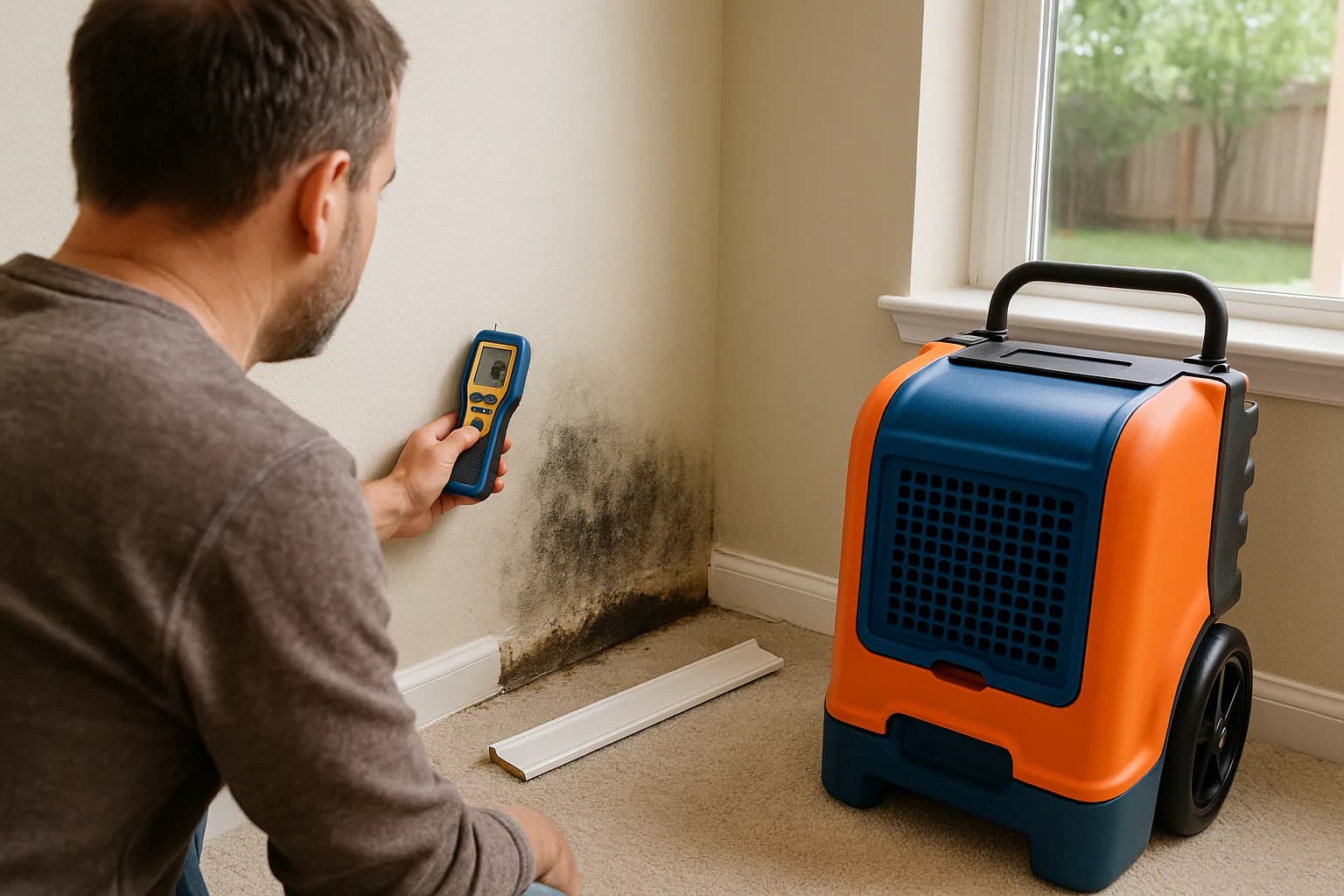
After water damage, moisture control is the main concern. Mold can grow when materials stay damp, so prompt drying and fixing the source of water are the key steps. The color of mold does not show how serious the moisture problem is.
What “black mold” means
“Black mold” is a common term for mold that looks dark in color. EPA guidance focuses on the moisture problem rather than the color of the growth. Any visible mold suggests that materials stayed wet long enough for growth to begin, so the priority is to correct the moisture source and dry the area safely.
Find and correct the moisture source
Mold usually points to a water source that has not been corrected. That source may be a leak, a spill, or water intrusion from another cause. A local pro can help inspect hidden areas, such as wall cavities or under flooring, where moisture may not be obvious.
Thermal imaging can help screen for temperature patterns that may suggest damp areas, but it does not prove moisture or mold on its own. Direct measurement and inspection are still needed to confirm what is wet and what needs drying.
Dry wet materials as soon as possible
EPA guidance says wet building materials should be dried within about 24 to 48 hours when possible. Quick drying reduces the conditions that allow mold to grow. Fans, dehumidifiers, and ventilation may help, but the goal is to remove moisture from affected materials, not just move air around the room.
Practical drying steps
Safe drying starts with stopping the water source if it can be done without electrical or structural risk. From there, affected materials should be dried as soon as possible. Hidden moisture can remain behind walls, under floors, or in other concealed spaces, so inspection of those areas may be needed to confirm that drying is complete.
If standing water is present or energized equipment may be involved, the area should be avoided until it is safe. The focus should stay on removing moisture and checking whether materials are still wet.
DIY limits and when to bring in professionals
The EPA says mold cleanup in an area larger than roughly 10 square feet is a point where professional help should be considered. Smaller areas may still require caution if the material is heavily damaged, the source of moisture is not fixed, or the cleanup is difficult to do safely.
Independent restoration professionals can help with drying, cleanup, and moisture-control decisions. They may also help determine which materials can be cleaned and which may need to be removed based on the condition of the damage. Water Restoration Pros connects homeowners with those independent professionals; it does not perform the work itself.
Why moisture control matters after cleanup
Cleanup alone is not enough if the area stays damp. EPA guidance emphasizes prompt drying, indoor humidity control, and fixing the moisture source to reduce the chance of mold returning. Ongoing dampness can keep conditions favorable for growth even after visible mold is removed.
Practical moisture-control steps include watching for leaks, keeping affected areas dry, and using dehumidification where appropriate. The goal is to keep indoor conditions from staying wet long enough for mold to reestablish itself.
Floodwater and sewage require extra caution
If the water damage involves floodwater or sewage, the water may be contaminated. In that case, avoid exposure and follow public-health guidance. Safe handling and sanitation are important, and a local pro can help manage the cleanup with the right precautions.
How insurance may fit in
Insurance coverage for mold or water damage depends on the cause, policy language, exclusions, endorsements, limits, deductible, and the facts of the claim. Homeowners should review the policy and contact the insurer directly. Coverage is not something a restoration guide can determine in advance.
A practical next step
After water damage, the most useful first questions are simple: what got wet, how long it has been wet, and whether the moisture source has been fixed. Those answers help determine whether drying, cleanup, or further inspection is needed. Acting quickly can reduce the conditions that allow mold to grow.
What a moisture-focused assessment should answer
A useful assessment begins with the water source and the materials that stayed damp. It should identify whether the source is active, where moisture may have traveled, which surfaces are visibly affected, and whether porous materials can be inspected and dried. A musty odor or dark discoloration can support further investigation, but appearance alone does not identify a mold species or establish a health conclusion.
Ask how moisture findings were confirmed. Thermal imaging may screen for temperature patterns, while moisture meters or direct inspection provide more specific evidence about a material. The assessment should also explain whether the affected area can be addressed without opening a larger assembly and how nearby areas will be protected during cleanup. EPA guidance puts source correction and moisture control at the center of the decision.
After cleanup, the closeout question is not whether a surface looks new. It is whether the moisture source was corrected, retained materials are dry, debris was removed appropriately, and conditions that supported growth have been addressed. Keep photographs, moisture records, and a description of removed materials. Those records provide a clearer property history without promising that mold can never return.
Explore Related Services
Connect with Local Restoration Pros
If you're dealing with water damage and potential mold issues, contact restoration professionals in your area for expert assistance.
Call (833) 968-0848Frequently asked questions
How quickly should wet materials be dried after water damage?
Does the color of mold tell you how serious it is?
When should a homeowner consider professional help for mold cleanup?
Can thermal imaging prove there is mold?
What should be done if the water damage involved sewage or floodwater?
Sources reviewed (3)
- U.S. EPA - Mold Cleanup in Your Home: EPA cleanup guidance, including the roughly 10-square-foot threshold for considering professional help.
- U.S. EPA - Mold Course Chapter 2: EPA guidance to dry wet building materials within about 24 to 48 hours when possible.
- U.S. EPA - A Brief Guide to Mold, Moisture and Your Home: EPA guidance on moisture control, prompt drying, indoor humidity, and mold cleanup decisions.