What a Musty Smell After a Water Leak Usually Means
A musty smell after a water leak usually points to moisture that is still present somewhere in the building. Even when surfaces look dry, water can remain in wall cavities, flooring, insulation, or other porous materials. The odor is a useful warning sign that the affected area needs a closer look and more drying.
The smell does not prove exactly where the moisture is or whether mold is present, but it should not be ignored. EPA guidance treats musty odors as a clue that damp materials may still be in the home. Finding and drying the wet area promptly helps reduce the conditions that allow mold to grow.
Why the Odor Can Linger After the Surface Looks Dry
A leak can wet materials below the surface while leaving the top layer looking normal. Drywall, wood, carpet padding, and insulation can hold moisture after the visible water is gone. That is why a room may seem fine but still carry a damp, earthy smell.
Odors may be strongest near the leak, but they can also spread to nearby rooms. In some homes, the smell is first noticed long after the leak itself, especially if hidden moisture was not fully addressed. A lingering odor is a sign to check for damp materials rather than assume the problem has passed.
Where Hidden Moisture Often Collects
After a leak, moisture often settles in places that are hard to inspect by sight alone. The exact path depends on the building layout, the leak source, and the materials involved. Restoration professionals look closely at areas where water commonly travels or becomes trapped.
- Inside wall cavities near the leak source
- Under flooring, carpet, or baseboards
- Behind cabinets, vanities, or built-ins
- In crawl spaces, basements, or closets with limited airflow
- Around HVAC openings where odors may spread
These areas can hold dampness even when the surrounding room appears dry. A visual check is helpful, but it is not always enough to find moisture that has moved into hidden spaces.
Why Fast Drying Matters
EPA guidance recommends drying wet building materials within about 24 to 48 hours when possible. Prompt drying helps reduce the conditions that allow mold to grow and can limit how far moisture spreads into materials.
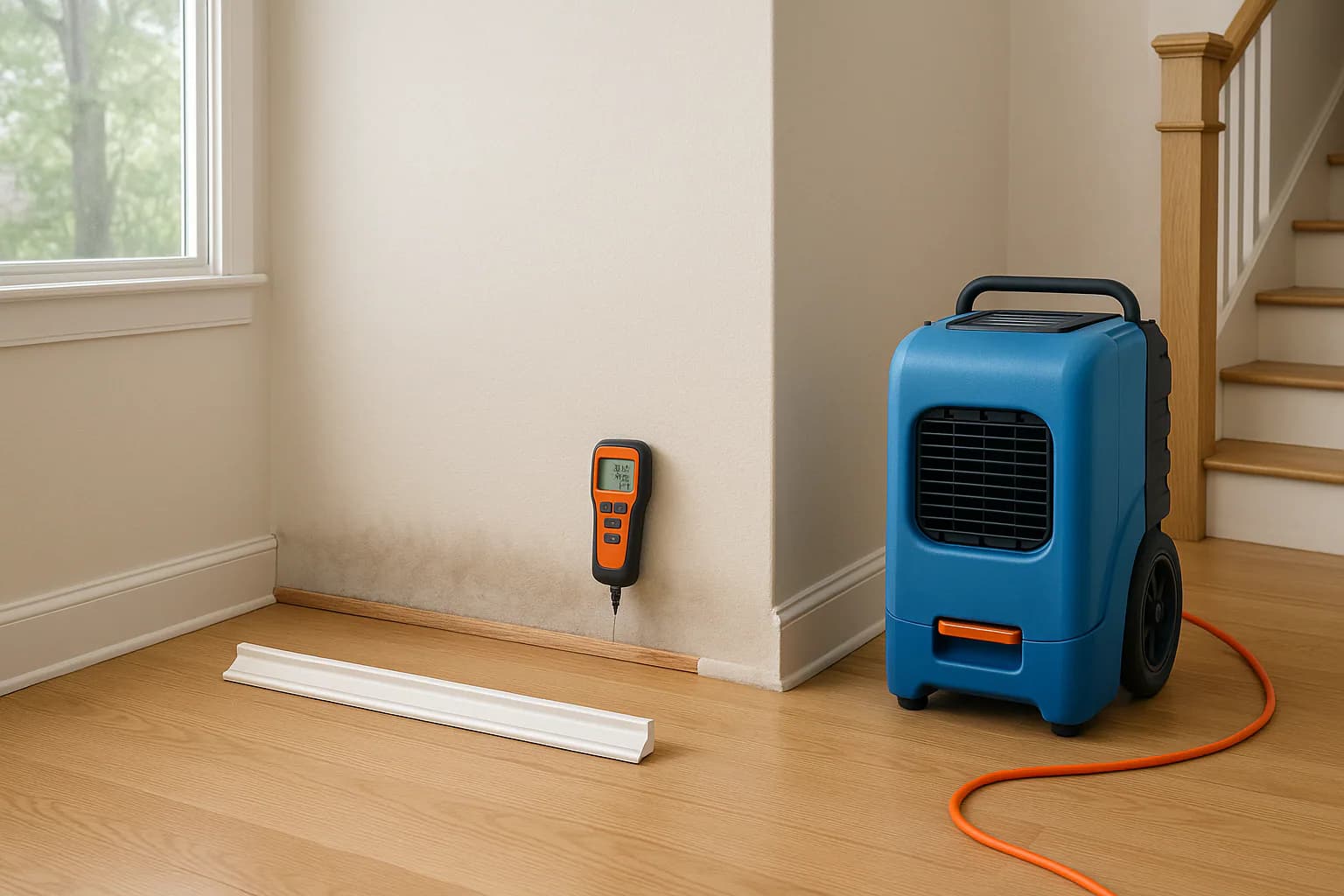
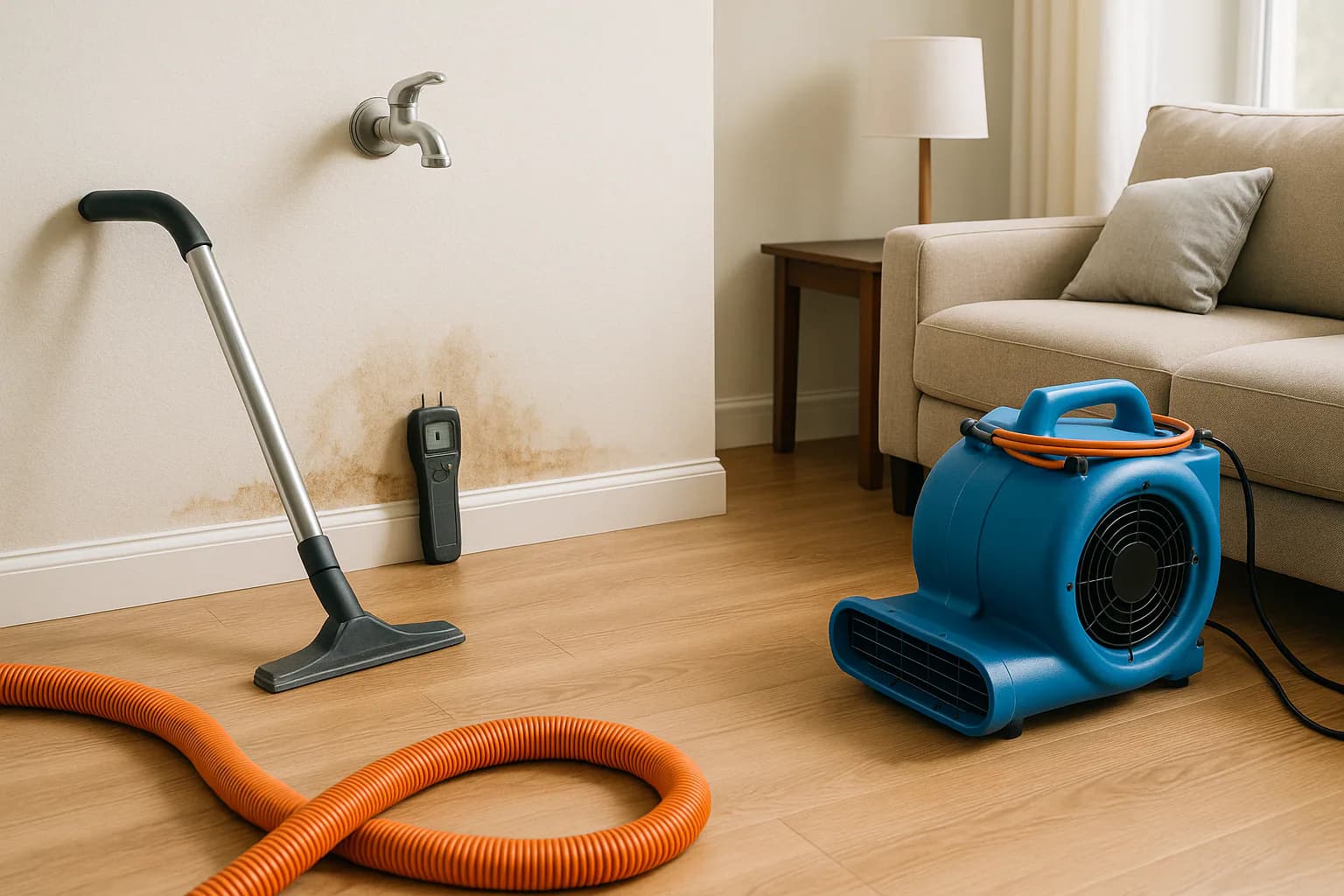
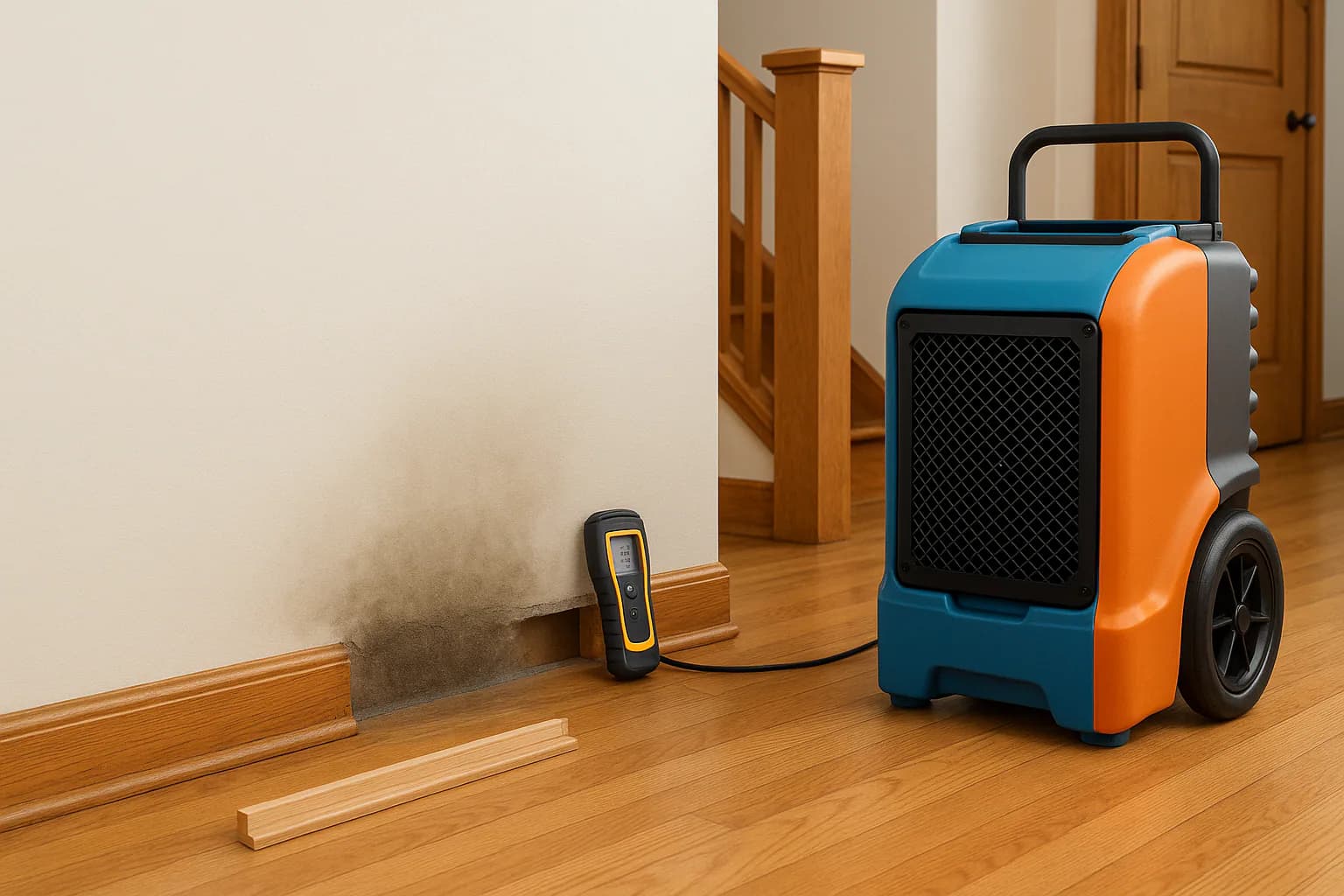
Drying usually takes more than opening windows or running a household fan. Restoration professionals may use air movers, dehumidifiers, and moisture meters to check progress and focus drying where it is needed. The goal is to remove moisture from the affected materials, not just dry the air in the room.
What a Moisture Assessment May Include
When a musty odor persists, a local pro can inspect the area for concealed dampness. Moisture meters are used to check materials directly, and thermal imaging may be used to screen for temperature patterns that could suggest hidden moisture. Thermal imaging alone does not prove moisture or mold, so any suspicious area should be confirmed by direct measurement or inspection.
The assessment may also include checking for an ongoing leak, reviewing the extent of affected materials, and deciding whether drying in place is possible. If materials such as insulation or carpet padding remain saturated, removal may be recommended based on the conditions found on site.
How Restoration Professionals Approach Drying
Drying plans depend on the materials involved and how much water they absorbed. Restoration professionals may set drying targets for structural materials and monitor conditions over time. If moisture has spread into multiple areas, they may focus on the source, the wettest materials, and the spaces where airflow is limited.
If materials cannot be dried effectively in place, removal may be part of the process. The goal is to address the wet materials directly rather than cover up the odor and leave the moisture behind.
Common Mistakes After a Leak
One common mistake is assuming that a dry-looking surface means the whole area is dry. Moisture can remain hidden inside walls, under floors, or behind trim long after the visible water is gone. Another mistake is masking the odor with air fresheners or paint, which does not remove the moisture causing it.
Delaying inspection or drying can make the problem harder to manage. If the smell remains after cleanup, the area likely needs a closer look for trapped moisture rather than more fragrance or surface treatment.
Practical Steps to Take When You Notice the Smell
A musty odor after a leak is a signal to act quickly and carefully. The most useful steps are simple and focused on finding the moisture source, drying the area, and avoiding exposure to unsafe conditions.
- Find and stop the leak source if it is still active.
- Look for visible signs of dampness, such as staining, warping, or soft materials.
- Increase airflow only if the area is safe and there is no contaminated water or suspected mold exposure.
- Avoid covering the odor with sprays, air fresheners, or paint.
- Consider a moisture assessment if the smell does not fade after cleanup.
If water was contaminated or came from sewage or floodwater, follow public-health guidance and avoid direct exposure. Safe handling matters when materials may be contaminated, and drying or cleanup decisions should be made with that in mind.
When to Consider Professional Help
EPA cleanup guidance notes that larger areas of mold growth may warrant professional help, with a rough threshold of about 10 square feet. Even when mold is not visible, a persistent musty smell after a leak can indicate that hidden moisture still needs attention.
Independent restoration professionals can help locate damp materials, confirm what is wet, and recommend drying steps based on the conditions in the home. If the odor continues, or if the affected area is hard to reach, a professional assessment can help identify what still needs to be dried or removed.
Insurance and Next Steps
Coverage and claim outcomes depend on the cause of the leak, the policy language, exclusions, endorsements, limits, deductible, and the facts of the claim. Homeowners should review the policy and contact the insurer with questions about the specific loss.
The most practical next step is to document the visible damage, address the leak source, and arrange for drying as soon as possible. Fast action can make the cleanup simpler and reduce the conditions that allow mold to grow.
Still Smell Something Musty?
A lingering musty smell is a reason to check for remaining moisture. Water Restoration Pros can connect you with restoration professionals that service your area and can assess the affected materials.
Call (833) 968-0848Frequently asked questions
Does a musty smell always mean mold is present?
Will the smell go away once the area dries?
Can air fresheners or paint fix the smell?
How quickly should wet materials be dried after a leak?
When should a homeowner consider professional help?
Can thermal imaging prove there is moisture behind a wall?
Sources reviewed (3)
- U.S. EPA - A Brief Guide to Mold, Moisture and Your Home: EPA guidance on moisture control, prompt drying, indoor humidity, and mold cleanup decisions.
- U.S. EPA - Mold Course Chapter 2: EPA guidance to dry wet building materials within about 24 to 48 hours when possible.
- U.S. EPA - Mold Cleanup in Your Home: EPA cleanup guidance, including the roughly 10-square-foot threshold for considering professional help.