Skip to content
Water Restoration Pros

Water Damage Service

Roof Leak Water Damage

When water gets in through the roof, it rarely stops at the spot you notice. It travels through the attic, across ceilings, and down inside walls before it shows up as a stain. Water Restoration Pros helps property owners connect with roof leak water damage help for the interior drying and restoration that follows.

Service overview

Roof leak water damage help that addresses where the water traveled inside, dries the affected materials, and plans the interior restoration.

Recognize the problem

Does this situation call for roof leak water damage?

Start with what you can safely observe. The source, the type of water, and the materials affected determine the response after an on-site assessment.

What you may notice

A roof leak or storm intrusion is letting water into the home

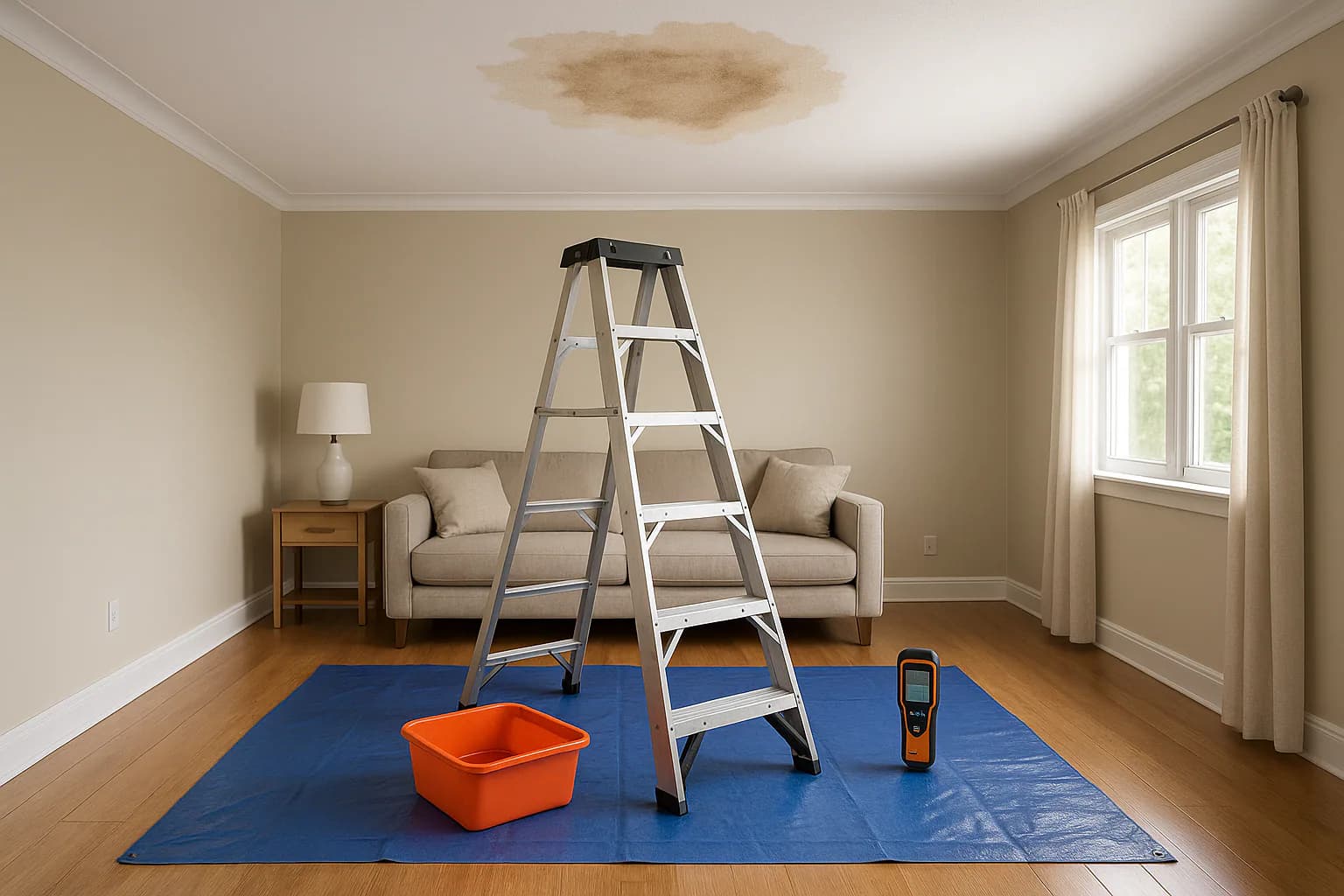
You see ceiling stains, sagging drywall, or drips after rain

Water has reached the attic, insulation, or the tops of walls

A storm damaged the roof and water followed it inside

You need the interior dried after the roof itself is addressed

How it commonly starts

Storm damage, wind, and missing or lifted shingles

Worn or aging roofing and failed flashing

Ice dams and water backing up under the roof edge

Cracked seals around vents, chimneys, and skylights

Clogged gutters and water forced back under the roofline

Why timing changes the outcome

Roof-leak water travels far from the entry point through attics and walls.

Wet insulation loses effectiveness and holds moisture against materials. A water-filled ceiling can sag and fall if it is not relieved safely.

Trapped moisture in the roof cavity and walls can lead to mold.

In-depth guidance

What to know about roof leak water damage

Where roof-leak water actually travels

Water from a roof leak follows the path of least resistance. It can run along rafters and trusses, soak the attic insulation, pool above a ceiling, and travel down inside wall cavities, often surfacing as a stain well away from where it got in. That is why the visible spot is rarely the full extent of the damage.

Restoration starts by tracing that path, drying everything the water reached, and confirming the cavity is dry before any finishes go back. One important distinction: Water Restoration Pros connects you with help for the interior water damage. The roof repair itself is a roofer's job, and the leak should be addressed so the intrusion stops.

Where roof water travels: attic, ceilings, walls, insulation

A roof leak almost never soaks just one spot. Water enters at the failure point, then follows rafters and trusses downhill, drips onto and flattens attic insulation, and collects on the top side of the ceiling drywall below. From there it can wick into the tops of walls and run down inside the cavities, surfacing as a stain or soft spot in a room that may be well away from the actual leak.

Each of those materials behaves differently when it gets wet. Wet insulation mats down, loses much of its R-value, and holds moisture against the framing it sits on. Ceiling drywall absorbs water and sags, and a pocket of water pooling above it can become heavy enough to fall. Inside wall cavities, trapped moisture has little airflow to dry on its own, which is exactly the condition that lets mold take hold out of sight.

Roofer vs. restoration: who handles what

These are two separate jobs, and a full fix usually needs both. A roofer addresses the roof itself — the shingles, flashing, or seal that failed — so the intrusion actually stops. Restoration pros handle everything the water did once it got inside: tracing where it traveled, removing soaked insulation and ceiling drywall that cannot be saved, drying the attic, cavities, and walls, and verifying the structure is dry before any finishes go back.

Order matters here. Repairing the interior while the roof still leaks just sets up the same damage again, so the leak should be stopped first or in parallel. Water Restoration Pros connects you with help for the interior water damage; the roof repair is a roofer's scope, and lining up both is what returns the home to a dry, restored state.
Professional response

How the work moves from damage to a dry property

The exact scope changes with the water source and affected materials, but a measured restoration response generally moves through three phases.

Assess and stabilize

Trace where the water went

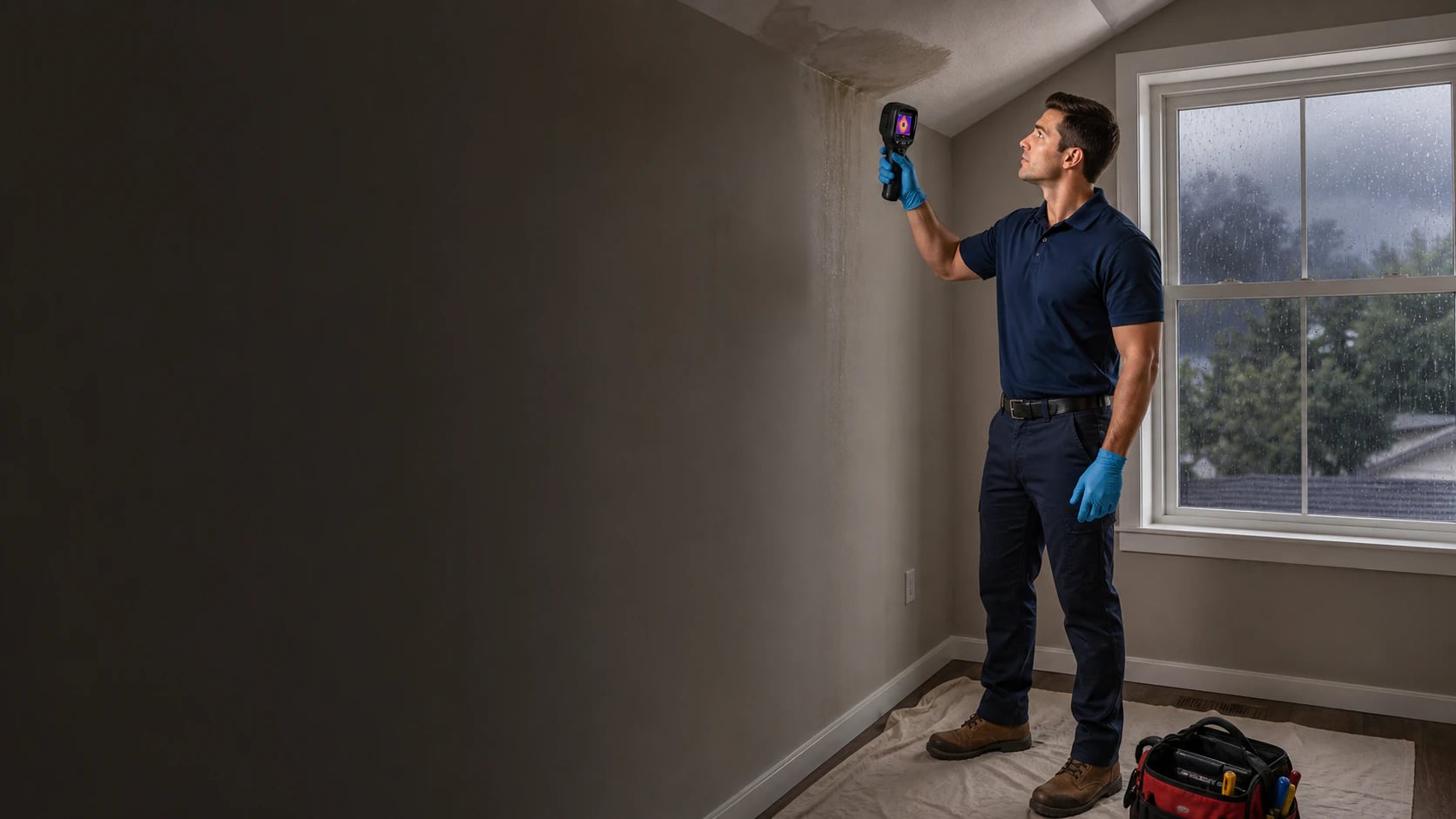
Follow the water from the roof entry point through the attic, ceilings, insulation, and walls.

Clear and protect the area

Keep people away from sagging ceilings, contain active drips only where it is safe, and protect belongings while qualified help is arranged.

Remove and dry

Remove ruined materials

Take out saturated insulation, ceiling drywall, and finishes that cannot be salvaged.

Dry the cavity and structure

Set air movers and dehumidifiers and monitor moisture in the attic, ceilings, and walls.

Verify and recover

Plan interior repairs

Outline the drywall, insulation, and finish repairs once the area is confirmed dry.

What to expect from the first visit

Trace where the water went

Follow the water from the roof entry point through the attic, ceilings, insulation, and walls.

Clear and protect the area

Keep people away from sagging ceilings, contain active drips only where it is safe, and protect belongings while qualified help is arranged.

Remove ruined materials

Take out saturated insulation, ceiling drywall, and finishes that cannot be salvaged.

Dry the cavity and structure

Set air movers and dehumidifiers and monitor moisture in the attic, ceilings, and walls.

Questions to ask before approving the scope

How will the assessment document temporary and permanent roof control?

The answer should be specific to the property and reflected in the written scope.

Which conditions determine whether roof leak damage is the right service path?

The answer should be specific to the property and reflected in the written scope.

What work, specialist responsibilities, measurements, and completion records will be included in writing?

The answer should be specific to the property and reflected in the written scope.

Before help arrives

What you can do now

Only take steps you can complete safely. Leave the area and wait for qualified help if there is an electrical, structural, or contamination risk.

Contain active drips with buckets and move valuables out of the way.

Keep people away from a sagging or bulging ceiling.

Turn off power to the area if water is near light fixtures or wiring.

Document the leak, the staining, and any storm damage for insurance.

Call to connect with roof leak water damage help.

These are general precautions for roof leak water damage; conditions at the property determine what is safe and appropriate.

Frequently asked questions

Where does water from a roof leak go?
It travels from the roof entry point through the attic, soaks insulation, pools above ceilings, and can run down inside walls. It often surfaces as a stain far from where the water actually got in.
Does Water Restoration Pros fix the roof?
No. Water Restoration Pros connects you with help for the interior water damage from a roof leak. The roof repair itself is a roofer's job, and addressing the leak is what stops the intrusion.
What should I do first with a leaking ceiling from the roof?
Contain active drips, move valuables, and keep people away from a sagging ceiling. Turn off power to the area if water is near fixtures, document the damage, and connect with restoration help so drying can begin.
Will insurance cover roof leak water damage?
It depends on the cause and your policy. Sudden storm-related roof damage is often treated differently from long-term wear and maintenance, so review your coverage, document the damage, and ask your insurer.
Why is the water stain in a different spot than the roof leak?
Roof water follows the path of least resistance — along rafters, across the attic, and down inside walls — before it shows up. It surfaces wherever it finally collects, which is usually downhill and away from where it entered the roof. Tracing it back to the source is part of the restoration work.
Should I dry the attic insulation or replace it after a roof leak?
Insulation that has been soaked tends to mat down and lose much of its effectiveness, so saturated insulation is often removed rather than dried. Restoration pros assess how wet it is and what type it is, dry the framing and cavity it sat against, and confirm the area is dry before new insulation goes in.
Technical and safety sources (4)

These sources support restoration, safety, moisture, cleanup, and scope guidance. They do not serve as numeric pricing provenance.

Need help with roof leak damage?

Call Water Restoration Pros to connect with roof leak water damage help in your area.

Call (833) 968-0848 · No-obligation · Availability varies by area

(833) 968-0848Check