A leaking water heater can quickly flood a utility space, basement, or garage and damage nearby rooms. Fast action to shut off the water and energy source can help limit how far the water spreads and reduce the cleanup needed. Knowing what to do first, what signs to look for, and when to get professional help is essential for protecting your home and belongings.
This guide explains how to safely shut down a leaking water heater, simple ways to contain the leak, common causes of leaks, and when to involve a local restoration professional. It also covers key warning signs, safe next steps, and what to expect if you need expert help to assess or dry out hidden moisture.
Hot Water and Energy Sources Require Care
The water inside a heater can be hot enough to scald, and water heaters are powered by electricity or gas. Always shut off the energy source before working near the unit, keep clear of any pooling water around electrical components, and if you smell gas, leave the area and contact your gas utility from a safe location.
Shutting Down a Leaking Water Heater Safely
Stopping a water heater leak starts with shutting off both the water supply and the energy source. Water heaters hold many gallons under pressure, and leaks can continue until the supply is off. The energy source—either electric or gas—should also be turned off for safety, as water and electricity are a hazardous mix and gas leaks require immediate attention.
- 1
Turn off the water supply to the heater
Locate the cold water shutoff valve on the pipe entering the top of the tank and turn it clockwise to close. If you can’t find it or if it won’t turn, shut off the main water supply to the house.
- 2
Shut off the power or gas
For electric water heaters, switch off its dedicated breaker in the electrical panel. For gas models, turn the gas control valve to the off position. This reduces risk while you manage the leak.
- 3
Handle hot water with care
Water in the tank may be very hot. Allow it to cool before any hands-on work, and use caution to avoid burns from draining or pooling water.
Do not stand in water near electrical equipment or attempt to reach a breaker through a wet area. If you ever notice a gas smell, leave the building immediately and contact your gas utility from a safe distance. These safety steps help prevent injury while you address the leak.
Containing the Leak and Minimizing Water Spread
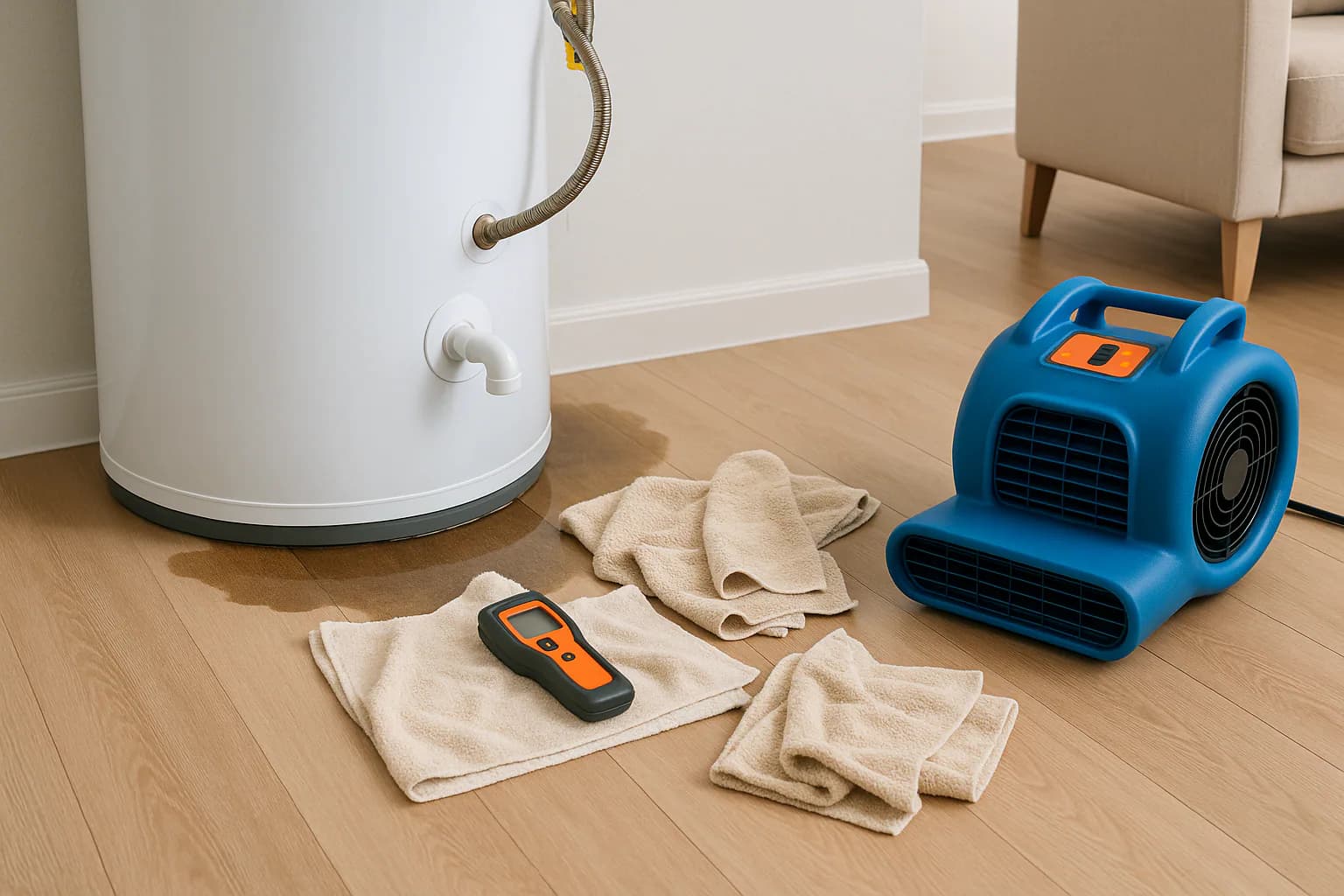
Once the water and energy are shut off, the next step is to limit how far the water can travel. Use towels or a wet/dry vacuum to soak up puddles if it is safe to do so. Place buckets under active drips and move any boxes, rugs, or belongings off the floor to prevent further damage. If your heater sits in a drain pan, check that the pan is not full and that its drain is clear.
Improving airflow with open windows can help dry damp surfaces if the water is from a clean source and there is no visible or suspected mold or contamination. If you suspect that water may be contaminated or has come into contact with sewage, or if there are signs of mold, avoid using fans or creating air movement as this can spread contaminants. Water that reaches under flooring, behind baseboards, or into walls is difficult to fully dry without professional equipment. Restoration professionals can extract standing water and use specialized tools to check for hidden moisture, which reduces the conditions that allow mold to grow. If water spreads into finished areas or soaks building materials, on-site assessment is often needed.
Common Causes of Water Heater Leaks
Understanding why a water heater leaks can help you decide on repairs or replacement. Most tanks have a limited service life. As they age, the risk of leaking increases. Internal corrosion, often from rust or mineral buildup, is a frequent culprit. Over time, these issues can create pinhole leaks or larger ruptures in the tank body.
- Age: Older tanks are more likely to develop leaks as their materials weaken.
- Tank corrosion: Rust and sediment can eat through the tank from the inside, causing leaks that are typically not repairable.
- Temperature and pressure relief (T&P) valve: This safety device can discharge water if pressure or temperature rises too high, or it may leak if worn or faulty.
- Loose or corroded fittings: Inlet and outlet connections, supply lines, and the drain valve can loosen or corrode, letting water escape.
- Sediment buildup: Minerals settling at the bottom of the tank can overheat and stress the metal, increasing the chance of leaks.
Some leaks come from easily replaced valves or connections, while others indicate the tank itself is failing. If you see water at the base of the heater or from seams in the tank, replacement is often necessary.
Investigating Moisture and Hidden Water Damage
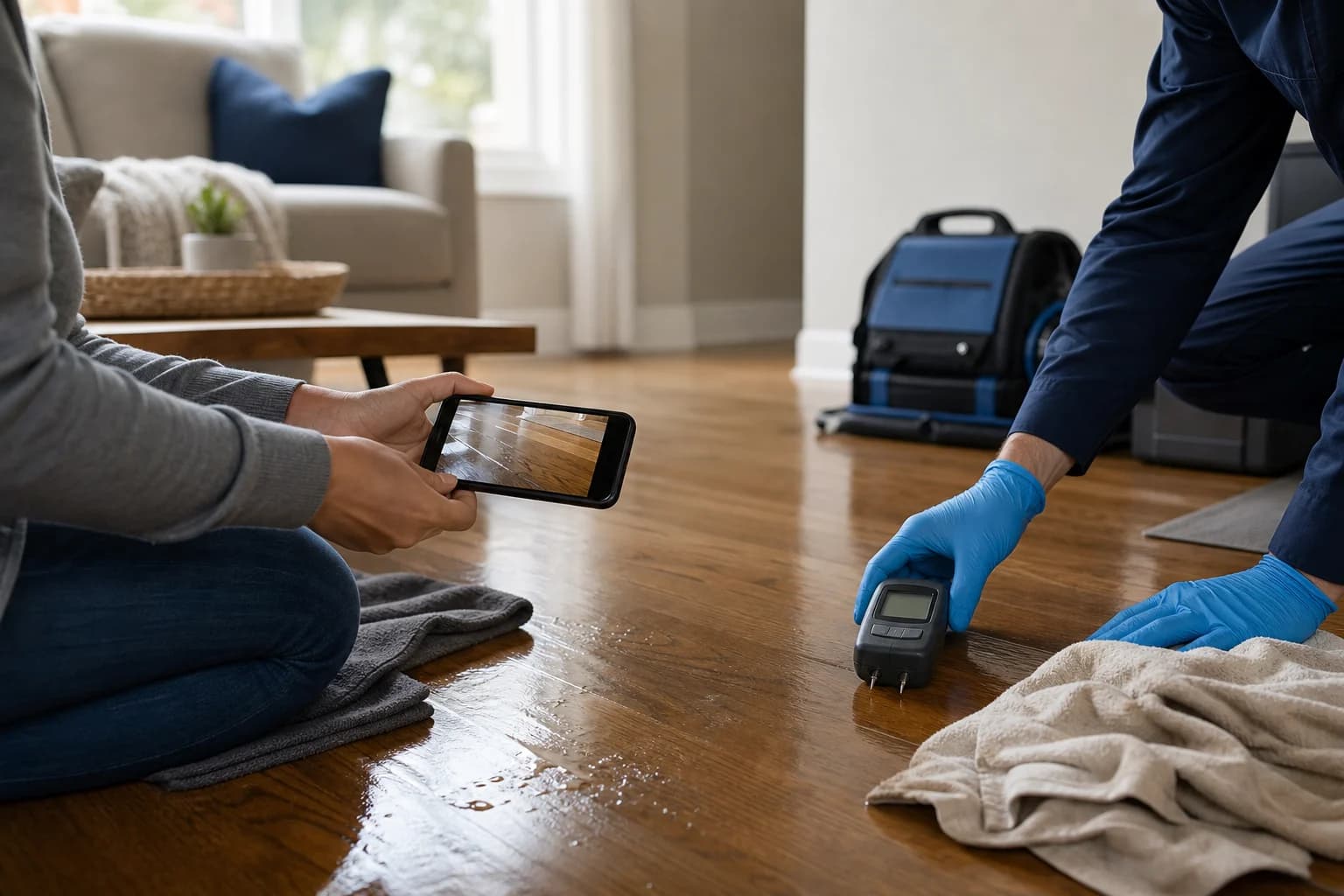
Not all water from a leaking heater remains visible. Water can seep under flooring, into wall cavities, or behind baseboards, leading to ongoing moisture issues if not addressed. Odors, staining, or cool spots on floors and walls are clues that moisture may be present, but these are not proof of the extent or source. Restoration professionals may use thermal imaging to screen for temperature patterns, but any suspicious area should be checked with appropriate moisture measurements or direct inspection to confirm hidden dampness.
According to EPA guidance, drying wet materials within 24-48 hours reduces the conditions that allow mold to grow. If you notice persistent moisture, unexplained dampness, or if water has traveled beyond the immediate water heater area, a local restoration pro can assess the situation, check for hidden wet spots, and recommend appropriate drying steps.
When to Call a Professional for Assessment and Cleanup
Some small leaks from fittings or the T&P valve may be repairable by a plumber. However, if the tank itself is leaking, replacement is usually needed. Regardless of the repair, water that has spread into adjacent rooms, flooring, or drywall often requires professional remediation. Restoration professionals can extract standing water, dry affected materials, and use moisture meters to check for hidden dampness that may linger.
Professional help is especially useful if water is contaminated, has soaked building materials, or if you are unsure how far moisture has traveled. If water damage is widespread or persistent, or if you suspect there is hidden moisture in walls or subflooring, on-site assessment helps identify the extent of moisture and determine the most effective approach for drying. Coverage for water heater leaks depends on the cause and the property owner's insurance policy.
Mistakes to Avoid During a Water Heater Leak
Some common mistakes can make water heater leaks worse or more dangerous. Do not ignore small leaks, as they can quickly escalate. Avoid using electrical appliances or tools in wet areas. Do not attempt repairs near electrical or gas connections unless you are certain all energy sources are off. Trying to dry out hidden water without proper tools can leave moisture behind, leading to further problems.
Delaying cleanup or neglecting to check for hidden moisture can allow water to linger in flooring, walls, or insulation. This can create conditions where mold is more likely to develop if drying is not completed within the recommended time. If in doubt about the full extent of the leak or how to dry out affected areas, connecting with a qualified restoration professional can help ensure the space is thoroughly addressed.
Leaking Water Heater Caused Damage?
Once the water and energy are off, drying the area quickly limits the damage. Call Water Restoration Pros to get connected with restoration professionals that service your area and can extract the water and dry out the space.
Call (833) 968-0848Frequently asked questions
How do I stop a water heater from leaking right away?
What are signs of hidden water damage from a heater leak?
Do I need both a plumber and a restoration professional?
Sources reviewed (3)
- U.S. EPA WaterSense - Leak Detection and Flow Monitoring Devices: EPA guidance on identifying unexpected moisture, irregular water use, and household leaks.
- U.S. EPA - A Brief Guide to Mold, Moisture and Your Home: EPA guidance on moisture control, hidden dampness, indoor humidity, and drying wet materials within 24-48 hours.
- U.S. EPA - Flooded Home: EPA guidance on safety, cleanup, moisture control, and drying after a home is flooded.