Skip to content
Water Restoration Pros

Water Damage Service

Appliance Leak Cleanup

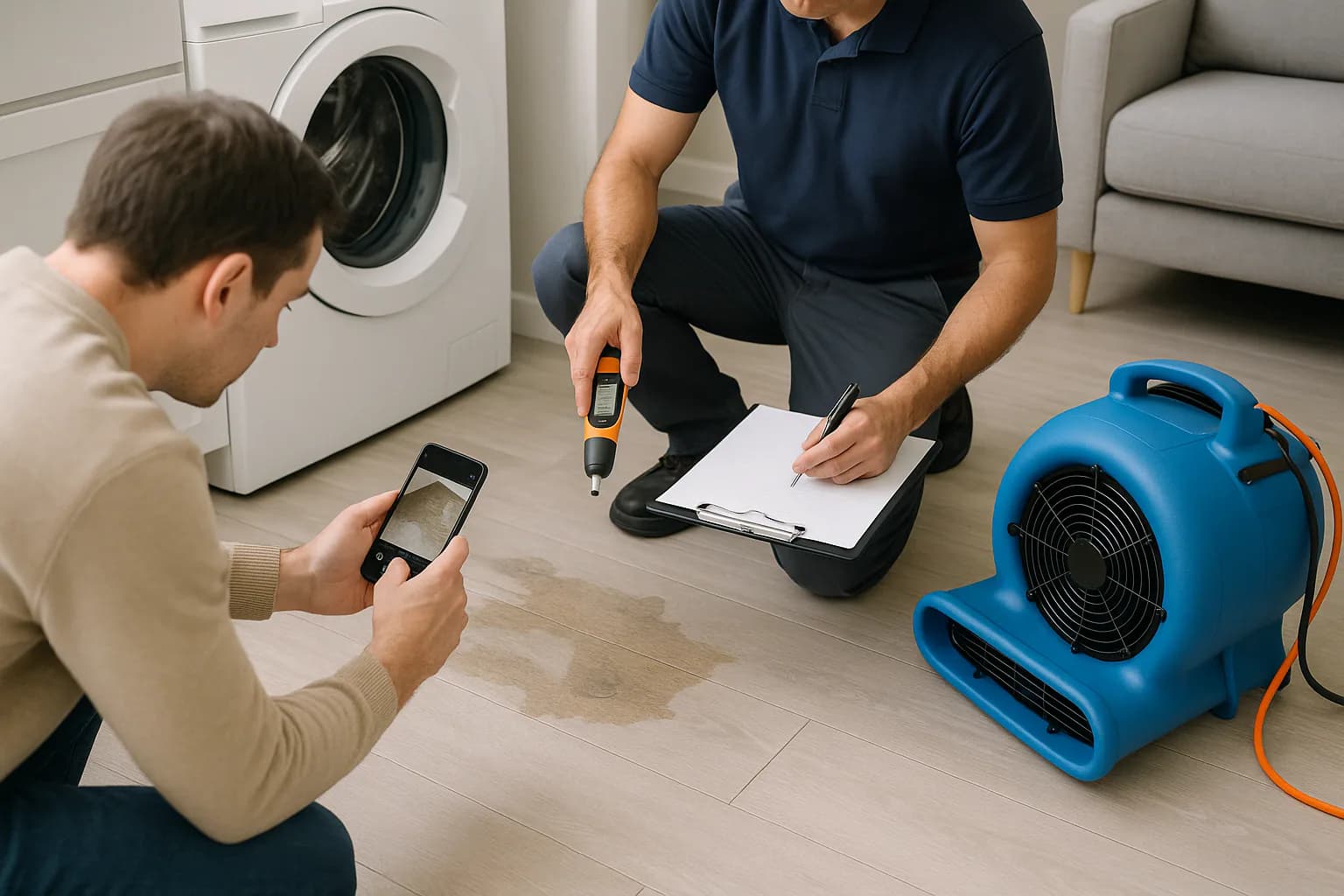
Appliances connected to water can leak or overflow, and the damage often spreads under cabinets and flooring before you see it. Water Restoration Pros helps property owners connect with appliance leak cleanup help that dries the area, including the hard-to-reach spaces behind and beneath the appliance.

Service overview

Appliance leak cleanup help that extracts the water, dries cabinets, flooring, and subfloor, and reaches the moisture behind and under the appliance.

Recognize the problem

Does this situation call for appliance leak cleanup?

Start with what you can safely observe. The source, the type of water, and the materials affected determine the response after an on-site assessment.

What you may notice

A washing machine overflowed or its hose let go

A dishwasher leaked onto the kitchen floor and into the cabinets

A water heater is leaking, dripping, or burst

A refrigerator or ice-maker line leaked behind the unit

Flooring or cabinets near an appliance are wet, swollen, or stained

How it commonly starts

Failed or cracked washing machine supply hoses and overflows

Dishwasher door seal, valve, or connection leaks

Water heater tank corrosion, failure, or a ruptured tank

Refrigerator and ice-maker supply line leaks

Loose or worn fittings on appliance water connections

Why timing changes the outcome

Appliance leaks often spread under cabinets and flooring out of sight.

Water wicks into the subfloor and can damage it before it is noticed. Trapped moisture behind and under appliances creates mold conditions.

Swollen cabinets and warped flooring point to water that needs drying.

In-depth guidance

What to know about appliance leak cleanup

Appliance leaks hide under cabinets and floors

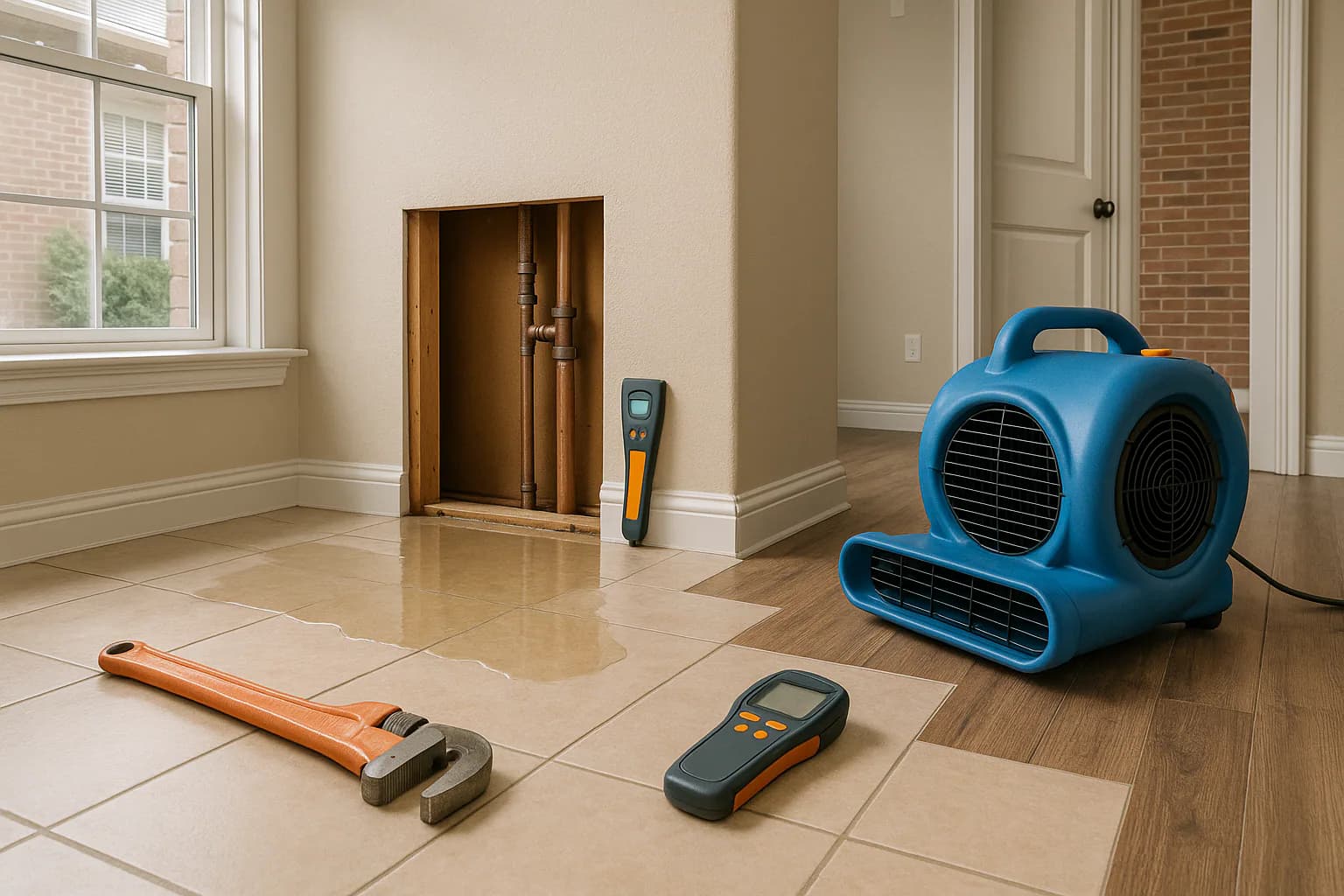
The water from a leaking appliance rarely stays in the open. It runs under the unit, slips beneath cabinet toe-kicks, and wicks into the flooring and subfloor, so the visible puddle is often the smallest part of the problem. A water heater in particular can leak slowly for a while or fail and release its whole tank.

Drying an appliance leak means reaching the spaces you cannot see: behind and under the appliance, inside the cabinet bases, and down into the subfloor. Catching that hidden moisture is what keeps a kitchen or laundry leak from turning into swollen cabinets, warped floors, and mold later.

By appliance: washers, dishwashers, water heaters, and fridges

Each water-connected appliance fails in its own way, and the failure shapes the cleanup. A washing machine can release a large volume fast when a supply hose lets go or the drum overflows, sending water across the laundry floor and under the walls. A dishwasher tends to leak more quietly from a door seal, valve, or hose, so the water seeps into the cabinet base and the flooring right in front of it before anyone notices a problem.

Water heaters and refrigerator or ice-maker lines are the slow, hidden offenders. A tank can weep at a fitting or from corrosion for weeks, or fail and dump its full contents at once, while a refrigerator's small supply line can drip behind the unit unseen for a long time. Knowing which appliance is involved tells the pros where the water most likely traveled and how far the moisture has had time to spread.
Drying under and behind appliances and cabinets

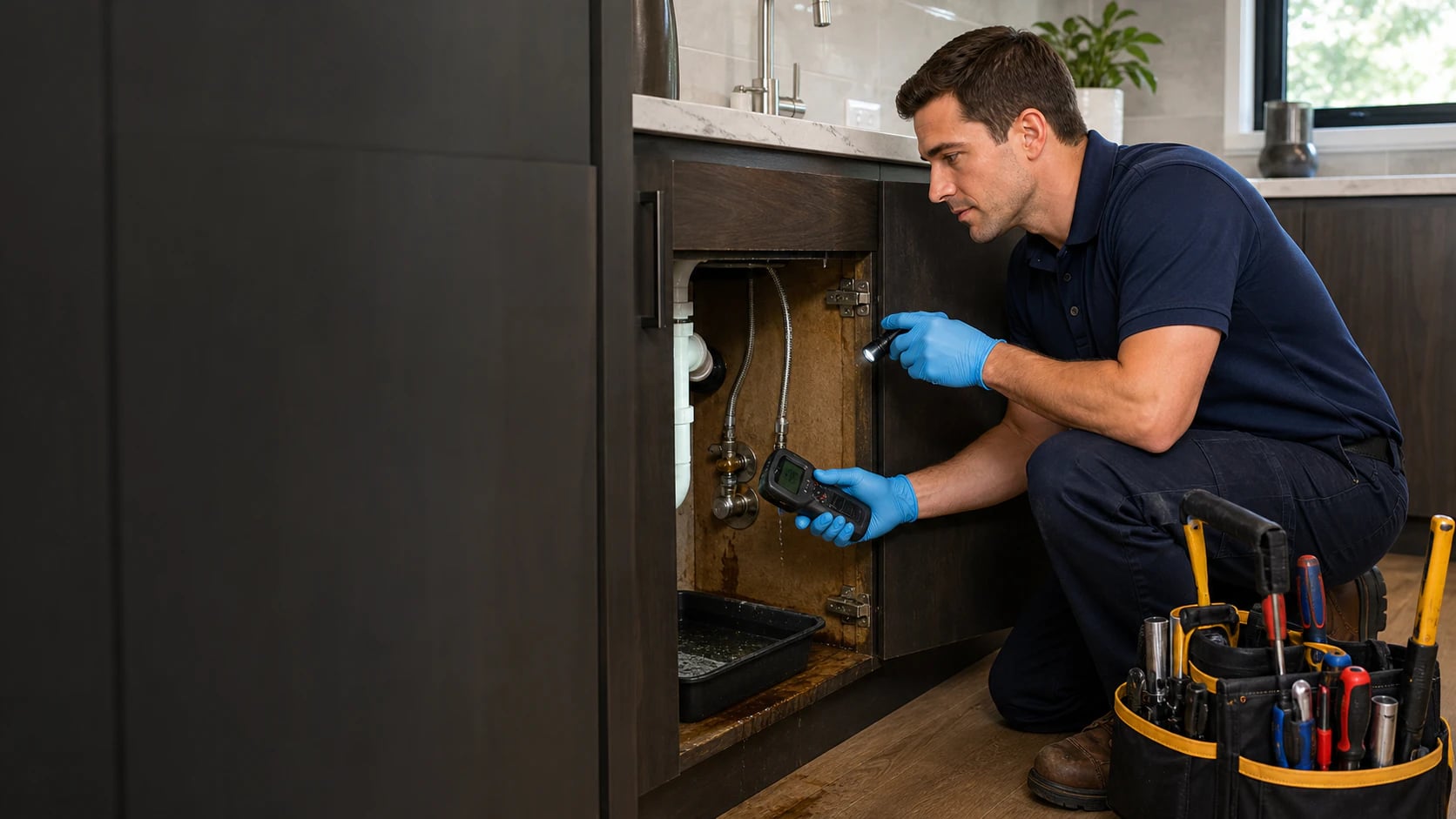
The hardest moisture to reach in an appliance leak is almost never out in the open. It collects under the appliance itself, behind it against the wall, and inside the toe-kick and base of the surrounding cabinets, where airflow is poor and water sits against the subfloor. Cabinet boxes are often particleboard or MDF that swell and crumble once they wick water up from the bottom, and the subfloor underneath can stay wet long after the visible floor feels dry.

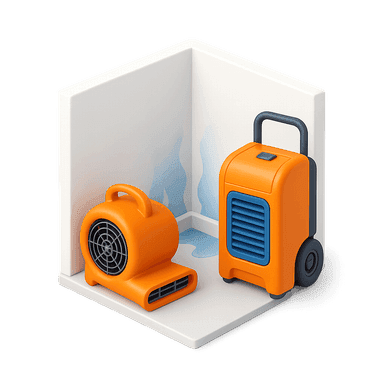
Reaching that moisture usually means moving the appliance out, and sometimes removing a cabinet toe-kick or drilling discreet vent holes so air movers can push air into the enclosed cavity while dehumidifiers pull the moisture out. A pro confirms the cabinet base and subfloor have actually dried with meter readings rather than assuming they did, because trapped moisture in these tight spaces is exactly where odor and mold start.

Professional response

How the work moves from damage to a dry property

The exact scope changes with the water source and affected materials, but a measured restoration response generally moves through three phases.

Assess and stabilize

Stop the water and power

Confirm the supply to the appliance is off and the unit is unplugged or de-energized if it is safe to do so.

Extract the water

Remove standing water from the floor and pull moisture out of soaked flooring and cabinet bases.

Remove and dry

Reach behind and under

Move the appliance and dry the hidden spaces behind and beneath it where water collects.

Check cabinets and subfloor

Assess cabinets, flooring, and the subfloor for trapped moisture and remove materials that cannot be dried in place.

Verify and recover

Set drying equipment

Position air movers and dehumidifiers to dry the structure, including cavities and the subfloor.

Monitor and finish

Track moisture until materials are dry, then plan repairs to cabinets, flooring, and finishes.

What to expect from the first visit

Stop the water and power

Confirm the supply to the appliance is off and the unit is unplugged or de-energized if it is safe to do so.

Extract the water

Remove standing water from the floor and pull moisture out of soaked flooring and cabinet bases.

Reach behind and under

Move the appliance and dry the hidden spaces behind and beneath it where water collects.

Check cabinets and subfloor

Assess cabinets, flooring, and the subfloor for trapped moisture and remove materials that cannot be dried in place.

Questions to ask before approving the scope

How will the assessment document appliance and supply or drain source?

The answer should be specific to the property and reflected in the written scope.

Which conditions determine whether appliance leak cleanup is the right service path?

The answer should be specific to the property and reflected in the written scope.

What work, specialist responsibilities, measurements, and completion records will be included in writing?

The answer should be specific to the property and reflected in the written scope.

Before help arrives

What you can do now

Only take steps you can complete safely. Leave the area and wait for qualified help if there is an electrical, structural, or contamination risk.

Shut off the water supply to the appliance, or the main supply.

Unplug the appliance or turn off power to it if it is safe to reach.

Pull the appliance out and mop up standing water if you can do so safely.

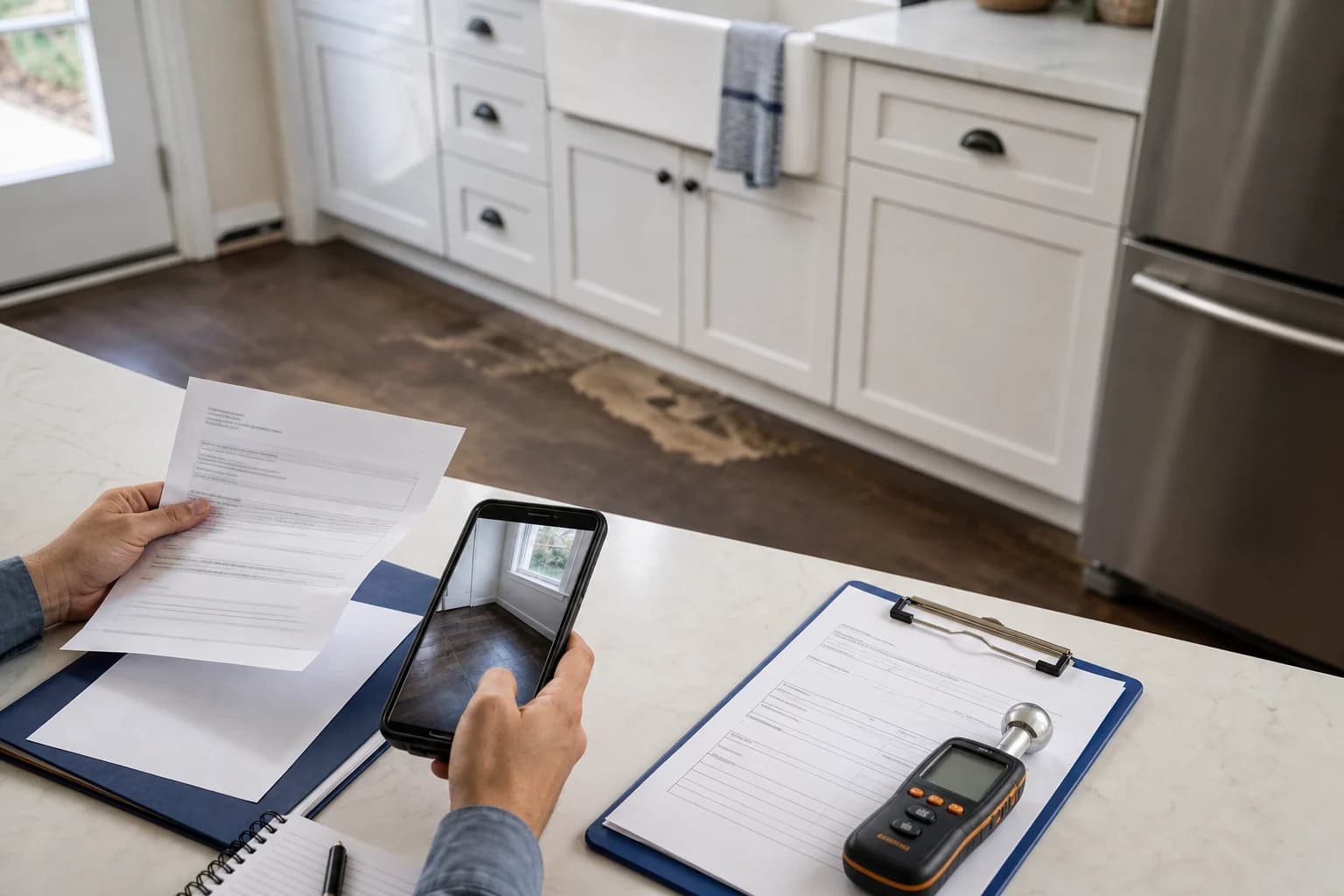
Photograph the appliance and the water damage for your insurance.

Call to connect with appliance leak cleanup help.

These are general precautions for appliance leak cleanup; conditions at the property determine what is safe and appropriate.

Frequently asked questions

What should I do first after an appliance leaks?
Shut off the water supply to the appliance, turn off power to it if it is safe to reach, pull it out and mop up standing water if you can do so safely, and photograph the damage. Then connect with cleanup help so the hidden moisture gets dried.
Why is drying under and behind an appliance important?
Water from an appliance leak collects in the spaces you cannot see, behind and beneath the unit, inside cabinet bases, and in the subfloor. If that moisture is not dried, it can swell cabinets, warp flooring, and create the conditions for mold.
Is a leaking water heater an emergency?
It can be. A water heater may drip slowly or fail and release its full tank at once. Shut off the water supply to it and power if it is safe, then get help quickly, since the water can spread under flooring and into nearby materials.
Will insurance cover an appliance leak?
It depends on the cause and your specific policy. A sudden, accidental appliance failure is often treated differently from slow, long-term leaking. Document the appliance and the damage with photos and review your policy or ask your insurer.
Which appliance leaks cause the most water damage?
It depends on the failure. A washing machine supply hose or overflow can release a large volume of water quickly, and a water heater can fail and empty its full tank at once. Dishwashers and refrigerator or ice-maker lines tend to leak slowly and stay hidden, so they can soak cabinets and subfloor for a long time before anyone notices.
Do kitchen cabinets need to come out after an appliance leak?
Sometimes. Cabinet bases made of particleboard or MDF wick water up from the bottom and swell, and the toe-kick area traps moisture against the subfloor. A pro may open or remove a toe-kick, or take out a swollen cabinet, so air can reach the cavity and the base and subfloor can be dried and verified rather than sealed up wet.
Technical and safety sources (4)

These sources support restoration, safety, moisture, cleanup, and scope guidance. They do not serve as numeric pricing provenance.

Need help with appliance leak cleanup?

Call Water Restoration Pros to connect with appliance leak cleanup help in your area.

Call (833) 968-0848 · No-obligation · Availability varies by area

(833) 968-0848Check