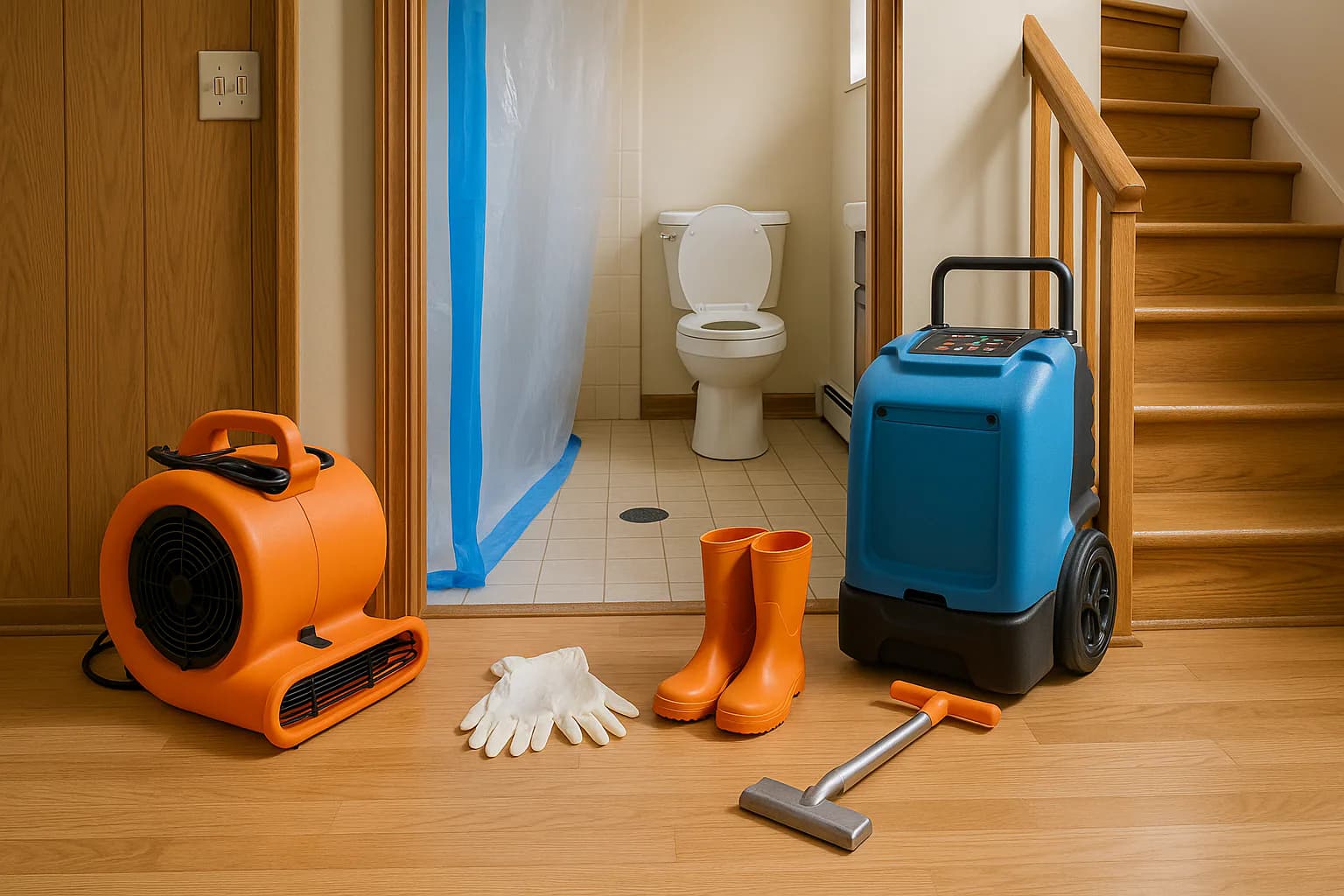
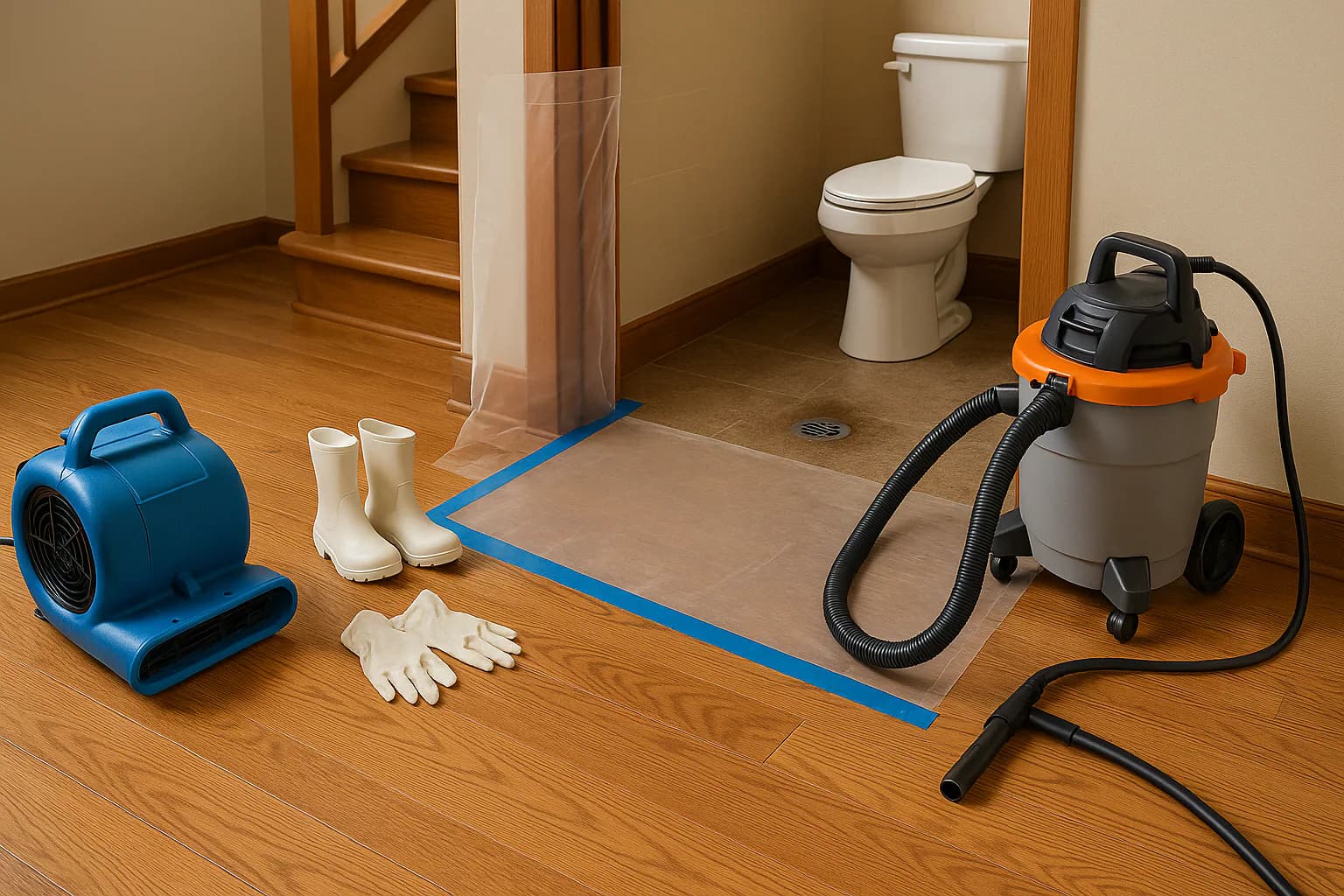
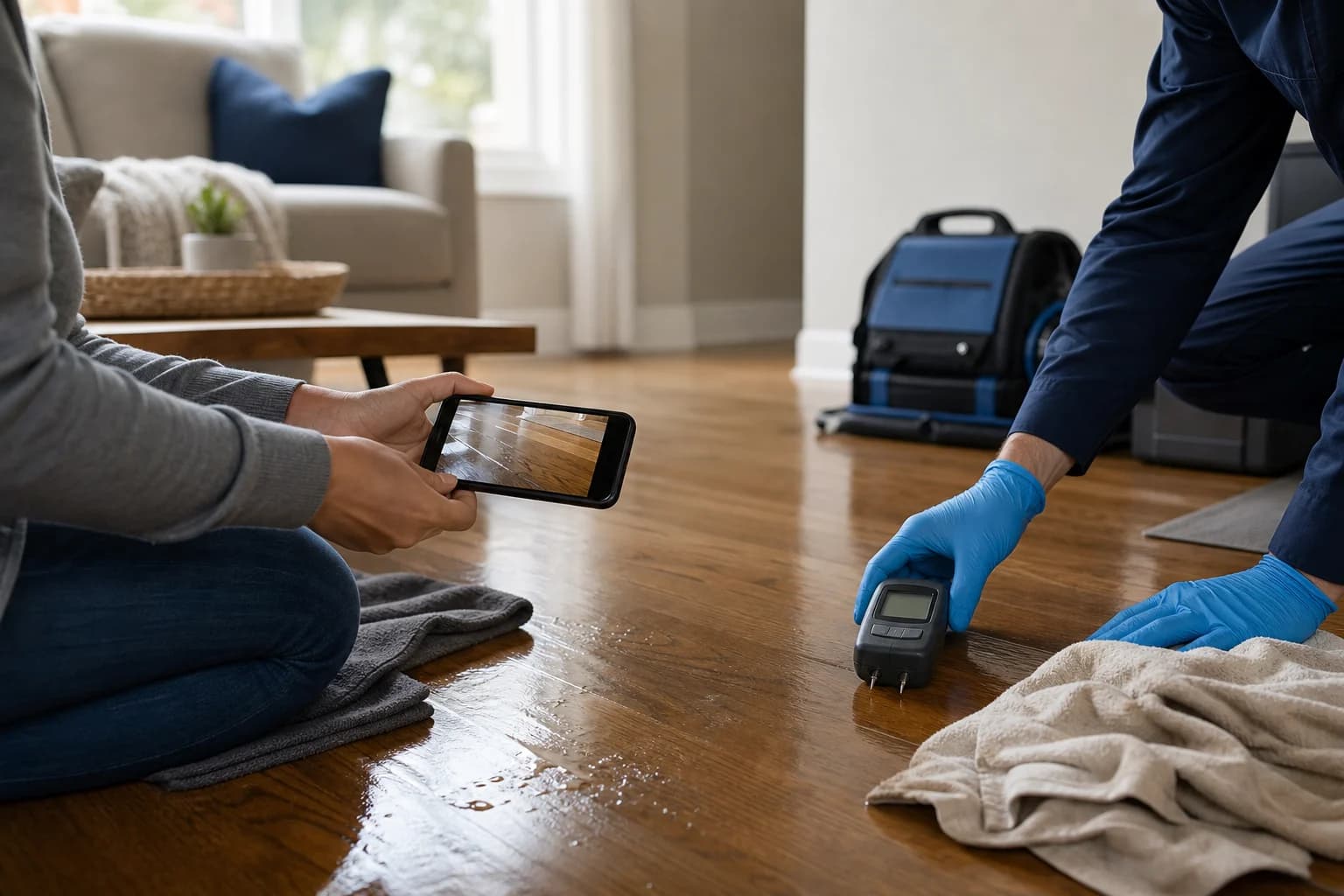
The single most important question with a toilet overflow is what was in the water. Clean water overflowing from the tank, with no waste involved, is the least concerning category. Once the overflow includes bowl water or anything that has passed through the bowl, it is treated as gray or contaminated water, and a backup carrying sewage is black water. That category determines everything that follows: how the water is handled, what protective equipment is used, which materials can be saved, and how thoroughly the area has to be sanitized.
This distinction matters because the cleanup is not just about removing water, it is about removing contamination. Porous materials that soaked up contaminated water, such as carpet, padding, and the lower edge of drywall, usually cannot be cleaned to a safe state and are removed instead. Hard, sealed surfaces can often be cleaned and sanitized. Treating a contaminated overflow as if it were clean leaves health risks behind even after the floor looks dry, which is why the safe default for any questionable overflow is to keep people and pets away, avoid contact, and let professionals handle it.