
A clear service answer
Is flood damage cleanup the right service for this loss?
Flood cleanup help that removes water and debris, dries the structure, and plans the path back to a usable property.
The central service decision
Flood cleanup and recovery boundary
Did water enter from outdoors or a flood source that changes contamination, debris, access, and material-removal decisions?
- Review
- flood source and safe reentry
- Review
- debris and porous materials
- Review
- cleaning, drying, and reconstruction scope
When it may fit
Storm or heavy rain pushed water into the property. Rising water or runoff entered a lower level or ground floor. An indoor flood from plumbing soaked multiple rooms. Flood water left behind mud, debris, or contamination.
How the problem may start
Heavy rain, storms, and overwhelmed drainage. Rising water and runoff entering at grade or below grade. Major plumbing failures that flood interior spaces. Backed-up storm or sewer drains during heavy weather.
Service context in Pontiac
Local conditions that can affect the plan
Local planning context
What can shape the assessment in Pontiac
The Clinton River runs straight through the city and downtown, which the city confined in a concrete channel in 1963 specifically to fight flooding; nearby low-lying and floodplain areas still carry high-water exposure. Pontiac's signature problem is its aging early-20th-century infrastructure — old sewer laterals and century-old foundations that lead to basement backups and groundwater seepage. Numerous lakes and wetlands add a high water table, and winter freezes hit the older and vacant housing stock hard.
Inland flooding context
FEMA's county-level National Risk Index records inland flooding as relatively high for Oakland. This is regional context, not a finding about a specific address.
Hurricanes context
FEMA's county-level National Risk Index records hurricanes as very low for Oakland. This is regional context, not a finding about a specific address.
Local water-loss scenario
Clinton River and floodplain flooding in low-lying areas near the channel
Property and material context
Strong stock of pre-WWII homes from the 1900s through the 1930s — Tudor, Colonial, Craftsman, and Victorian — in the historic districts, plus 1919-era GM worker housing and postwar infill
Property and material context
Predominantly full basements with aging foundations in a denser urban core than the surrounding suburbs
Verified service geography
The Census Gazetteer identifies Pontiac city as the matched service geography. Property conditions and service scope still require an on-site assessment.
Local water-loss scenario
Basement backups from aging early-20th-century sewer laterals
Local water-loss scenario
Groundwater seepage through cracked century-old foundations
Local water-loss scenario
Frozen and burst pipes in older or vacant homes during winter
Professional service plan
How flood damage cleanup work moves forward
Assess and contain
Assess and stay safe
Evaluate the water category, electrical hazards, and how far the flooding spread before cleanup begins.
Remove water and debris
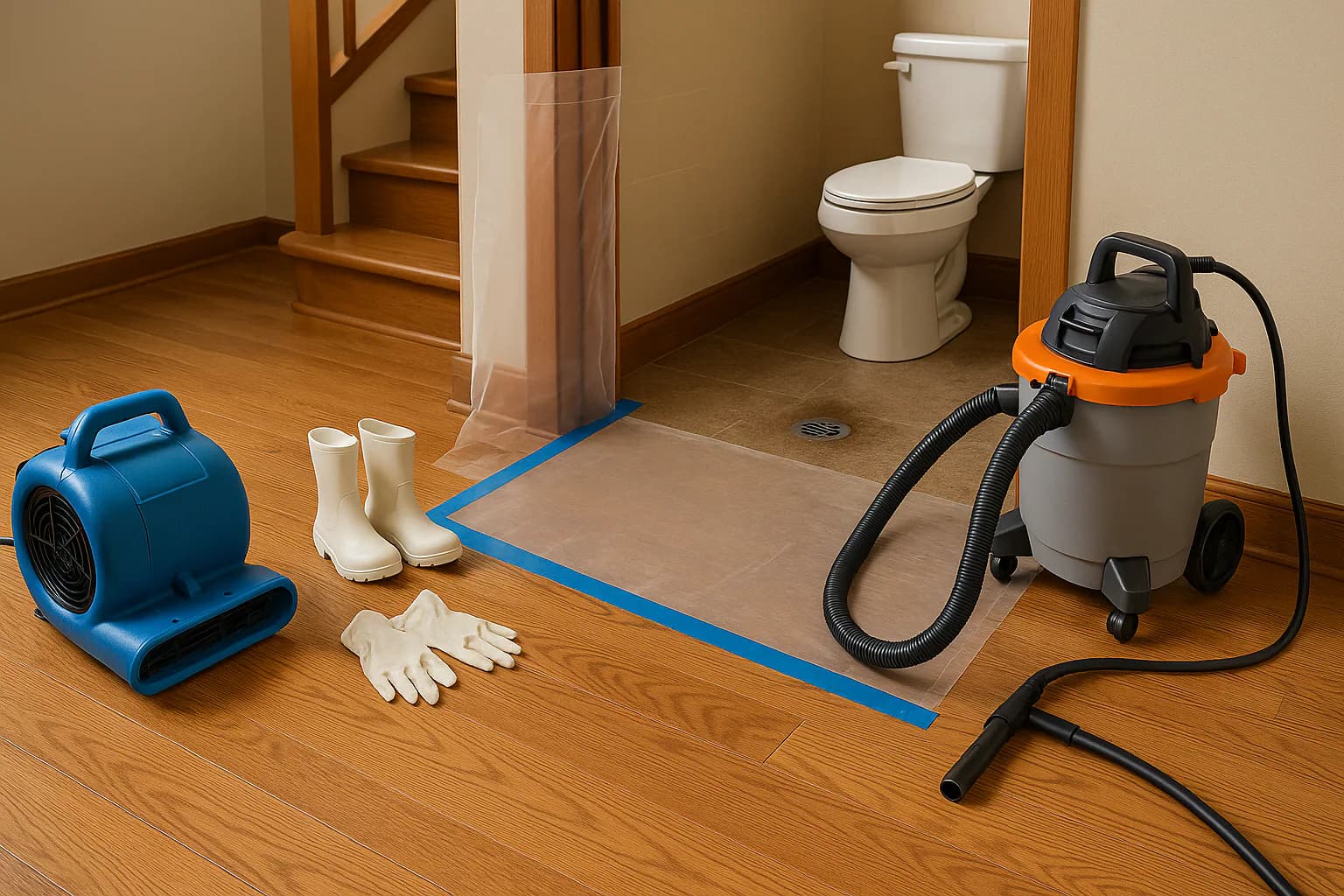
Extract standing flood water and clear mud and debris left behind.
Remove and dry
Remove ruined materials
Take out saturated drywall, insulation, and flooring that cannot be salvaged after flooding.
Clean and sanitize
Clean affected surfaces, with sanitation steps when the flood water was contaminated.
Verify and recover
Dry the structure
Set drying equipment and monitor moisture until framing and remaining materials are dry.
Plan restoration
Outline the repairs and reconstruction needed to return the space to use.
Scope and outcome
What changes the amount of work
How deep the flooding was and how many areas it reached. Whether the flood water was contaminated. How much material must be removed and disposed of. The amount of sanitation and drying required.
How quickly cleanup was able to begin. How high the water rose and how many rooms or levels it reached drives the amount of extraction, removal, and drying needed. Flood water is often contaminated, which means careful handling, sanitation, and removal of porous materials it touched. Saturated drywall, insulation, flooring, and belongings that cannot be salvaged add removal and disposal to the scope.
Cost and scope
What affects flood damage cleanup cost in Pontiac
Flood cleanup cost is shaped by the depth and reach of the flooding, whether the water was contaminated, how much material must be removed, and the drying and sanitation required. Understand the drivers, then connect with a pro.
A written estimate should connect each charge to the source, affected materials, access, contamination conditions, drying work, and repairs found during the assessment.
National planning range for this location
Standard residential planning range
$5,250-$11,000 per project
Resolved from the approved Water Restoration Pros pricing methodology and standardized scope.
National planning range used for this location until reviewed local economic inputs are available.
Cost ranges are estimates developed from standardized project scopes and reviewed pricing inputs. Government labor and regional cost data are used where applicable. See our Pricing Methodology for the exact sources, calculations, and review date. Actual prices vary by property, scope, materials or equipment, location, and provider.
Depth and reach of flooding
How high the water rose and how many rooms or levels it reached drives the amount of extraction, removal, and drying needed.
Contamination level
Flood water is often contaminated, which means careful handling, sanitation, and removal of porous materials it touched.
Material removal
Saturated drywall, insulation, flooring, and belongings that cannot be salvaged add removal and disposal to the scope.
Drying and sanitation
After removal, the structure has to be dried and, when contamination was involved, cleaned and sanitized before repairs.
What happens next
What to expect from the first visit
Assess and stay safe
Evaluate the water category, electrical hazards, and how far the flooding spread before cleanup begins.
Remove water and debris
Extract standing flood water and clear mud and debris left behind.
Remove ruined materials
Take out saturated drywall, insulation, and flooring that cannot be salvaged after flooding.
Clean and sanitize
Clean affected surfaces, with sanitation steps when the flood water was contaminated.
Before approving the scope
Questions that make a proposal easier to compare
How will the assessment document flood source and safe reentry?
The answer should be specific to the property and reflected in the written scope.
Which conditions determine whether flood damage cleanup is the right service path?
The answer should be specific to the property and reflected in the written scope.
What work, specialist responsibilities, measurements, and completion records will be included in writing?
The answer should be specific to the property and reflected in the written scope.
Documentation
Keep the property record organized
Coverage depends on the water source, policy language, exclusions, endorsements, limits, deductible, and claim facts. When conditions are safe, document the apparent source, affected rooms, visible damage, and reasonable steps taken to limit additional loss. Review the policy and follow the insurer's claim instructions.
This is general information, not insurance or legal advice.
Read the water damage insurance claim guideMore flood damage cleanup in Michigan
Questions property owners ask
Flood Damage Cleanup in Pontiac: FAQs
What can affect flood damage cleanup in Pontiac, MI?
What should a flood damage cleanup assessment cover in Pontiac, MI?
What does flood damage cleanup involve?
Is flood water dangerous?
Will insurance cover flooding?
Technical and safety sources (12)
These sources support restoration, safety, moisture, cleanup, local context, and scope guidance. They do not serve as numeric pricing provenance.
- U.S. EPA - Flooded Home: EPA guidance on safety, cleanup, moisture control, and drying after a home is flooded.
- CDC - Reentering Your Flooded Home Safely: CDC guidance on electrical hazards, standing water, ventilation, cleanup, and reentry after flooding.
- FloodSmart.gov - National Flood Insurance Program: Federal consumer information about flood insurance and the distinction between flood and homeowners coverage.
- NAIC - Consumer Homeowners Insurance: NAIC consumer information on homeowners coverage, exclusions, inventories, and policy review.
- NAIC - What You Need to Know When Filing a Homeowners Claim: NAIC guidance on reporting a claim, documenting damage, deductibles, contractors, and adjuster meetings.
- FEMA National Risk Index: Counties: FEMA county-level hazard ratings used for conservative regional context.
- FEMA National Risk Index Technical Documentation: FEMA documentation for National Risk Index measures, scoring, and limitations.
- U.S. Census Bureau Gazetteer Files: Census reference for official place geography and Gazetteer datasets.
- CDC - Guidelines for Cleaning Safely After a Disaster: CDC safety guidance for floodwater, sewage, protective equipment, and contaminated materials.
- CDC - Septic and Onsite Wastewater Systems After Flooding: CDC guidance on sewage exposure, wastewater overflows, and precautions after flooding.
- U.S. EPA - A Brief Guide to Mold, Moisture and Your Home: EPA guidance on moisture control, prompt drying, indoor humidity, and mold cleanup decisions.
- U.S. EPA - Mold Course Chapter 2: EPA guidance on responding promptly to wet building materials and evaluating moisture conditions.