
A clear service answer
Is emergency water removal the right service for this loss?
Urgent water extraction help for standing and active water before it soaks deeper into the property.
The central service decision
Immediate removal versus planned drying
Is water still standing, entering, or spreading far enough that bulk removal must happen before normal drying can begin?
- Review
- active source and water depth
- Review
- safe access and contamination
- Review
- extractable water and concealed spread
When it may fit
There is standing water on floors or pooling in rooms. Water is actively flowing or rising and needs to be pumped out. Carpet, flooring, or subfloor is saturated and squishy. Water is spreading toward more rooms, walls, or lower levels.
How the problem may start
Burst pipes and supply line failures. Water heater or appliance ruptures. Storm flooding and heavy rain intrusion. Sump pump failure in a basement or crawlspace.
Service context in Martinsburg
Local conditions that can affect the plan
Local planning context
What can shape the assessment in Martinsburg
Tuscarora Creek is the city's primary flood driver, capable of overtopping its banks and flooding adjacent low-lying streets when slow-moving storms or remnants of tropical systems stall over the valley. The karst limestone landscape adds sinkhole and rapid groundwater-rise risk, sending water into basements with little warning during wet stretches. Aging downtown infrastructure and winter freeze-thaw cycles round out the local exposure, with burst pipes common during sharp Eastern Panhandle cold snaps.
Inland flooding context
FEMA's county-level National Risk Index records inland flooding as relatively moderate for Berkeley. This is regional context, not a finding about a specific address.
Hurricanes context
FEMA's county-level National Risk Index records hurricanes as relatively low for Berkeley. This is regional context, not a finding about a specific address.
Access and drying consideration
Creek and groundwater intrusion in basements needs sustained dehumidification because cool below-grade walls re-wet quickly in the humid valley air
Access and drying consideration
Karst-driven water can appear and recede unpredictably, so moisture mapping helps confirm hidden saturation before drying equipment is pulled
Local water-loss scenario
Tuscarora Creek overbank flooding reaching low-lying streets and businesses near the downtown corridor
Local water-loss scenario
Stormwater overwhelming aging downtown storm drains during intense summer thunderstorms
Access and drying consideration
Martinsburg's historic plaster, brick, and old-growth wood dry slowly and benefit from staged, monitored drying to avoid trapping moisture
Verified service geography
The Census Gazetteer identifies Martinsburg city as the matched service geography. Property conditions and service scope still require an on-site assessment.
Local water-loss scenario
Groundwater surging into basements through karst limestone seams during prolonged wet periods
Professional service plan
How emergency water removal work moves forward
Assess and contain
Confirm safety
Check for electrical hazards and signs of contaminated water before anyone enters the area.
Stop the source
Shut off the supply or contain the intrusion so new water stops adding to the problem.
Remove and dry
Pump and extract
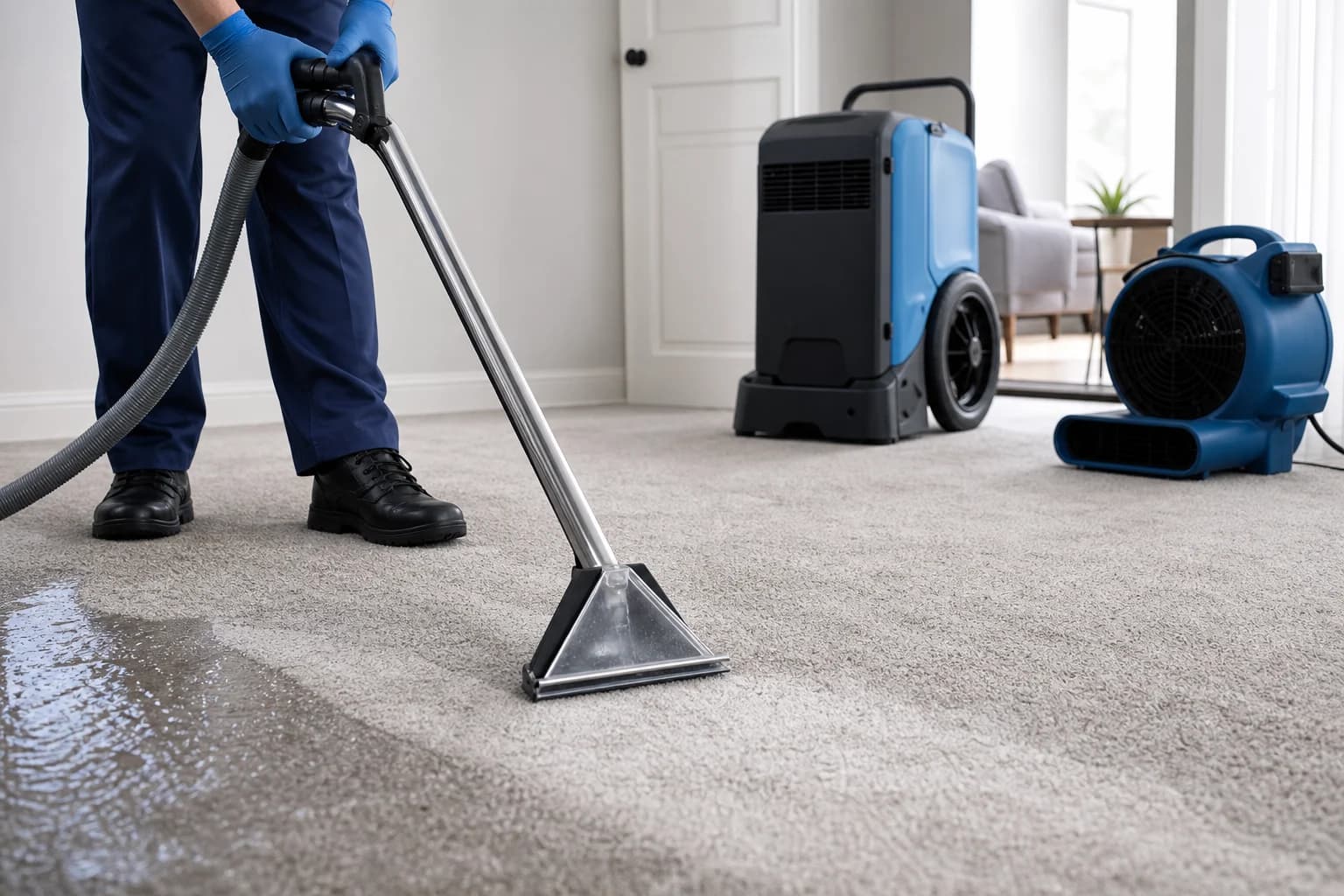
Use pumps and extraction units to remove standing water from floors, carpet, and low spots.
Clear trapped water
Pull water out of padding and crevices where it hides and continues to wick into materials.
Verify and recover
Transition to drying
Once water is removed, set air movers and dehumidifiers to begin structural drying.
Scope and outcome
What changes the amount of work
How much standing water needs to be removed. Whether the water is clean or contaminated. How accessible the water is, including below-grade spaces. How much carpet, padding, and trapped water is involved.
Whether it is a standard or emergency after-hours response. Removing a small amount of standing water is far simpler than pumping out a flooded level. More water means more equipment and time. Water in an easy-to-reach room is quicker to extract than water in a basement, crawlspace, or under built-in features that are hard to access. Clean water is straightforward to extract. Contaminated water requires careful handling and protective measures that add to the job.
Cost and scope
What affects emergency water removal cost in Martinsburg
Water removal cost is driven by the volume and location of the water, the type of water, and how much extraction equipment and labor the job requires. Understand the factors, then connect with a pro for an accurate quote.
A written estimate should connect each charge to the source, affected materials, access, contamination conditions, drying work, and repairs found during the assessment.
National planning range for this location
Emergency clean-water removal (1–3 rooms / 100–500 sq. ft.)
$600-$1,200 per project
Includes initial response, standing-water extraction, and basic moisture inspection. Multi-day drying, reconstruction, source repair, and extensive material removal are separate.
National planning range used for this location until reviewed local economic inputs are available.
Cost ranges are estimates developed from standardized project scopes and reviewed pricing inputs. Government labor and regional cost data are used where applicable. See our Pricing Methodology for the exact sources, calculations, and review date. Actual prices vary by property, scope, materials or equipment, location, and provider.
Volume of water
Removing a small amount of standing water is far simpler than pumping out a flooded level. More water means more equipment and time.
Location and access
Water in an easy-to-reach room is quicker to extract than water in a basement, crawlspace, or under built-in features that are hard to access.
Type of water
Clean water is straightforward to extract. Contaminated water requires careful handling and protective measures that add to the job.
Urgency and timing
After-hours and emergency response can affect cost, but acting fast usually limits the overall damage and the drying that follows.
What happens next
What to expect from the first visit
Confirm safety
Check for electrical hazards and signs of contaminated water before anyone enters the area.
Stop the source
Shut off the supply or contain the intrusion so new water stops adding to the problem.
Pump and extract
Use pumps and extraction units to remove standing water from floors, carpet, and low spots.
Clear trapped water
Pull water out of padding and crevices where it hides and continues to wick into materials.
Before approving the scope
Questions that make a proposal easier to compare
How will the assessment document active source and water depth?
The answer should be specific to the property and reflected in the written scope.
Which conditions determine whether emergency water removal is the right service path?
The answer should be specific to the property and reflected in the written scope.
What work, specialist responsibilities, measurements, and completion records will be included in writing?
The answer should be specific to the property and reflected in the written scope.
Documentation
Keep the property record organized
Coverage depends on the water source, policy language, exclusions, endorsements, limits, deductible, and claim facts. When conditions are safe, document the apparent source, affected rooms, visible damage, and reasonable steps taken to limit additional loss. Review the policy and follow the insurer's claim instructions.
This is general information, not insurance or legal advice.
Read the water damage insurance claim guideMore emergency water removal in West Virginia
Questions property owners ask
Emergency Water Removal in Martinsburg: FAQs
What can affect emergency water removal in Martinsburg, WV?
What should a emergency water removal assessment cover in Martinsburg, WV?
What is emergency water removal?
How quickly can water removal start?
What is the difference between water removal and drying?
Technical and safety sources (9)
These sources support restoration, safety, moisture, cleanup, local context, and scope guidance. They do not serve as numeric pricing provenance.
- U.S. EPA - Flooded Home: EPA guidance on safety, cleanup, moisture control, and drying after a home is flooded.
- U.S. EPA - A Brief Guide to Mold, Moisture and Your Home: EPA guidance on moisture control, prompt drying, indoor humidity, and mold cleanup decisions.
- NAIC - Consumer Homeowners Insurance: NAIC consumer information on homeowners coverage, exclusions, inventories, and policy review.
- NAIC - What You Need to Know When Filing a Homeowners Claim: NAIC guidance on reporting a claim, documenting damage, deductibles, contractors, and adjuster meetings.
- FEMA National Risk Index: Counties: FEMA county-level hazard ratings used for conservative regional context.
- FEMA National Risk Index Technical Documentation: FEMA documentation for National Risk Index measures, scoring, and limitations.
- U.S. Census Bureau Gazetteer Files: Census reference for official place geography and Gazetteer datasets.
- CDC - Reentering Your Flooded Home Safely: CDC guidance on electrical hazards, standing water, ventilation, cleanup, and reentry after flooding.
- U.S. EPA - Mold Course Chapter 2: EPA guidance on responding promptly to wet building materials and evaluating moisture conditions.