

Cost Guide
Flooded Basement Cleanup Cost: What to Expect
A flooded basement often involves more than pumping out water, since basements sit below grade, hold water longer, and can take on contamination. The cost reflects that added scope. Water Restoration Pros connects you with professionals who can assess a flooded basement and explain what is involved.

Flooded basement cleanup cost is shaped by the depth and volume of water, its category including sewer backup, whether the space is finished or unfinished, how much material is removed, and the drying time below grade. Understand the drivers, then connect with a pro.
What affects the cost
Depth and volume of water
A few inches across the floor is very different from a foot or more of standing water. More water means more pumping, extraction, and drying.
Water category, including sewer backup
Clean groundwater is the least complex to handle. A sewer backup brings contaminated black water, which calls for careful handling, sanitation, and removal of porous materials it touched.
Finished versus unfinished
An unfinished basement is mostly extraction and drying. A finished basement with drywall, flooring, and built-ins adds material removal and reconstruction to the scope.
Materials removed
Saturated drywall, insulation, carpet, padding, and belongings that cannot be salvaged add removal and disposal to the job.
Drying time below grade
Below-grade spaces hold moisture and dry more slowly, so they often need more equipment and more days of monitoring than an above-grade room.
Typical cost ranges
Standard residential planning range
$850-$1,800 per project
Resolved from the approved Water Restoration Pros pricing methodology and standardized scope.
Cost ranges are estimates developed from standardized project scopes and reviewed pricing inputs. Government labor and regional cost data are used where applicable. See our Pricing Methodology for the exact sources, calculations, and review date. Actual prices vary by property, scope, materials or equipment, location, and provider.
Compare the scope before the price
Limited, typical, and complex project scopes
- Limited scope
- A contained affected area with accessible materials and little or no finish repair.
- Typical scope
- Multiple materials or rooms requiring removal, drying, monitoring, and cleanup.
- Complex scope
- Concealed spread, difficult access, contamination, specialty work, or reconstruction.
Planning ranges at a glance
Canonical planning range
The same approved national range is used wherever this standardized residential scope appears.
| Scope | Planning range | Method |
|---|---|---|
| Standard residential scope | $850-$1,800 per project | Water Restoration Pros pricing methodology |
What affects your total
- How deep the water was and how much volume needs to be removed
- Whether the water was clean, gray, or a contaminated sewer backup
- Whether the basement is finished or unfinished
- How much material must be removed and disposed of
- How long the below-grade space takes to dry fully
Why no one can quote a flooded basement over the phone
An accurate price depends on how deep the water is, whether it is contaminated, whether the basement is finished, and how much material soaked through, which usually is not clear until someone assesses the space and takes moisture readings.
Be cautious of any support flat price before an assessment. The most reliable path is to have a professional evaluate the situation and explain the scope before work begins. If a sewer backup is involved, keep people and pets away from the water and let professionals handle it.
How Water Restoration Pros helps with cost
Water Restoration Pros does not set prices or perform the work. We connect you with restoration professionals that service your area who can assess your basement and walk you through the expected scope.
Acting quickly often helps limit the overall cost, since fast pumping and drying can reduce how much material is lost and how long a below-grade space stays wet.
Finished vs unfinished basements
The cost of cleaning up a flooded basement significantly depends on whether the space is finished or unfinished. In finished basements, materials like drywall, carpet, and built-ins can increase the complexity and cost of the restoration process. These materials often require removal and replacement if they become waterlogged or contaminated.
In contrast, unfinished basements with bare concrete floors and minimal furnishings generally stay on the lower end of the cost spectrum. The focus in these areas is on water extraction and drying, with less concern for material replacement. This simplicity can help keep costs down when dealing with less severe flooding.
- Finished basements often require drywall and carpet removal.
- Unfinished areas focus on extraction and drying.
- Material replacement drives up costs in finished spaces.
Depth Matters
The depth of water in a flooded basement impacts the cleanup process. An inch of water might only require basic extraction and drying efforts. However, deeper water increases the complexity of the job. A foot of water can affect electrical systems, require extensive material removal, and extend drying times.
Deeper flooding typically demands more involved extraction techniques and may lead to greater structural damage. This can result in higher costs due to the additional labor and equipment required to restore the basement to its original condition.
- More water means more material removal.
- Deeper floods can affect electrical systems.
- Longer drying times increase overall restoration costs.
Sump pump failure and coverage
Whether insurance covers a flooded basement often depends on the cause. Sump pump failures can lead to significant water damage, but coverage might only be available if homeowners have a water backup endorsement. This policy add-on specifically addresses water damage from sump pump failures or drain backups.
Standard homeowners insurance typically does not cover flooding from external sources. Instead, it focuses on sudden and accidental water damage, like a burst pipe. Understanding policy specifics helps homeowners manage potential restoration costs more effectively.
- Water backup endorsement covers sump pump failures.
- Standard policies cover sudden, accidental damage.
- Review policies to understand coverage limits.
Groundwater and the flood-insurance line
Flooding from rising groundwater is generally considered a flood insurance issue, not typically covered by standard homeowners insurance. This is because rising water from outside the home is categorized differently. Homeowners need separate flood insurance to cover such events.
Floodwater is considered contaminated, requiring specialized handling and sanitation. Restoration professionals treat it as black water, necessitating thorough cleaning and potential material removal to ensure safety and prevent health risks.
- Rising groundwater requires flood insurance.
- Standard homeowners insurance excludes flood damage.
- Floodwater is treated as contaminated, requiring special handling.
Written estimate review
How to compare two estimates fairly
Compare the affected areas, measured quantities, material decisions, equipment, monitoring, cleaning, specialty work, and repairs included in each scope.
A lower total may describe less work rather than the same work at a lower price. Ask each provider to explain exclusions, allowances, change-order conditions, and the records supplied at completion.
Frequently asked questions
How much does flooded basement cleanup cost?
Why does a sewer backup cost more to clean up?
Does a finished basement cost more than an unfinished one?
Does homeowners insurance cover a flooded basement?
Can a finished basement be saved after a flood?
Technical and safety sources (2)
These sources support restoration, safety, moisture, cleanup, and scope guidance. They are not sources for the numeric cost ranges on this page.
- U.S. EPA - Flooded Home: EPA guidance on safety, cleanup, moisture control, and drying after a home is flooded.
- U.S. EPA - A Brief Guide to Mold, Moisture and Your Home: EPA guidance on moisture control, prompt drying, indoor humidity, and cleanup decisions.


Helpful guides
 Emergency Response
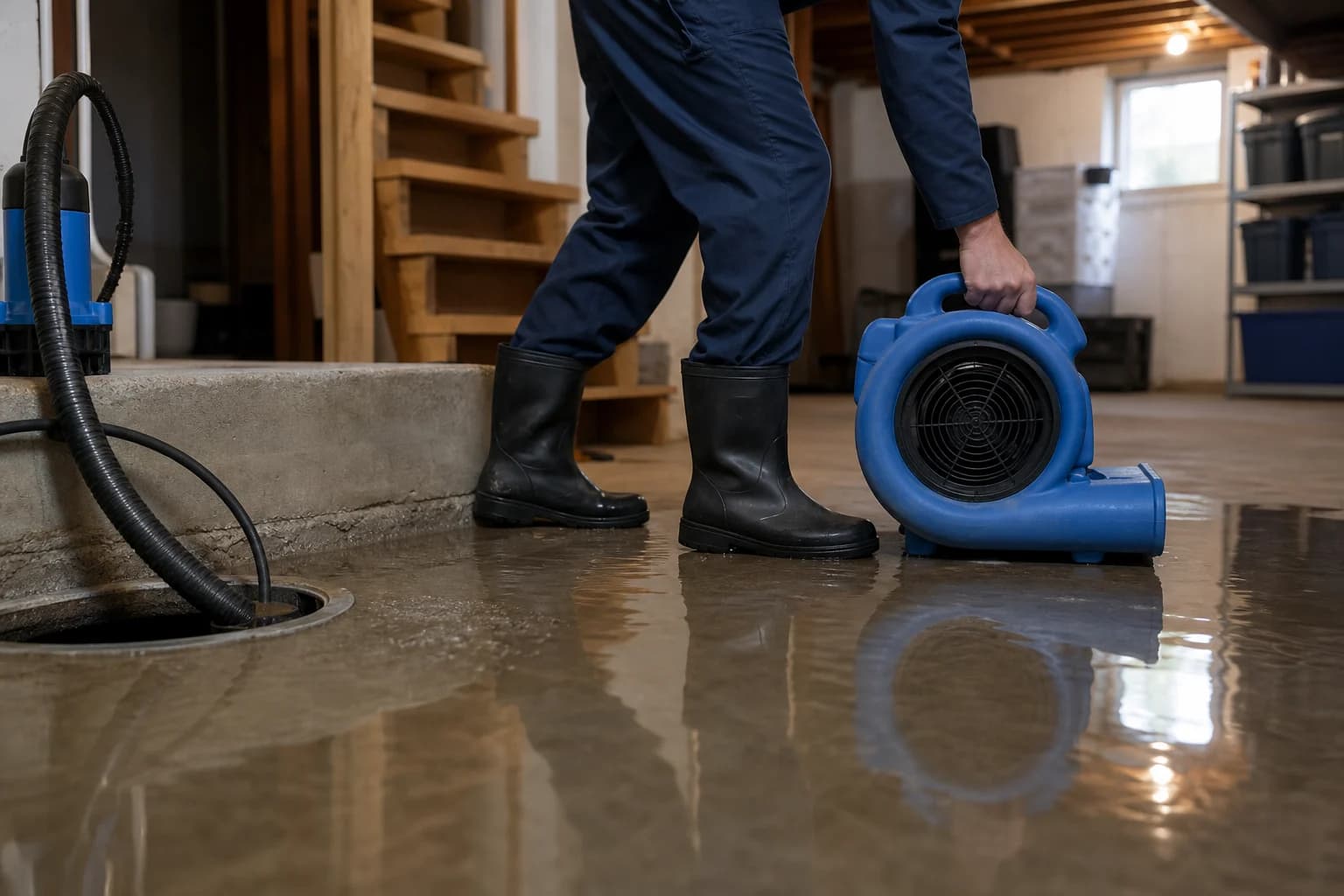
What to Do If Your Basement Floods
This guide explains how to respond if your basement floods. Find safety precautions, tips for identifying the source, and advice on when to seek professional help.
Read guide Water Damage Basics
Clean Water vs. Gray Water vs. Black Water Damage
Water damage categories reflect contamination and source conditions. Learn how clean, gray, and black water differ, why conditions can change, and how to respond safely.
Read guideWater damage can’t wait.
Fast response, expert care. Call Water Restoration Pros and we’ll connect you with help for leaks, flooding, burst pipes, water removal, and drying.
Call (833) 968-0848 · No-obligation · Availability varies by area