What the restoration scope can include
Water damage restoration is the coordinated process of controlling a water loss, removing accessible water, locating moisture within building materials, drying and monitoring the structure, cleaning or removing affected materials, and completing or coordinating necessary repairs.
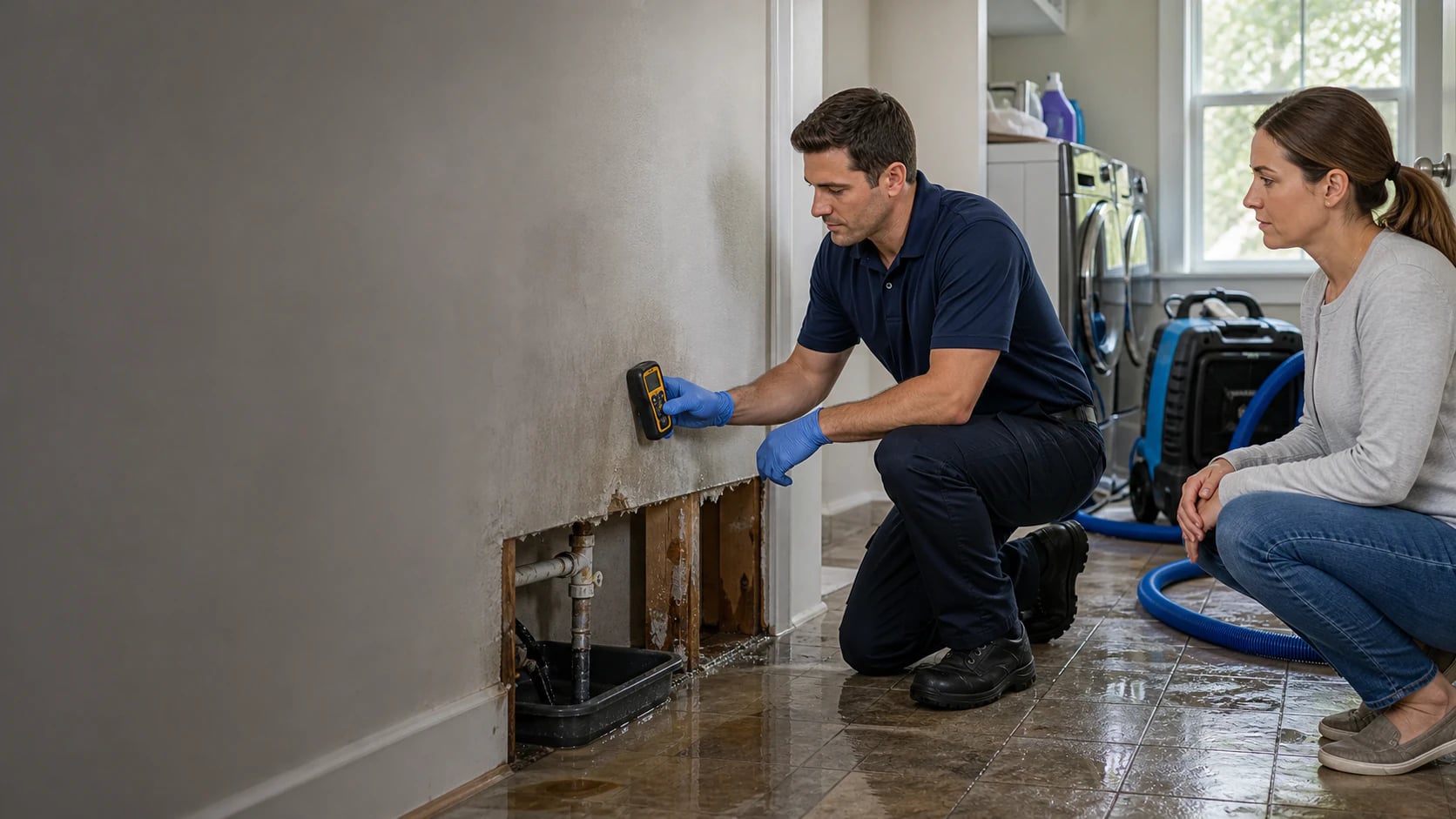
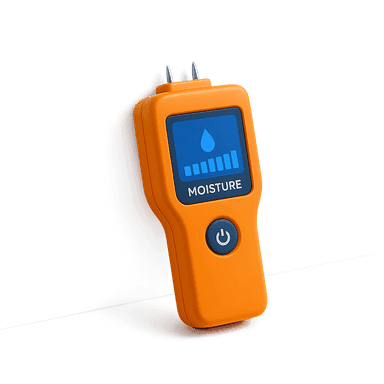
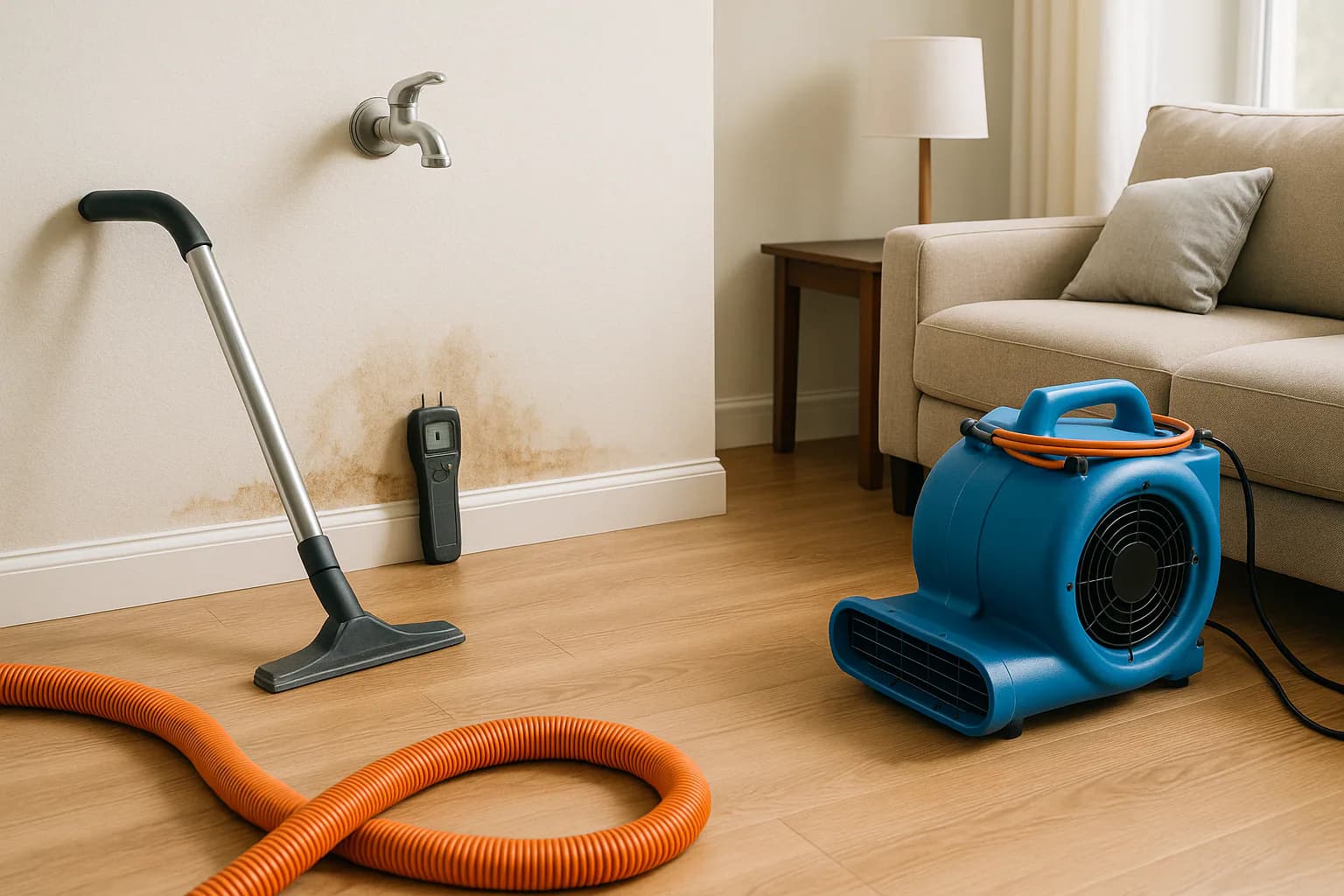
A floor can look dry while the pad, underlayment, subfloor, wall base, cabinet toe kick, or nearby framing remains wet. A useful restoration plan accounts for both visible water and moisture that moved beyond the original spill.
- Source control
- Stopping or isolating the pipe, appliance, drain, roof opening, groundwater entry, sprinkler system, or other source. Another trade may be required.
- Water removal or extraction
- Removing standing or accessible liquid water with pumps, extractors, vacuums, or material-specific systems.
- Water mitigation
- Immediate work intended to stabilize the loss and limit continued damage through source control, extraction, access, containment, selective removal, and initial drying.
- Structural drying
- Removing retained moisture from framing, subfloors, drywall, cabinets, concrete, and other assemblies through managed airflow, dehumidification, access, and monitoring.
- Cleaning or decontamination
- Treating surfaces and contents according to the water source, affected materials, and contamination conditions.
- Remediation
- Correcting a defined contamination problem, such as established mold growth or sewage contamination, using an appropriate scope, controls, and verification.
- Restoration
- Returning the property to a dry, clean, stable, and usable condition. The contracted scope may or may not include reconstruction.
- Repair or reconstruction
- Replacing drywall, insulation, flooring, cabinets, trim, paint, electrical components, roofing, or other materials after mitigation and drying are complete.