Water mitigation is the urgent process of stopping and limiting further damage after a water event, such as a burst pipe, leak, or flood. It focuses on stabilizing the property and protecting what can still be saved, rather than making repairs or restoring the home to its original condition.
The primary goal of water mitigation is to remove water, control moisture, and limit the spread of damage. This phase is time-sensitive because water can quickly soak into building materials, potentially worsening conditions. Taking prompt action can help reduce structural and material loss.
How Water Mitigation Limits Damage
Mitigation involves a series of steps designed to make damage less severe. After a water incident, the main concern is to stop the water source if possible and begin addressing affected areas. This process is not about returning the property to its pre-loss state—that comes later during restoration. Instead, mitigation focuses on immediate actions to halt the spread of water and protect structural components and belongings that may still be salvageable.
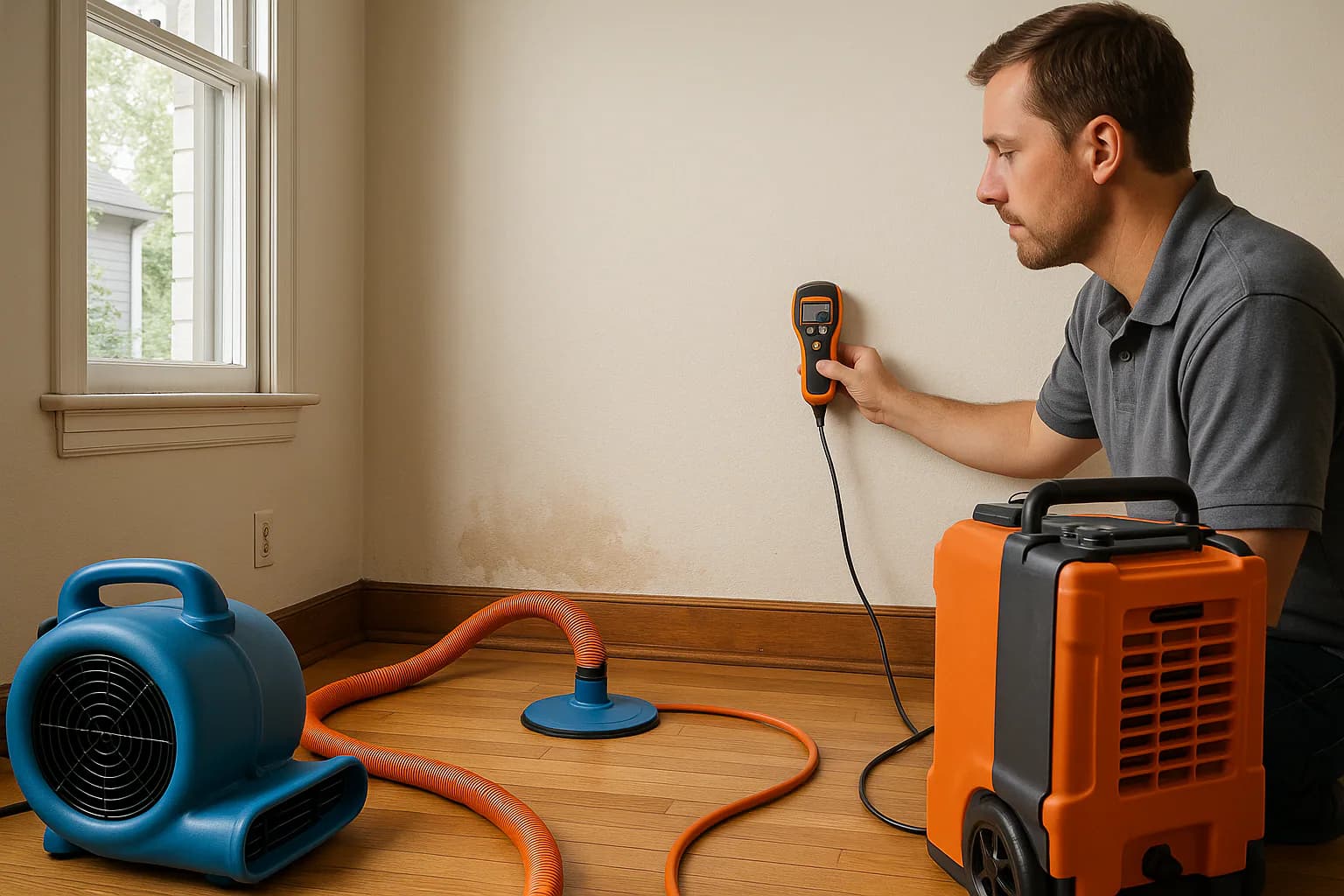
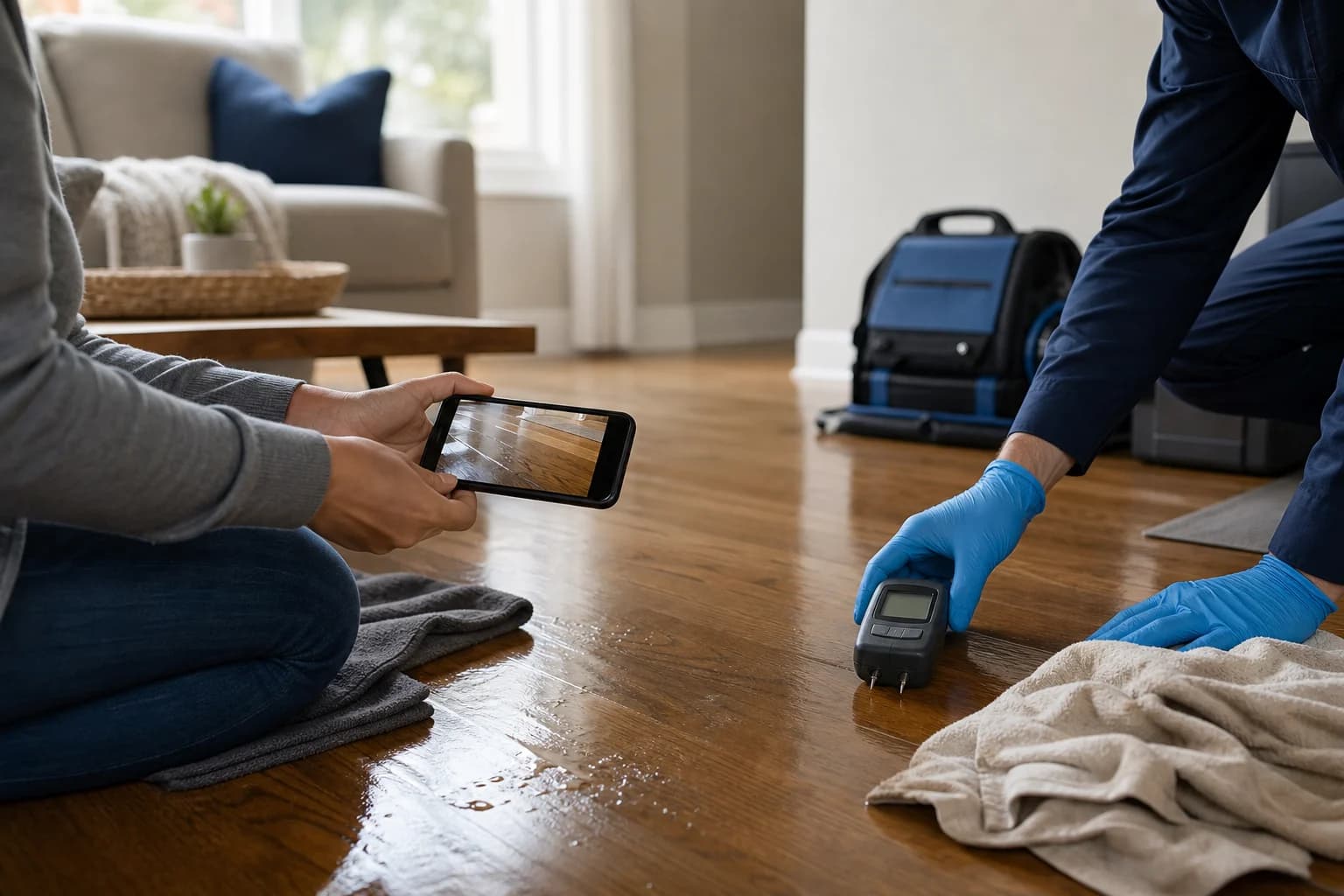
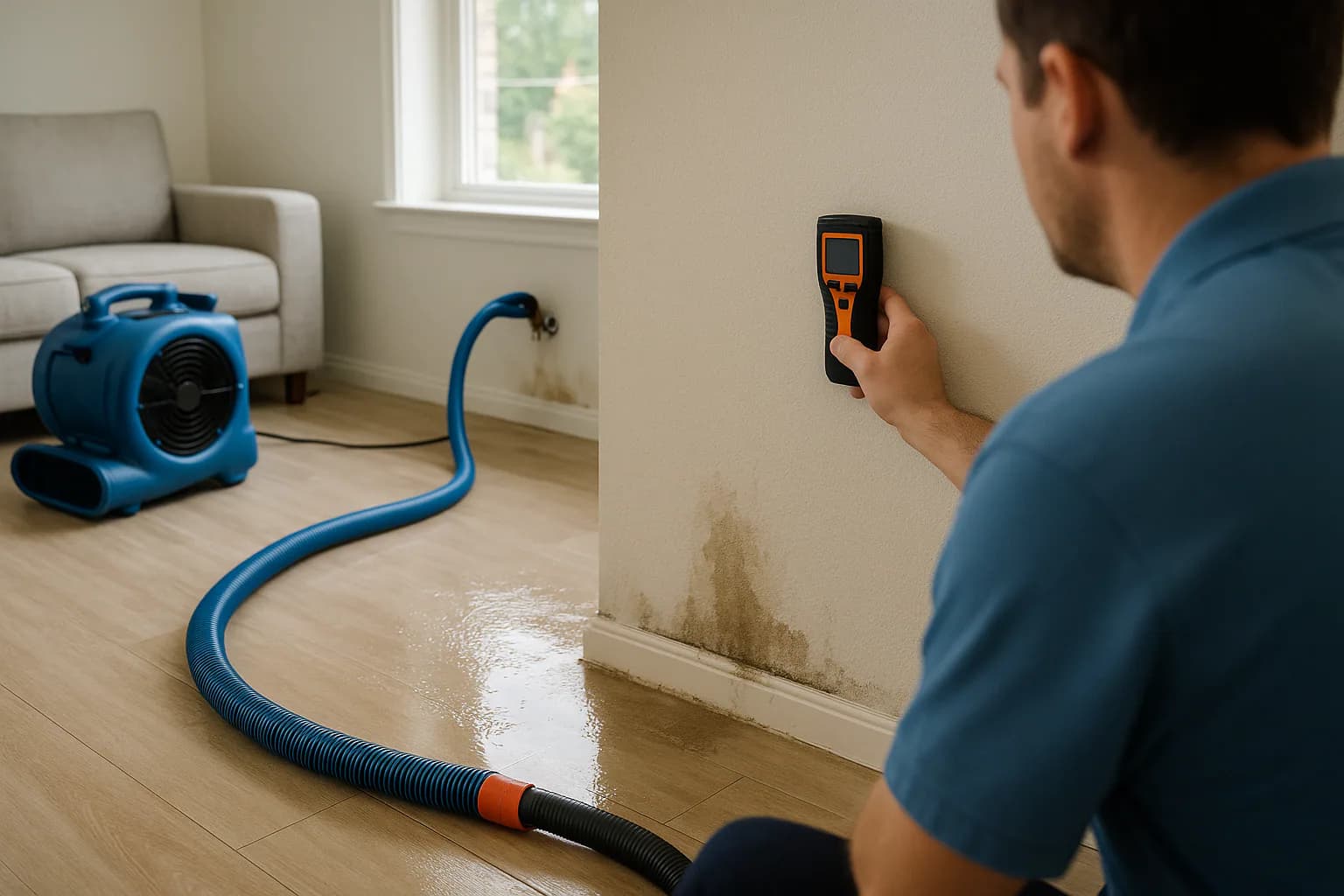
Observable clues that water mitigation is needed include visible pooling or puddles, damp or stained walls, warped floors, and musty odors. These clues may suggest moisture, but are not proof of the full extent or source of the problem. Sometimes, water moves behind walls or under flooring, so a professional may use moisture meters or thermal imaging to check for hidden dampness. Temperature patterns seen on thermal imaging can point to suspicious areas, but confirmation with moisture measurements or direct inspection is needed.
Mitigation Is Not the Same as Restoration
Mitigation is the urgent work to stop and limit damage. Restoration is the later work to repair and rebuild a property back to its pre-loss condition. Mitigation comes first and sets up everything that follows.
Key Phases in the Water Mitigation Process
- 1
Assess and stop the source
Identify where the water is entering the property and stop it if it is safe to do so. Evaluate which areas and materials have been affected.
- 2
Remove standing water
Extract water that is pooling or sitting on surfaces. This may involve mops, wet vacuums, or pumps, depending on the amount and location.
- 3
Remove unsalvageable materials
Take out materials that cannot be dried or are likely to hold contamination, such as waterlogged drywall, carpet padding, or insulation.
- 4
Dry and dehumidify
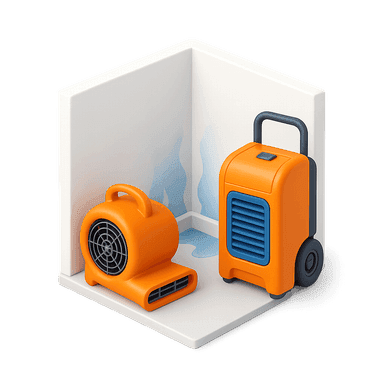
Set up drying and dehumidification equipment to remove moisture from the structure and air. In situations involving contaminated water or areas with visible or suspected mold, air movement should be avoided to prevent spreading contaminants. Drying hidden cavities and hard-to-reach spaces is also important.
- 5
Monitor moisture
Track moisture levels over several days using meters or sensors. Work is not considered complete until materials reach appropriate dryness as determined by industry guidelines or professional judgment.
Each phase of mitigation requires decisions about what can be dried in place and what needs to be removed. For example, drywall that is only slightly damp may be dried, while drywall that is saturated or potentially contaminated may need to be removed. The approach depends on the type of water, how long it has been present, and the materials involved. Water category is determined by source, contamination, and how water has moved through the building.
Restoration professionals can assess situations where water is widespread, contaminated, or hidden within walls or floors. In situations with clean water and limited damage, property owners may be able to address some mitigation steps themselves. However, when contaminated water (such as sewage or floodwater) is involved, or when the extent of moisture is unclear, a professional assessment is highly recommended.
When to Call a Professional for Water Mitigation
Certain water damage situations are complex or risky enough that an on-site professional assessment is useful. If water has soaked into wall cavities, subfloors, or insulation, it may not be possible to fully dry the area with household fans. Persistent odors, stained surfaces, or unusual temperature patterns may also indicate hidden moisture that needs further investigation. Restoration professionals use specialized tools to identify and address these areas.
If the water has come from a contaminated source—such as a backed-up sewer line or external floodwater—safe handling and sanitation are critical. Contaminated water (sometimes called black water) can carry bacteria or other hazards. In these cases, restoration professionals may remove affected materials and use specialized cleaning methods to sanitize the space. Property owners should avoid contact with contaminated water, keep children and pets out of the area, and only shut off power if it can be done safely without crossing wet areas or standing water.
Common Water Mitigation Mistakes to Avoid
One mistake property owners make is underestimating how far water can spread. Water can move behind walls, under floors, and into insulation, even if the surface appears dry. Relying on appearance alone can leave hidden moisture that may later cause problems. Another common error is delaying action, which allows water to continue damaging materials and increases the risk of further issues.
Attempting to dry out areas affected by contaminated water without proper protection or equipment can be hazardous. Using fans or air movement in spaces exposed to sewage, contaminated water, or visible or suspected mold may spread contaminants. Additionally, failing to remove materials that cannot be properly dried—such as saturated carpet padding or insulation—can allow moisture to linger. Restoration professionals evaluate which materials can be salvaged and which should be removed, based on the type of water and how long it has been present.
Moisture Control and Monitoring After Mitigation
After the initial removal of water, controlling humidity and monitoring moisture are essential. Fast drying reduces the conditions that allow mold to grow. Restoration professionals use moisture meters to verify that building materials have reached an appropriate level of dryness. Ensuring that further repairs or rebuilding do not trap residual moisture inside walls or floors is important to prevent ongoing moisture problems.
The drying process may take several days or longer, depending on how much water was involved and the materials affected. It is important to continue monitoring moisture levels until all areas meet established dryness standards. Skipping this step may result in lingering dampness, which can cause future structural issues or persistent odors.
Insurance Considerations and Documentation
Many homeowners insurance policies expect property owners to take reasonable steps to prevent further damage after a water incident. This is often called a duty to mitigate. Starting water mitigation quickly may support this expectation, but coverage depends on the specific cause of the water and the details of the policy. Sudden and accidental water events may be treated differently from gradual leaks, so it is important to review the policy and consult the insurer for guidance.
Documenting the damage and the steps taken during mitigation is helpful for insurance claims. Take photos of affected areas, keep records of any work done, and save receipts for materials or professional services. This documentation can help support the claim process and clarify what was done to limit further loss.
Related Services
Need to Stop the Damage Now?
Every hour counts once water is in your home. Call Water Restoration Pros to get connected with restoration professionals that service your area and can begin mitigation and dry your property.
Call (833) 968-0848Frequently asked questions
What is the difference between water mitigation and restoration?
How do I know if hidden moisture remains after cleanup?
Does insurance expect me to mitigate water damage?
Sources reviewed (2)
- U.S. EPA - Mold Course Chapter 2: EPA guidance on drying buildings, furnishings, carpet, wall cavities, and other wet materials.
- U.S. EPA - Flooded Home: EPA guidance on safety, cleanup, moisture control, and drying after a home is flooded.