Skip to content
Water Restoration Pros

Water Damage Service

Emergency Water Damage Restoration

When water is actively causing damage, the first calls matter. Emergency water damage restoration is urgent help for homes and businesses when a leak, flood, or backup cannot wait until morning. Call Water Restoration Pros to get connected with restoration pros that service your area.

Service overview

Emergency water damage help that connects homes and businesses with restoration pros for urgent removal, mitigation, and drying.

Recognize the problem

Does this situation call for emergency water damage restoration?

Start with what you can safely observe. The source, the type of water, and the materials affected determine the response after an on-site assessment.

What you may notice

Water is actively flooding or spreading through the property right now

A pipe burst or a backup happened after hours and cannot wait

A business needs water handled fast to limit downtime and loss

Water is near electrical, or the source may be contaminated

A ceiling is sagging or bulging from water collecting above it

How it commonly starts

Burst pipes and supply line failures, often overnight

Sewer or drain backups that need urgent, careful handling

Storm flooding and rising water during severe weather

Water heater and appliance ruptures that release water fast

Fire suppression or sprinkler discharge in a building

Why timing changes the outcome

Every hour of active water soaks more materials and spreads the loss.

Water near electrical or contaminated sources is an immediate hazard. A sagging, bulging ceiling can fail without warning.

Fast removal and drying limit the damage and the eventual repairs.

In-depth guidance

What to know about emergency water damage restoration

Safety comes before cleanup in an emergency

In a water emergency, the hazards are the first concern. Water near outlets, panels, or wiring can be deadly, so stay clear and only shut off power if you can do it safely and dry. Water from a sewer or drain backup may be contaminated, so keep people and pets away and avoid contact. A ceiling that is sagging or bulging is holding water and can collapse, so do not stand beneath it.

Once the area is safe, the priority is stopping the source, removing the water, and starting to dry the structure. Acting quickly is what keeps an after-hours emergency from turning into weeks of additional damage.

What to expect when you call

Reaching out in an emergency is a call-first process, and knowing how it works can make a stressful moment easier. The Water Restoration Pros line connects you with restoration pros that service your area. On the call, it helps to be ready to describe what happened, where the water is coming from and how much there is, whether anyone is in danger, and any hazards you have noticed such as water near electrical or a sagging ceiling. That picture is what allows the right help to be pointed your way and the urgent first steps to be talked through.

It is just as important to know what the call does not do. No one can promise exactly when a crew arrives, because availability and response times depend on your location and the providers near you, and honest help will never put a clock on it. What the call does is connect you quickly, talk you through making the area safe, and get you pointed toward urgent removal, mitigation, and drying. There is no obligation, so calling early to understand your options costs nothing even while you are still deciding what to do.

Emergency safety: electricity, gas, and unstable structure

Water emergencies create hazards that go beyond the water itself, and a few are serious enough to override any urge to start cleaning up. Electricity is the first: water in contact with outlets, a panel, or wiring can be deadly, and power should be shut off at the breaker only if you can reach it from a dry spot without standing in or touching water. If you cannot do that safely, the safe move is to stay clear and wait for help rather than risk it. A burning or gas odor, or any doubt about whether power can be cut safely, is a reason to leave the area and call from somewhere safe.

Contaminated water is the next concern. Sewage, drain backups, and floodwater can carry harmful contaminants, so keep people and pets away, avoid contact, and do not try to wade through it. Structure is the third: a ceiling that is sagging, bulging, or dripping is holding water and can come down without warning, so do not stand beneath it, and treat soaked floors and stairs as potentially slippery or weakened. When hazards like these are present, getting people to safety comes before anything else, and the cleanup waits until the area can be made safe.
Professional response

How the work moves from damage to a dry property

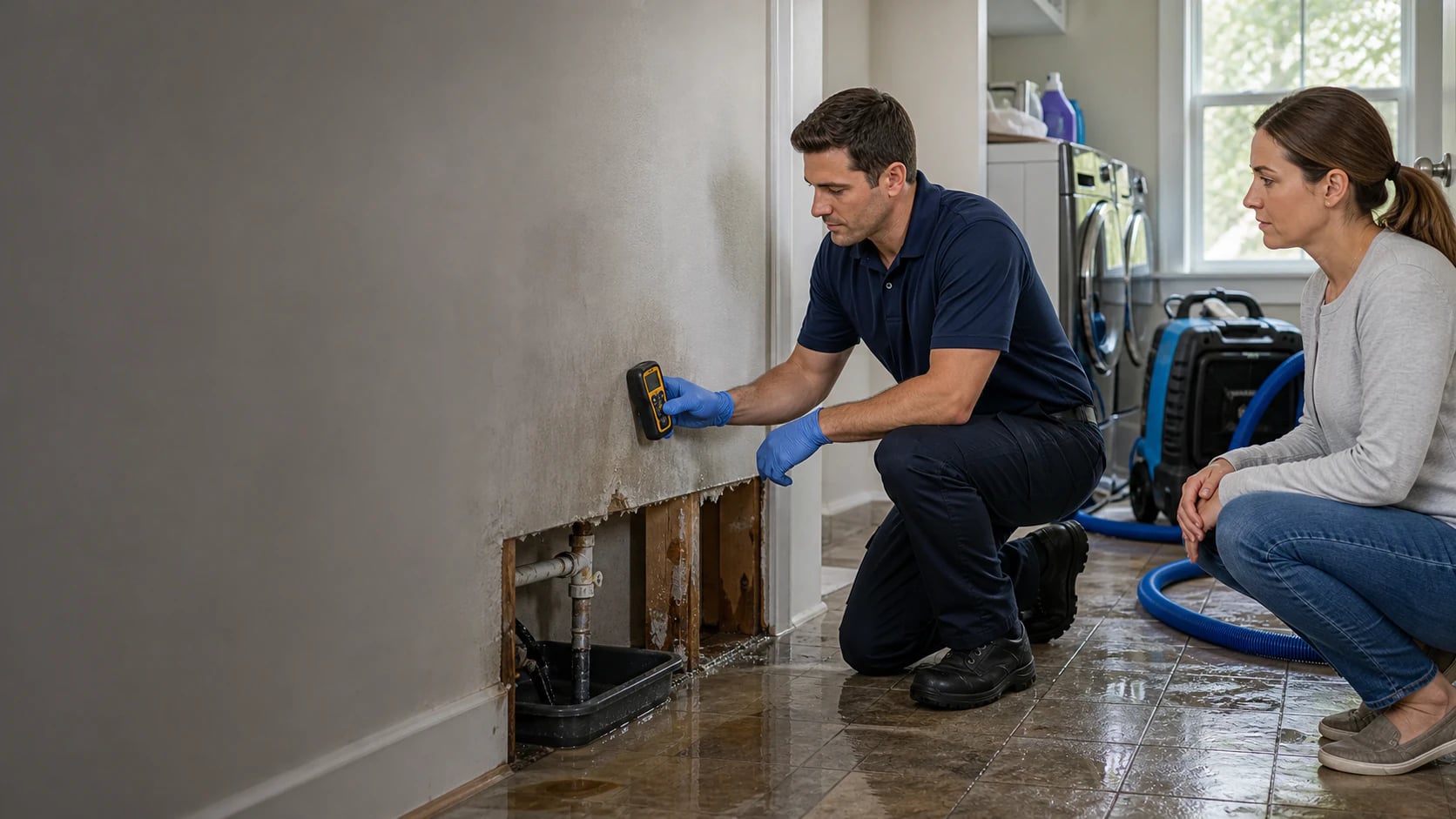
The exact scope changes with the water source and affected materials, but a measured restoration response generally moves through three phases.

Assess and stabilize

Call and describe the emergency

Reach the line, explain what is happening, and get pointed toward urgent first steps and help in your area.

Make the area safe

Address electrical and contamination hazards and keep people clear before anyone works in the water.

Remove and dry

Stop and contain the source

Confirm the water is shut off or contained so it stops adding to the loss.

Remove the water

Pump and extract standing water from floors, low spots, and lower levels.

Verify and recover

Mitigate and set drying

Remove materials that cannot be saved and set air movers and dehumidifiers to begin drying.

Document for insurance

Capture photos and notes of the damage so the loss is recorded for a claim.

What to expect from the first visit

Call and describe the emergency

Reach the line, explain what is happening, and get pointed toward urgent first steps and help in your area.

Make the area safe

Address electrical and contamination hazards and keep people clear before anyone works in the water.

Stop and contain the source

Confirm the water is shut off or contained so it stops adding to the loss.

Remove the water

Pump and extract standing water from floors, low spots, and lower levels.

Questions to ask before approving the scope

How will the assessment document immediate safety and source control?

The answer should be specific to the property and reflected in the written scope.

Which conditions determine whether emergency restoration is the right service path?

The answer should be specific to the property and reflected in the written scope.

What work, specialist responsibilities, measurements, and completion records will be included in writing?

The answer should be specific to the property and reflected in the written scope.

Before help arrives

What you can do now

Only take steps you can complete safely. Leave the area and wait for qualified help if there is an electrical, structural, or contamination risk.

Stop the water at the source if you can reach it safely.

Stay away from water near outlets or electrical, and shut off power only if it is safe.

Keep people and pets away from water that may be contaminated.

Do not stand under a sagging or bulging ceiling.

Call to connect with emergency water damage restoration help.

These are general precautions for emergency water damage restoration; conditions at the property determine what is safe and appropriate.

Frequently asked questions

How soon should I call after I find water?
As soon as the area is safe to be in. Water moves into drywall, subfloor, and framing within hours, so calling early is what shortens the drying job later. Availability and response times of the restoration pros themselves vary by location and provider, so no one can promise exactly when a crew arrives, but calling right away is the fastest way to get connected.
What should I do first in a water emergency?
Make the area safe first. Stay clear of water near electrical, keep people and pets away from contaminated water, and do not stand under a sagging ceiling. Stop the source if you can do it safely, then call to connect with emergency help.
Do you handle commercial water damage emergencies?
Yes. The call line connects both homes and businesses with restoration pros that service their area, which matters when a business needs water handled fast to limit downtime and loss.
What can I expect when I call?
We help you understand the urgent first steps, talk through safety, and connect you with emergency restoration professionals near you. Calling is a no-obligation way to get pointed toward urgent removal, mitigation, and drying.
What information should I have ready when I call?
It helps to be able to describe what happened, where the water is coming from and roughly how much there is, whether anyone is in danger, and any hazards you have spotted such as water near electrical or a sagging ceiling. That lets the urgent first steps be talked through and the right help in your area be pointed your way.
When should I leave the property instead of dealing with the water?
Leave and call from a safe spot if you smell gas or burning, if power cannot be shut off without contacting water, if the water may be contaminated, or if a ceiling is sagging or the structure feels unstable. Getting people and pets to safety always comes before cleanup, and the work can wait until the area is safe.
Technical and safety sources (4)

These sources support restoration, safety, moisture, cleanup, and scope guidance. They do not serve as numeric pricing provenance.

Need help with emergency restoration?

Call Water Restoration Pros to connect with emergency water damage restoration help in your area.

Call (833) 968-0848 · No-obligation · Availability varies by area

(833) 968-0848Check